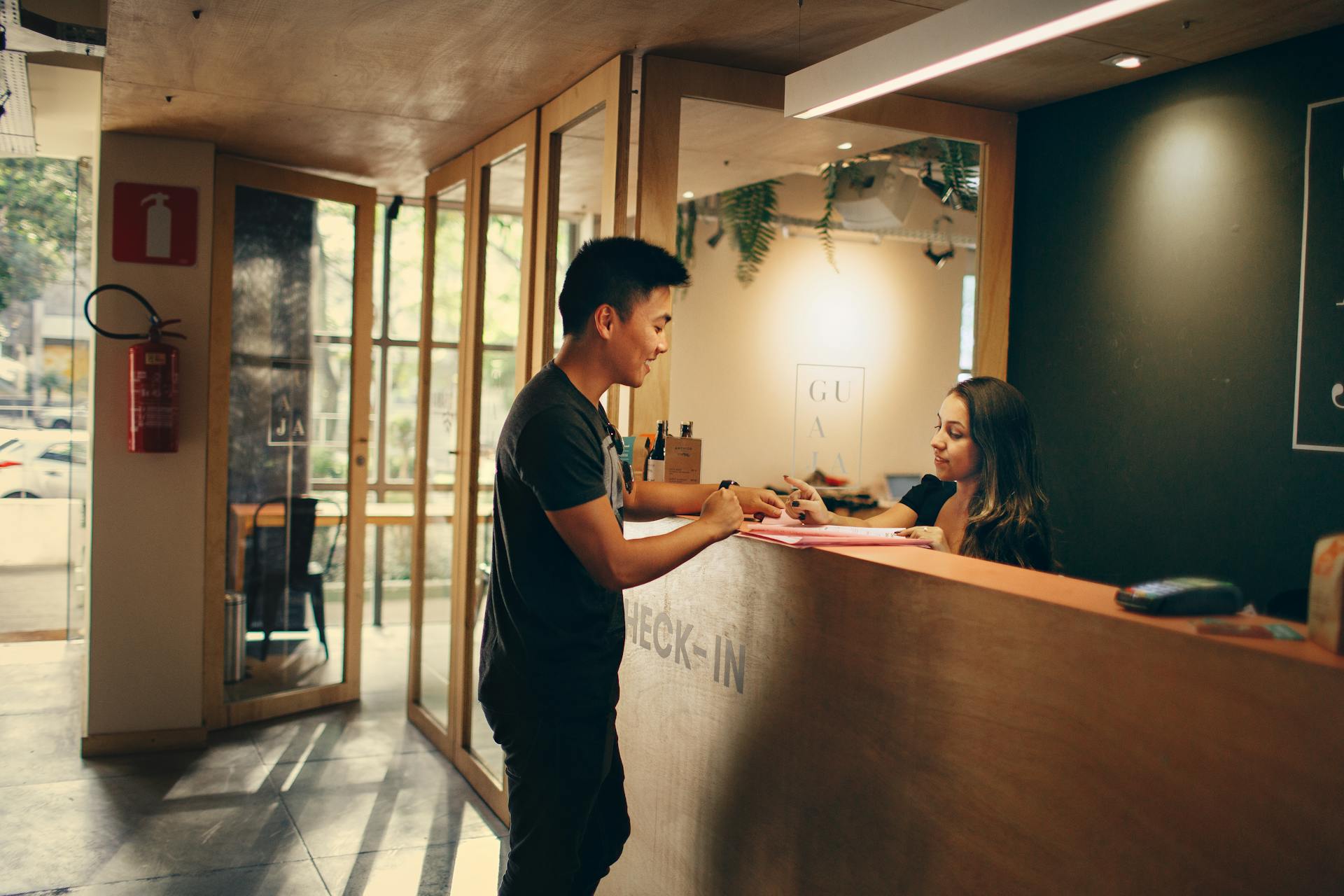
How to Build a Green Travel Policy that encourages Sustainable Business Travel
You've been asked to write a green travel policy. The challenge is creating one that meaningfully reduces emissions without making business travel impossibly complicated. This guide walks through the key decisions you need to make, from setting reduction targets to choosing which hotel certifications to require.
The timing matters. The EU Corporate Sustainability Reporting Directive is being phased in, with the first companies applying it for the 2024 financial year (reports published in 2025) and additional waves following for other large companies and listed SMEs. UK companies face requirements under Streamlined Energy and Carbon Reporting, though Scope 3 is generally not mandatory except for specific items such as grey-fleet business travel. Beyond compliance, GBTA's 2023 barometer found 54% of respondents said their company has set Scope 3 reduction targets including business travel, and another 23% are planning to set targets.
Here's how to build a policy that works in practice, not just on paper.
Define Your Emission Reduction Target
Before writing policy rules, establish what you're trying to achieve and by when. A target gives you something to measure against and helps justify policy restrictions to travelers who push back.
Calculate Your Current Baseline
Business travel falls under Scope 3, Category 6 emissions in the GHG Protocol framework. Carbon emissions are measured in kilograms (kg) or tonnes of CO2 equivalent (CO2e), the standard units used globally for climate accounting. Start by calculating your current annual emissions using consistent methodology. If you work with a travel management company, most now integrate carbon tracking into their booking platforms.
If you manage bookings independently or have unmanaged travel, use the GHG Protocol's distance-based method. Multiply trip distances by emission factors for each transport mode. The UK Government publishes conversion factors annually—download the spreadsheet and use the factors for the appropriate transport categories.
For an order-of-magnitude estimate: a company with 500 employees where each takes 4 roundtrip flights per year will produce hundreds to over a thousand tonnes CO2e annually, depending on flight distances, whether you count one-way or roundtrip distances in your calculation basis, and whether you include non-CO2 radiative forcing effects.
Set a Near-Term Target
Industry standard targets aim for 30-50% reduction by 2030. Break this into annual milestones so you can track progress and adjust if you're falling behind. A company starting in 2026 might target 10% reduction by end of 2027, 20% by 2028, and 30% by 2030.
Consider aligning with the Science Based Targets initiative framework if your company has broader climate commitments. SBTi provides guidance on setting targets consistent with limiting global warming to 1.5°C. Even if you don't pursue formal SBTi validation, their methodology helps ensure your target is ambitious enough to matter.
Document your baseline calculation method and target structure. You'll reference these when reporting quarterly progress.
Decide Which Trips Require Approval
Not all trips are equal. Define criteria for essential versus discretionary travel to reduce unnecessary journeys before you even get to mode of transport decisions.
Essential Trip Criteria
Specify situations where travel is pre-approved or gets fast-track approval. Consider including client meetings for contract negotiations or relationship-building, site visits requiring physical inspection of facilities or properties, multi-day conferences with significant networking value, and trade shows where face-to-face time directly drives sales opportunities.
Be specific about what "relationship-building" means. A first meeting with a potential client worth $500K annually probably justifies travel. A third check-in with an existing client might not.
Virtual-First Situations
List meeting types that default to virtual unless there's a documented reason to travel. Internal team meetings under 2 hours typically work well virtually. Routine client check-ins, training sessions, and quarterly business reviews often don't require physical presence.
Track virtual meeting adoption alongside travel reduction. If you shift 200 internal meetings per year from in-person to video, calculate the emissions saved from eliminated trips. This gives you concrete evidence of policy impact when leadership asks whether the changes are working.
Write Your Flight Booking Rules
Flights produce the majority of business travel emissions. Your policy should address class of service, route selection, and how to handle exceptions.
Class of Service Restrictions
Require economy class for flights under a specified duration. Common thresholds are 6 hours or 8 hours depending on company culture. Premium cabins take more space per passenger, effectively increasing per-passenger emissions—often by approximately 3 times or more on long-haul flights depending on methodology.
Build in an exception process for medical needs, last-minute bookings where only premium seats remain, or situations where overnight flights require sleep for next-day client meetings. Define who approves these exceptions—typically a travel manager or department head—and set a response timeframe so travelers aren't stuck waiting.
Route and Aircraft Selection
Mandate direct flights when available and when the price difference is reasonable. Takeoff and landing represent the highest fuel burn, so connecting flights produce higher emissions than direct flights covering the same total distance. A London to New York roundtrip produces approximately 800-1,200 kg CO2e (roughly 1,800-2,600 lbs) per passenger in economy class, though actual emissions vary by methodology—especially whether non-CO2 radiative forcing effects are included.
For companies with decentralized booking or unmanaged travel programs, consider requiring employees to book accommodations through platforms that automatically contribute to renewable energy investments. This approach simplifies emissions management without requiring separate carbon accounting for each trip.
Emission Factors You'll Reference
Understanding the emissions per passenger-kilometer helps you evaluate tradeoffs between transport modes. Use your chosen methodology consistently—whether UK Government factors, GHG Protocol calculators, or another recognized standard. Key considerations include whether you include non-CO2 radiative forcing effects, which can significantly increase aviation emission estimates.
For reference, UK Government 2024 business travel factors with non-CO2 effects included show:
- Domestic flights (average passenger): 0.273 kg CO2e per passenger-kilometer
- Short-haul international (economy): 0.183 kg CO2e per passenger-kilometer
- Long-haul international (economy): 0.200 kg CO2e per passenger-kilometer
- Average petrol car: 0.170 kg CO2e per vehicle-kilometer
- National rail: 0.035 kg CO2e per passenger-kilometer
- International rail: 0.004 kg CO2e per passenger-kilometer
National rail produces substantially less emissions per passenger-kilometer than driving alone or flying equivalent routes.
Set Rail-First Rules for Regional Routes
For shorter distances, rail often matches flight time when you account for airport security, boarding, and baggage claim, while producing significantly lower emissions.
Determine Your Distance Threshold
A common policy requires rail for trips under 300 miles where journey time is under 4 hours. This guideline works for many major business corridors but needs adjustment based on your specific routes.
Evaluate your company's top 10 most-traveled routes. Boston to New York is approximately 215 miles with Amtrak taking 3.5-4.5 hours depending on service type. When you add airport arrival time, security, and baggage claim on both ends, total travel time often favors rail. London to Paris via Eurostar takes approximately 2 hours 15 minutes compared to a 1 hour 15 minute flight plus 2-3 hours of airport procedures.
Some routes don't work for rail. San Francisco to Los Angeles is 382 miles with Amtrak taking approximately 12 hours versus a 1.5 hour flight. The time difference probably justifies flying for this route—but requiring economy class and direct flights helps minimize emissions.
Build Route-Specific Exceptions
Create a "pre-approved flight routes" list where rail isn't viable due to time or lack of service. Include these in your booking tool as policy logic so travelers see them flagged appropriately. Review the list annually as rail networks expand and service improves.
For European operations, consider the 700 km threshold recommended by some companies. Routes under 700 km (approximately 435 miles) often have competitive rail options with comparable total travel time. The European Environment Agency's Transport and Environment Report provides detailed emissions comparisons for European transport modes.
Choose Hotel Sustainability Standards
Accommodation represents a smaller share of travel emissions than flights but is highly visible and easier for travelers to understand and support.
Which Certifications to Require
Decide your minimum standard. Three common approaches work: require LEED Silver or higher for all bookings, accept multiple programs at specified levels (Green Key, EarthCheck Silver or higher, BREEAM Good or higher), or use a softer "preferred if certified, required when available" policy that doesn't block bookings in destinations with limited certified inventory.
LEED Silver provides a good balance between meaningful environmental performance and availability. It requires 50-59 points under the LEED v4 rating system, covering energy efficiency, water conservation, materials selection, and indoor air quality.
LEED Levels Explained
LEED certification from the US Green Building Council has four levels. Certified level requires 40-49 points and represents basic energy and water efficiency measures. Silver level requires 50-59 points with measurable reductions in resource use and improved water systems. Gold level requires 60-79 points including renewable energy integration and waste diversion programs. Platinum level requires 80 or more points with net-zero goals and advanced building systems.
Verify any hotel's LEED status at the USGBC project directory. Don't rely on hotel marketing claims.
Other Recognized Programs
Green Key operates internationally with thousands of certified properties using criteria that properties must meet to maintain certification. EarthCheck certifies organizations using Bronze, Silver, Gold, and Platinum levels requiring annual performance data submission. BREEAM originated in the UK and rates buildings from Pass to Outstanding through BREEAM In-Use assessments.
When booking hotels, verify certification claims directly with the certification body's directory. Some properties display expired or inaccurate certifications. For companies without strict certification requirements or those booking in destinations with limited certified options, using a booking platform that directs profits toward renewable energy provides an alternative approach to addressing accommodation impact.
Set Up Tracking and Reporting
Without quarterly reviews, policies become paper exercises that travelers ignore. Build reporting into your workflow from day one.
Data You Need to Track
Request or compile standard reports showing emissions by transport mode (air, rail, car rental), emissions by route and trip purpose, policy compliance rates showing the percentage of bookings following your rules, and cost data tracking whether the policy increases or decreases overall travel spending.
If you work with a travel management company, most can provide these reports quarterly. If you manage bookings independently, build a tracking spreadsheet using booking data and UK Government emission factors.
Quarterly Review Process
Track progress against your annual milestone targets. Identify your top emission routes for focused intervention—these are candidates for new rail-first rules or virtual-meeting defaults. Share results with travelers to create transparency and drive adoption. Adjust policy based on what's working and what's creating problems.
If you're consistently missing targets, diagnose whether the issue is policy design (rules aren't aggressive enough) or compliance (travelers are finding workarounds). These require different solutions.
Regulatory Reporting Timeline
CSRD is being phased in, with the first companies applying it for the 2024 financial year (reports published in 2025) and additional waves following for other large companies and listed SMEs. Under UK SECR, Scope 3 is generally not mandatory, though some entities must include specific items such as grey-fleet business travel.
Plan ahead even if reporting is currently voluntary. Requirements are tightening, and building tracking infrastructure now means you're ready when regulations expand to cover your organization.
Get Employee Buy-In
The best policy on paper fails if travelers find workarounds or pressure managers for exceptions. Communication and ease of use determine whether your policy succeeds.
Make Your Booking Process Easy
If you use a corporate booking platform, enable emissions display at point of booking and configure policy logic to flag non-compliant bookings before purchase, not after when it's too late to change. For companies with unmanaged travel, provide clear guidelines and preferred booking channels that make compliance simple.
The easier you make compliance, the higher your adoption rates. Friction creates exception requests.
Explain Why to Your Team
Share company emission targets and progress in regular updates. Show cost savings where they exist—rail is often cheaper than short-haul flights for routes under 300 miles. Connect travel policy to broader ESG goals and sustainability commitments leadership has made.
Consider your talent strategy. Younger employees increasingly factor sustainability into employer choice, and visible climate action on business travel is one of the most tangible ways companies demonstrate commitment.
Create Exception Request Process
Define who approves exceptions. This might be a travel manager for routine requests or department heads for their teams. Set a response timeframe that accommodates urgent bookings—same-day approval for requests submitted before 2pm works for many companies.
Track exception reasons in a simple spreadsheet or form. If you see patterns—"client requested in-person meeting" appearing 50 times—that identifies policy weak points or training opportunities to help teams push back on unnecessary travel requests from clients.
At Dyme, we turn all travel into a force for good while helping you save money. We use our profits to invest in clean energy projects that provide communities with cheaper electricity, create jobs, and reduce reliance on fossil fuels. Whether you're booking accommodations for your business travel program, your stays through Dyme contribute to solar installations and renewable infrastructure in developing markets.

Table of Contents
How to Build a Green Travel Policy that encourages Sustainable Business Travel
You've been asked to write a green travel policy. The challenge is creating one that meaningfully reduces emissions without making business travel impossibly complicated. This guide walks through the key decisions you need to make, from setting reduction targets to choosing which hotel certifications to require.
The timing matters. The EU Corporate Sustainability Reporting Directive is being phased in, with the first companies applying it for the 2024 financial year (reports published in 2025) and additional waves following for other large companies and listed SMEs. UK companies face requirements under Streamlined Energy and Carbon Reporting, though Scope 3 is generally not mandatory except for specific items such as grey-fleet business travel. Beyond compliance, GBTA's 2023 barometer found 54% of respondents said their company has set Scope 3 reduction targets including business travel, and another 23% are planning to set targets.
Here's how to build a policy that works in practice, not just on paper.
Define Your Emission Reduction Target
Before writing policy rules, establish what you're trying to achieve and by when. A target gives you something to measure against and helps justify policy restrictions to travelers who push back.
Calculate Your Current Baseline
Business travel falls under Scope 3, Category 6 emissions in the GHG Protocol framework. Carbon emissions are measured in kilograms (kg) or tonnes of CO2 equivalent (CO2e), the standard units used globally for climate accounting. Start by calculating your current annual emissions using consistent methodology. If you work with a travel management company, most now integrate carbon tracking into their booking platforms.
If you manage bookings independently or have unmanaged travel, use the GHG Protocol's distance-based method. Multiply trip distances by emission factors for each transport mode. The UK Government publishes conversion factors annually—download the spreadsheet and use the factors for the appropriate transport categories.
For an order-of-magnitude estimate: a company with 500 employees where each takes 4 roundtrip flights per year will produce hundreds to over a thousand tonnes CO2e annually, depending on flight distances, whether you count one-way or roundtrip distances in your calculation basis, and whether you include non-CO2 radiative forcing effects.
Set a Near-Term Target
Industry standard targets aim for 30-50% reduction by 2030. Break this into annual milestones so you can track progress and adjust if you're falling behind. A company starting in 2026 might target 10% reduction by end of 2027, 20% by 2028, and 30% by 2030.
Consider aligning with the Science Based Targets initiative framework if your company has broader climate commitments. SBTi provides guidance on setting targets consistent with limiting global warming to 1.5°C. Even if you don't pursue formal SBTi validation, their methodology helps ensure your target is ambitious enough to matter.
Document your baseline calculation method and target structure. You'll reference these when reporting quarterly progress.
Decide Which Trips Require Approval
Not all trips are equal. Define criteria for essential versus discretionary travel to reduce unnecessary journeys before you even get to mode of transport decisions.
Essential Trip Criteria
Specify situations where travel is pre-approved or gets fast-track approval. Consider including client meetings for contract negotiations or relationship-building, site visits requiring physical inspection of facilities or properties, multi-day conferences with significant networking value, and trade shows where face-to-face time directly drives sales opportunities.
Be specific about what "relationship-building" means. A first meeting with a potential client worth $500K annually probably justifies travel. A third check-in with an existing client might not.
Virtual-First Situations
List meeting types that default to virtual unless there's a documented reason to travel. Internal team meetings under 2 hours typically work well virtually. Routine client check-ins, training sessions, and quarterly business reviews often don't require physical presence.
Track virtual meeting adoption alongside travel reduction. If you shift 200 internal meetings per year from in-person to video, calculate the emissions saved from eliminated trips. This gives you concrete evidence of policy impact when leadership asks whether the changes are working.
Write Your Flight Booking Rules
Flights produce the majority of business travel emissions. Your policy should address class of service, route selection, and how to handle exceptions.
Class of Service Restrictions
Require economy class for flights under a specified duration. Common thresholds are 6 hours or 8 hours depending on company culture. Premium cabins take more space per passenger, effectively increasing per-passenger emissions—often by approximately 3 times or more on long-haul flights depending on methodology.
Build in an exception process for medical needs, last-minute bookings where only premium seats remain, or situations where overnight flights require sleep for next-day client meetings. Define who approves these exceptions—typically a travel manager or department head—and set a response timeframe so travelers aren't stuck waiting.
Route and Aircraft Selection
Mandate direct flights when available and when the price difference is reasonable. Takeoff and landing represent the highest fuel burn, so connecting flights produce higher emissions than direct flights covering the same total distance. A London to New York roundtrip produces approximately 800-1,200 kg CO2e (roughly 1,800-2,600 lbs) per passenger in economy class, though actual emissions vary by methodology—especially whether non-CO2 radiative forcing effects are included.
For companies with decentralized booking or unmanaged travel programs, consider requiring employees to book accommodations through platforms that automatically contribute to renewable energy investments. This approach simplifies emissions management without requiring separate carbon accounting for each trip.
Emission Factors You'll Reference
Understanding the emissions per passenger-kilometer helps you evaluate tradeoffs between transport modes. Use your chosen methodology consistently—whether UK Government factors, GHG Protocol calculators, or another recognized standard. Key considerations include whether you include non-CO2 radiative forcing effects, which can significantly increase aviation emission estimates.
For reference, UK Government 2024 business travel factors with non-CO2 effects included show:
- Domestic flights (average passenger): 0.273 kg CO2e per passenger-kilometer
- Short-haul international (economy): 0.183 kg CO2e per passenger-kilometer
- Long-haul international (economy): 0.200 kg CO2e per passenger-kilometer
- Average petrol car: 0.170 kg CO2e per vehicle-kilometer
- National rail: 0.035 kg CO2e per passenger-kilometer
- International rail: 0.004 kg CO2e per passenger-kilometer
National rail produces substantially less emissions per passenger-kilometer than driving alone or flying equivalent routes.
Set Rail-First Rules for Regional Routes
For shorter distances, rail often matches flight time when you account for airport security, boarding, and baggage claim, while producing significantly lower emissions.
Determine Your Distance Threshold
A common policy requires rail for trips under 300 miles where journey time is under 4 hours. This guideline works for many major business corridors but needs adjustment based on your specific routes.
Evaluate your company's top 10 most-traveled routes. Boston to New York is approximately 215 miles with Amtrak taking 3.5-4.5 hours depending on service type. When you add airport arrival time, security, and baggage claim on both ends, total travel time often favors rail. London to Paris via Eurostar takes approximately 2 hours 15 minutes compared to a 1 hour 15 minute flight plus 2-3 hours of airport procedures.
Some routes don't work for rail. San Francisco to Los Angeles is 382 miles with Amtrak taking approximately 12 hours versus a 1.5 hour flight. The time difference probably justifies flying for this route—but requiring economy class and direct flights helps minimize emissions.
Build Route-Specific Exceptions
Create a "pre-approved flight routes" list where rail isn't viable due to time or lack of service. Include these in your booking tool as policy logic so travelers see them flagged appropriately. Review the list annually as rail networks expand and service improves.
For European operations, consider the 700 km threshold recommended by some companies. Routes under 700 km (approximately 435 miles) often have competitive rail options with comparable total travel time. The European Environment Agency's Transport and Environment Report provides detailed emissions comparisons for European transport modes.
Choose Hotel Sustainability Standards
Accommodation represents a smaller share of travel emissions than flights but is highly visible and easier for travelers to understand and support.
Which Certifications to Require
Decide your minimum standard. Three common approaches work: require LEED Silver or higher for all bookings, accept multiple programs at specified levels (Green Key, EarthCheck Silver or higher, BREEAM Good or higher), or use a softer "preferred if certified, required when available" policy that doesn't block bookings in destinations with limited certified inventory.
LEED Silver provides a good balance between meaningful environmental performance and availability. It requires 50-59 points under the LEED v4 rating system, covering energy efficiency, water conservation, materials selection, and indoor air quality.
LEED Levels Explained
LEED certification from the US Green Building Council has four levels. Certified level requires 40-49 points and represents basic energy and water efficiency measures. Silver level requires 50-59 points with measurable reductions in resource use and improved water systems. Gold level requires 60-79 points including renewable energy integration and waste diversion programs. Platinum level requires 80 or more points with net-zero goals and advanced building systems.
Verify any hotel's LEED status at the USGBC project directory. Don't rely on hotel marketing claims.
Other Recognized Programs
Green Key operates internationally with thousands of certified properties using criteria that properties must meet to maintain certification. EarthCheck certifies organizations using Bronze, Silver, Gold, and Platinum levels requiring annual performance data submission. BREEAM originated in the UK and rates buildings from Pass to Outstanding through BREEAM In-Use assessments.
When booking hotels, verify certification claims directly with the certification body's directory. Some properties display expired or inaccurate certifications. For companies without strict certification requirements or those booking in destinations with limited certified options, using a booking platform that directs profits toward renewable energy provides an alternative approach to addressing accommodation impact.
Set Up Tracking and Reporting
Without quarterly reviews, policies become paper exercises that travelers ignore. Build reporting into your workflow from day one.
Data You Need to Track
Request or compile standard reports showing emissions by transport mode (air, rail, car rental), emissions by route and trip purpose, policy compliance rates showing the percentage of bookings following your rules, and cost data tracking whether the policy increases or decreases overall travel spending.
If you work with a travel management company, most can provide these reports quarterly. If you manage bookings independently, build a tracking spreadsheet using booking data and UK Government emission factors.
Quarterly Review Process
Track progress against your annual milestone targets. Identify your top emission routes for focused intervention—these are candidates for new rail-first rules or virtual-meeting defaults. Share results with travelers to create transparency and drive adoption. Adjust policy based on what's working and what's creating problems.
If you're consistently missing targets, diagnose whether the issue is policy design (rules aren't aggressive enough) or compliance (travelers are finding workarounds). These require different solutions.
Regulatory Reporting Timeline
CSRD is being phased in, with the first companies applying it for the 2024 financial year (reports published in 2025) and additional waves following for other large companies and listed SMEs. Under UK SECR, Scope 3 is generally not mandatory, though some entities must include specific items such as grey-fleet business travel.
Plan ahead even if reporting is currently voluntary. Requirements are tightening, and building tracking infrastructure now means you're ready when regulations expand to cover your organization.
Get Employee Buy-In
The best policy on paper fails if travelers find workarounds or pressure managers for exceptions. Communication and ease of use determine whether your policy succeeds.
Make Your Booking Process Easy
If you use a corporate booking platform, enable emissions display at point of booking and configure policy logic to flag non-compliant bookings before purchase, not after when it's too late to change. For companies with unmanaged travel, provide clear guidelines and preferred booking channels that make compliance simple.
The easier you make compliance, the higher your adoption rates. Friction creates exception requests.
Explain Why to Your Team
Share company emission targets and progress in regular updates. Show cost savings where they exist—rail is often cheaper than short-haul flights for routes under 300 miles. Connect travel policy to broader ESG goals and sustainability commitments leadership has made.
Consider your talent strategy. Younger employees increasingly factor sustainability into employer choice, and visible climate action on business travel is one of the most tangible ways companies demonstrate commitment.
Create Exception Request Process
Define who approves exceptions. This might be a travel manager for routine requests or department heads for their teams. Set a response timeframe that accommodates urgent bookings—same-day approval for requests submitted before 2pm works for many companies.
Track exception reasons in a simple spreadsheet or form. If you see patterns—"client requested in-person meeting" appearing 50 times—that identifies policy weak points or training opportunities to help teams push back on unnecessary travel requests from clients.
At Dyme, we turn all travel into a force for good while helping you save money. We use our profits to invest in clean energy projects that provide communities with cheaper electricity, create jobs, and reduce reliance on fossil fuels. Whether you're booking accommodations for your business travel program, your stays through Dyme contribute to solar installations and renewable infrastructure in developing markets.