
Carbon Emissions and Compensation
In analyzing our impact, there are two key aspects we consider: the carbon emissions generated from our travel activities and the carbon compensation achieved through our solar energy initiatives. On one hand, traveling contributes to our carbon footprint through the emission of greenhouse gasses, which can significantly affect the environment.
On the other side, solar energy projects play a crucial role in mitigating these impacts by providing a clean, renewable alternative that reduces overall CO2 emissions. By evaluating both aspects, we can gain a clearer understanding of how our travel habits compare with the environmental benefits of our solar energy efforts.
Carbon Emissions
Dyme’s impact from reducing carbon emissions through the travel product can be understood by describing the carbon emissions that are created through travel, and Dyme’s support for solar projects that compensate for the emissions created in the process. While the best ways to reduce emissions are to travel less, buy economy class tickets, rent EVs, and stay at eco-friendly hotels in regions with cleaner grids, it is sometimes difficult to maintain these standards with business operations and personal necessities.
Dyme’s travel tool helps individuals address their travel-related carbon footprints through three primary areas: emissions from flights and aviation, emissions from car rentals, and emissions from hotel stays and accommodation. These three areas represent some of the main sources of carbon emissions created during travel, and thus it is important to understand the drivers of carbon emissions in each of the

Hotels
This is some text inside of a div Hotels contribute about 2% of global carbon emissions, equating to roughly 740 million metric tons of CO2 equivalent annually. The main drivers of these emissions are energy consumption, water usage, waste management, and transportation. Each of these factors plays a significant role in the overall carbon footprint of a hotel.
Energy consumption. Energy consumption is the largest contributor, primarily due to electricity and heating / cooling systems.
Water usage. Water usage involves energy for treatment and transportation and is significant in hotel operations.
Waste management. Waste management contributes to carbon emissions through landfill methane production.
Transportation: Transportation emissions arise from guest transfers and staff commutes.

Flights and Aviation
Air travel is a significant contributor to carbon emissions, accounting for 2.5% of total carbon emissions from fossil fuels annually. As demand for air travel is expected to grow, it’s essential to understand the carbon footprint of individual flights and the factors that influence it. The main factors that determine flight carbon emissions are:
Flight length. Longer flights produce more carbon emissions due to increased fuel consumption. Short-haul flights have the highest carbon emissions per passenger-mile due to the need for more fuel during takeoff and landing.
Energy efficiency The type of plane used affects energy efficiency, with newer, larger planes typically being more fuel-efficient. Short-haul flights often use older, less efficient planes.
Seat type. The type of seating chosen affects the carbon footprint, with economy seats having the lowest footprint and business and first-class seats having the highest due to increased space and resource usage.

Car Rentals
The transportation sector is responsible for 28% of the total annual greenhouse gas emissions in the US, with light-duty vehicles (such as passenger cars) accounting for 57% of these emissions. Rental cars, in particular, can contribute to an individual’s carbon footprint while traveling. The main factors that determine the carbon emissions of rental cars are the size and type of car, fuel efficiency, and distance traveled.
Size. Larger cars require more fuel and produce more emissions, while smaller cars like sedans produce less.
Energy efficiency Fuel efficiency, measured in miles per gallon (mpg), also plays a significant role, with more fuel-efficient cars producing fewer emissions.
Distance. the distance traveled in a vehicle also affects emissions, as longer distances require more fuel consumption.
Carbon Compensation
Carbon Accounting Model for Solar CO2 Reductions
To accurately measure the carbon reduction per dollar invested in solar projects, we developed a comprehensive model that establishes baseline expectations for various aspects. For each project, we identify the partner, specific project, and geographical location. After this initial step, we incorporated parameters from the installed capacity (kW) of a project to the carbon intensity (lbs of CO2 per MWh) to calculate the carbon reduction per dollar. Our model allows us to efficiently calculate the total carbon reductions per dollar invested, which is tailored to each project’s specifics. This precision helps us ensure that our investments maximize CO2 reductions.
Projects we support
Dyme invests in funds with our partners that develop solar in schools and communities throughout the US, Africa, Asia and the rest of the world. Our rationale is simple: we aim to bring solar energy to areas where we can have the most significant impact on both the environment and local economies, while also generating profitable returns. Our partnerships have led to significant CO2 reductions:
UGE International. A leading global developer of distributed renewable energy projects. Their mission is to create sustainable and resilient energy solutions by designing, financing, and deploying solar projects. UGE international initiatives span across various regions, though we are focused more on their US projects. Their projects focus on enhancing energy access, reducing carbon footprints, and driving economic growth in the communities they serve.
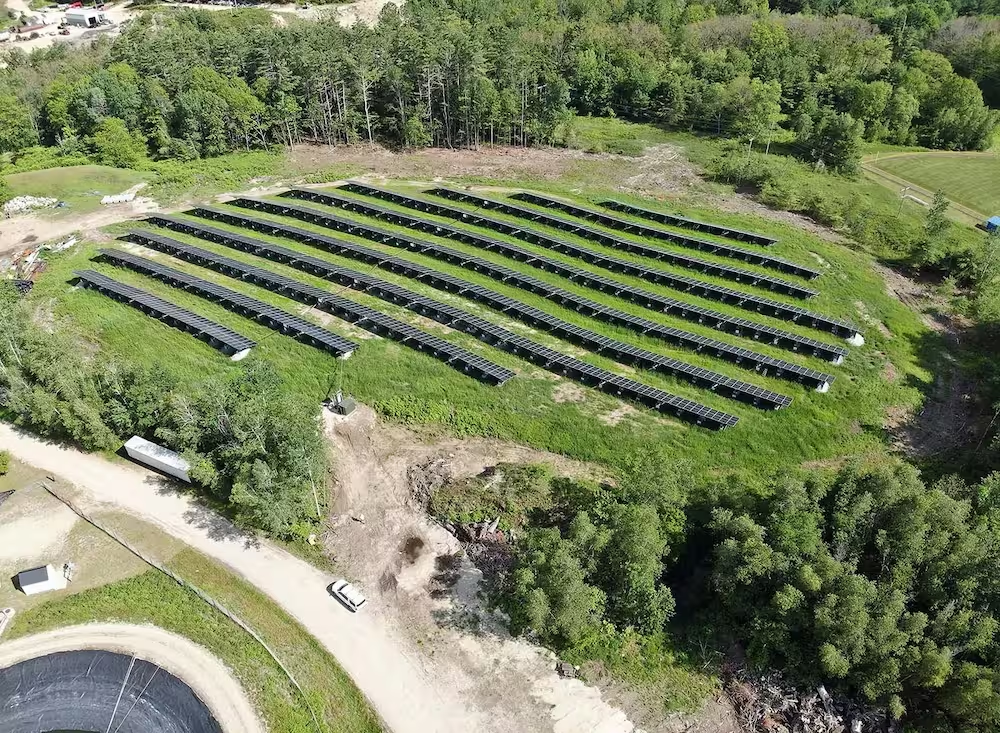
Communitary solar system built atop capped landfill on Norway, Maine, US
Renewables.org. As a non-profit organization, Renewables.org builds solar facilities in regions across Asia and Africa. Their projects focus on providing reliable and sustainable energy to underserved areas, improving quality of life, and fostering economic development.
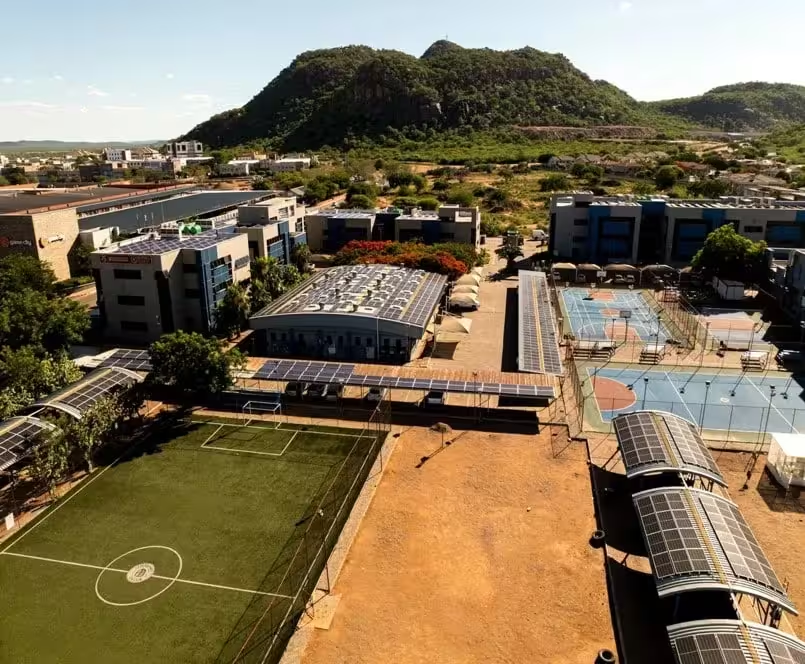
Communitary solar system built atop University in Gaborone, Botswana
Overalll, Dyme’s investments have helped compensate 200,000 lbs of CO2 emissions in 2024.
By investing in these funds, we achieve significant CO2 reductions and deliver tangible benefits to the communities involved. Our approach ensures that our investments are both environmentally and financially sustainable, driving positive change on a global scale. Through these initiatives, we help communities reduce energy costs and generate revenue while directly combating climate change.
