Selection Sunday drops a full bracket and a long list of host cities at once. The trick is turning that into a route you can actually follow without spending the whole week in airports and Ubers. This guide walks through how to plan multi-city March Madness trips step by step: routes, flights and trains, flexible hotels, and ways to keep both costs and emissions in check between games.
Before you book anything, confirm this year's official host sites and dates on NCAA.com. Early rounds and regionals move every year, and exact tipoff times publish closer to the tournament, so you want your itinerary to match the actual game windows and venues.
How to Map Your Multi-City Route for March Madness
Start with the first two locations you care about most—often a Thursday/Saturday or Friday/Sunday pod—and check the distance between them. If both cities are on the same rail corridor, a 2–4 hour train can be as fast or faster than a short flight once you factor in travel to the airport and security lines. If they are far apart, use one open-jaw flight in the middle of the trip and connect the rest by train or bus. This cuts the number of flights, which usually lowers both emissions and the number of times you risk delays.
Plan from tipoff times backward, not just from calendar dates. A 9:40 p.m. local start plus time to leave the arena can put you at midnight or later. In those cases, stay in the game city that night and travel the next morning instead of gambling on a late train or last flight out. Build at least 3–4 hours of buffer for any same-day city-to-city move on game days so a delayed train or bus does not turn into missing tipoff.
If you want to see games in four cities in one week, use two "anchor" cities and two "hop" cities. Spend 2–3 nights in each anchor city, where you can do laundry, rest, and walk or take a short transit ride to the arena. Use single nights in hop cities that are tied to specific matchups or sessions. This pace gives you time for actual meals and sleep instead of spending every free hour in security lines or on platforms.

How to Book Flights and Trains for a Multi-City March Madness Trip
Use multi-city search and open-jaw tickets instead of stacking one-ways. A route like "Home → City A, City B → Home" is often cheaper than two separate tickets and usually means fewer connections. Use a flight search tool with a price calendar and nearby airport filters to find flights at reasonable times instead of only chasing the lowest fare.
If two host cities are within a 4–5 hour train or bus ride, compare door-to-door time from one downtown to the other. On routes like Washington, D.C.–Philadelphia–New York–Boston, city-center stations frequently beat short flights once you include getting to and from each airport. Check specific routes and schedules on Amtrak's route page.
For tickets to or from the U.S. that you book at least seven days before departure, U.S. rules require airlines to either hold a reservation at the quoted fare for 24 hours without payment or allow you to cancel within 24 hours without a fee. In practice, that is easiest to use when you book directly with the airline, so read the conditions before you assume you have that window. When you use miles, look for award tickets that are refundable or airlines that waive redeposit fees if you have status.
Trains and buses can sell out around tournament weekends, especially on Friday afternoons and Sunday evenings. If your plan relies on a specific departure, book that seat as soon as you know your game schedule, and pick a departure that arrives at least a couple of hours before doors open.
Use Refundable Hotel Rates in Real Host Neighborhoods
Book flexible hotel rates near likely arenas as soon as host cities are confirmed, not just a few weeks before you go. For March Madness, many city-center hotels and properties near arenas raise prices or sell out quickly after Selection Sunday. Holding a few refundable reservations in the right neighborhoods gives you options when exact session times are released. Once you know which games you will attend, keep the stays that match those dates and cancel the rest before their deadline.
Aim for hotels within a 10–15 minute walk of the arena or a major transit hub. After a late double-overtime game, being able to walk back to your room can save you from long lines at the station and surge pricing on rideshare. Before you commit, plug the hotel address and the arena into a maps app and check the walking time and route; construction and road closures can add several minutes on event nights. For days with back-to-back sessions, on-site restaurants or a reliable café matter because they let you grab a meal between games without a long detour.
If you travel with a pet, check the property's size limits, nightly fees, and any room-type restrictions before you book. Some hotels cap dog weight at 25–50 pounds, limit pets to certain floors, or charge a flat cleaning fee per stay. Budget travelers should confirm whether breakfast is included and whether there is coin or card laundry on site. Both can cut daily costs on a seven-day, multi-city trip and save time compared with hunting for a laundromat between sessions.
Hotels Near Barclays Center for March Madness Games
If your route includes games at Barclays Center in Brooklyn, these hotels keep you within walking distance or a short subway ride, with clear policies and features that work well for multi-day tournament trips.

1 Hotel Brooklyn Bridge — LEED Gold & Waterfront Views
1 Hotel Brooklyn Bridge has 195 rooms and suites, LEED Gold certification, and heavy use of reclaimed materials, including wood from the old Domino Sugar Factory. Rooms use filtered water taps and glassware instead of single-use plastic water bottles, and bathrooms have larger refillable bath-product bottles rather than travel-size minis. The hotel has a rooftop pool and spa, plus restaurants and bars on site. The property is about 2 miles from Barclays Center, which is roughly a 35–40 minute walk; the subway ride is closer to 20 minutes, and trains from nearby stations go directly to Atlantic Avenue–Barclays. Dogs are allowed for an additional fee, so confirm the current amount and any size limits when you book.

Hilton Brooklyn New York — Walkable Location Near Flatbush Avenue
Less than a mile from the arena, Hilton Brooklyn New York places most guests within an 18–20 minute walk via Schermerhorn Street and Flatbush Avenue. The hotel has a fitness center, a small business center, meeting rooms, and a lobby bar and restaurant for pre- or postgame meals. Rooms typically include a mini-fridge. Hilton tracks energy, water, and waste usage through its LightStay platform and sets annual resource-reduction targets for each property. The hotel is pet-friendly, but fees and weight limits vary by stay, so check the specifics for your dates.

TownePlace Suites by Marriott New York Brooklyn — Suite Layouts with Kitchens
TownePlace Suites by Marriott New York Brooklyn works well for groups who want to keep food costs predictable. Suites include kitchenettes with a cooktop, microwave, and full-sized refrigerator, plus basic cookware and dishes. The hotel serves daily breakfast and has self-serve laundry machines. It is about a 10–15 minute walk from Barclays Center depending on your route.
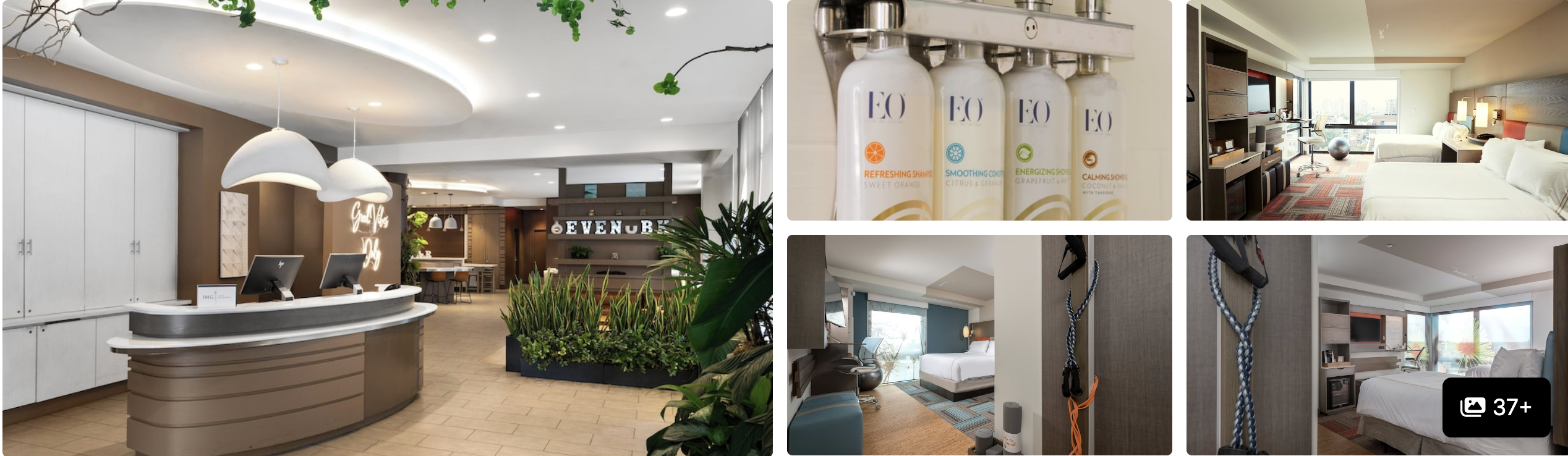
EVEN Hotel Brooklyn — In-Room Fitness Zones & Short Walk to the Arena
EVEN Hotel Brooklyn is geared toward travelers who want to keep a workout routine going during the tournament. Most rooms include an in-room fitness area with a yoga mat, yoga block, foam roller, ball, resistance band, and access to guided workout content. The hotel has a fitness center, a casual restaurant, and a small market with grab-and-go items. It is about a 10-minute walk (roughly 0.5 miles) from Barclays Center. EVEN participates in IHG's Green Engage program, which tracks each hotel's energy, water, waste, and carbon metrics and provides more than 200 "Green Solutions" that help properties set and meet specific sustainability targets.

Ace Hotel Brooklyn — Lively Lobby + Quick Transit Access
Just 0.5 miles from Barclays Center, Ace Hotel Brooklyn sits an 8–12 minute walk from the arena or one to two subway stops away. If you prefer transit, it is one to two stops away on several subway lines. The hotel has a restaurant, a coffee bar, and an active lobby space. Bathrooms use refillable bath-product bottles to reduce single-use plastic containers. The property allows dogs, typically up to a set weight limit, for a nightly fee; check the current fee and any breed or size restrictions when you reserve.
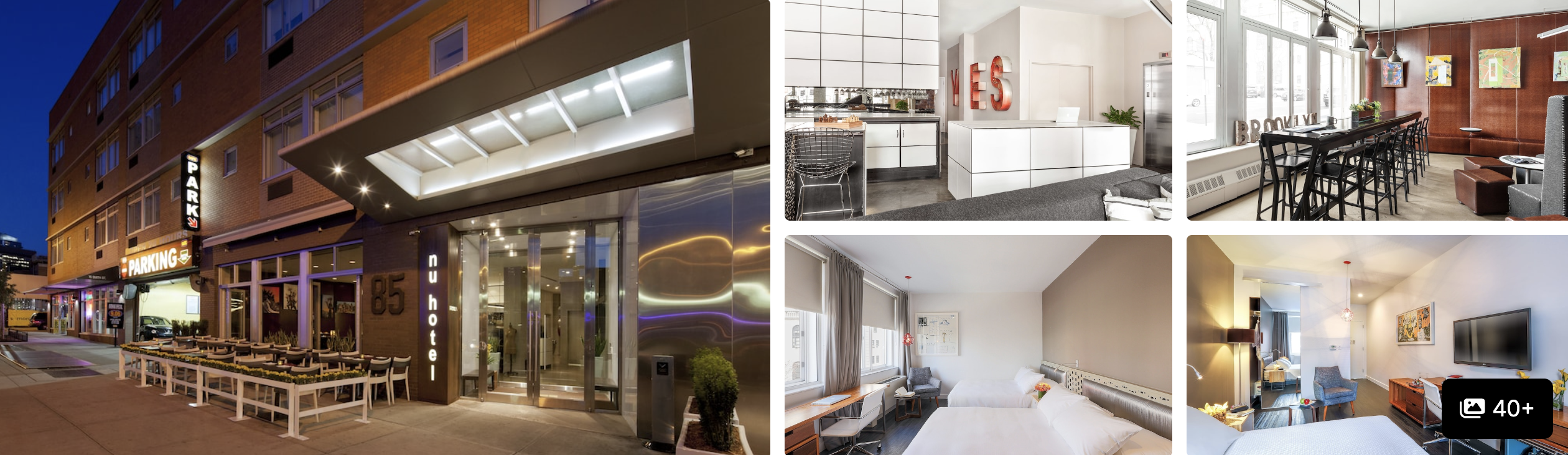
NU Hotel Brooklyn — Near Atlantic Avenue Transit Hub
NU Hotel Brooklyn is near Atlantic Avenue, within walking distance of several subway lines and roughly a 12–15 minute walk to Barclays Center. The hotel includes a mix of standard rooms and bunk-bed rooms. Stays usually include continental breakfast; check current hours, but service typically runs into late morning. NU Hotel often provides loaner bikes for guests. The property has a defined pet policy with size and fee details, so review those before you bring a dog or cat.
For more options across New York City, look at Dyme's guide to eco-focused hotels in NYC. Many of those hotels are near major subway hubs and work well if you want to combine games in Brooklyn with meetings or sightseeing elsewhere in the city.
March Madness Travel FAQs: Flights, Hotels, Routes, and Timing
Before you map out your route, here are the most common March Madness travel questions and what they mean for multi-city planning.
How should you organize flights and hotels across multiple March Madness cities?
Pick two anchor cities where you will spend most nights and add one- or two-night hops for specific sessions. Price an open-jaw flight that starts in your first city and returns from your last city, and hold refundable hotel reservations within a 10–15 minute walk of each arena or main station as soon as host cities are announced. Once exact tipoff times are published, cancel any stays that no longer match your schedule.
Should you book refundable hotels?
Yes. For a tournament where matchups and times can shift, paying a little more for flexible rates near the arena is usually cheaper than being stuck with nonrefundable rooms in the wrong neighborhood. Flexible rates also give you options if your preferred game moves to a different time slot or if you decide to follow a team to a different city.
What is the most efficient way to move between host cities?
Start by grouping cities that share strong train or bus connections and move in one direction through the bracket rather than bouncing back and forth. Use trains on routes under about 4–5 hours where station-to-station time matches or beats air travel, and keep a single open-jaw flight for longer jumps.
Are there realistic lower-carbon options between host cities?
Yes. On the East Coast and other busy corridors, using trains instead of planes for short hops can cut emissions per passenger while keeping travel times similar. Picking hotels within walking distance of arenas and packing in a carry-on also reduces your reliance on private cars and checked baggage on short-haul routes.
Which tools help most with logistics?
Use airline apps plus a flight-search tool that supports multi-city fares, book trains directly on the rail operator's site, use a trip-management app to track all reservations, and download local transit apps before you land in each city.
How Dyme Helps You Plan Multi-City March Madness Travel
Booking your stays through Dyme lets you follow the tournament city by city while supporting clean energy along the way. Each reservation helps fund solar projects for schools and hospitals at no extra cost to you. These installations cut emissions and lower electricity bills for the facilities over time, and you still access member rates and hotel options that fit a fast, multi-stop March Madness itinerary.
Become a Dyme member to support cleaner, low-impact travel and unlock exclusive prices.
Frequently asked questions
How should you organize flights and hotels across multiple March Madness cities?+
Pick two anchor cities where you will spend most nights and add one- or two-night hops for specific sessions. Price an open-jaw flight that starts in your first city and returns from your last city, and hold refundable hotel reservations within a 10–15 minute walk of each arena or main station as soon as host cities are announced. Once exact tipoff times are published, cancel any stays that no longer match your schedule.
Should you book refundable hotels?+
Yes. For a tournament where matchups and times can shift, paying a little more for flexible rates near the arena is usually cheaper than being stuck with nonrefundable rooms in the wrong neighborhood. Flexible rates also give you options if your preferred game moves to a different time slot or if you decide to follow a team to a different city.
What is the most efficient way to move between host cities?+
Start by grouping cities that share strong train or bus connections and move in one direction through the bracket rather than bouncing back and forth. Use trains on routes under about 4–5 hours where station-to-station time matches or beats air travel, and keep a single open-jaw flight for longer jumps.
Are there realistic lower-carbon options between host cities?+
Yes. On the East Coast and other busy corridors, using trains instead of planes for short hops can cut emissions per passenger while keeping travel times similar. Picking hotels within walking distance of arenas and packing in a carry-on also reduces your reliance on private cars and checked baggage on short-haul routes.
Which tools help most with logistics?+
Use airline apps plus a flight-search tool that supports multi-city fares, book trains directly on the rail operator's site, use a trip-management app to track all reservations, and download local transit apps before you land in each city.