London is one of the most visited cities in the world, and for most tourists, it's safe. The question of whether London is safe for tourists comes down to a few specific risks, mainly theft, and a handful of habits that reduce them.
In global safety rankings, London placed 13th in Berkshire Hathaway Travel Protection's top 15 safest cities for 2026, drawn from traveler surveys combined with data from Numbeo, GeoSure Global, and The Economist. GeoSure gives the city an overall safety score of 74 out of 100, with high marks for physical safety and LGBTQ+ safety but lower marks for theft. Violent crime is rare: London's homicide rate stands at 1.1 per 100,000 residents, the lowest since records began in 1997, compared to 2.8 in New York City, 1.6 in Milan, and 11.7 in Chicago.

Is London Safe at Night?
Night travel in London is fine in central areas, with the main caution being situational awareness rather than outright danger. The Night Tube is staffed at all times, and Transport for London has added British Transport Police officers dedicated to policing overnight services.
On foot, stick to well-lit, populated streets and avoid isolated alleys or quiet end-of-platform areas in Tube stations. Late-night services do attract people traveling home after drinking, which isn't dangerous but does call for extra awareness near platform edges. Traveling in groups after midnight is the practical move.
London Neighborhoods to Be Aware Of
No neighborhood in central London is off-limits for tourists, but some require more care than others. Areas with higher theft and street crime reports include parts of Elephant and Castle, Brixton, Peckham, and the stretch between Bethnal Green and Cambridge Heath. All of these have improved in recent years with redevelopment, but the stats still run higher than the central tourist zones.
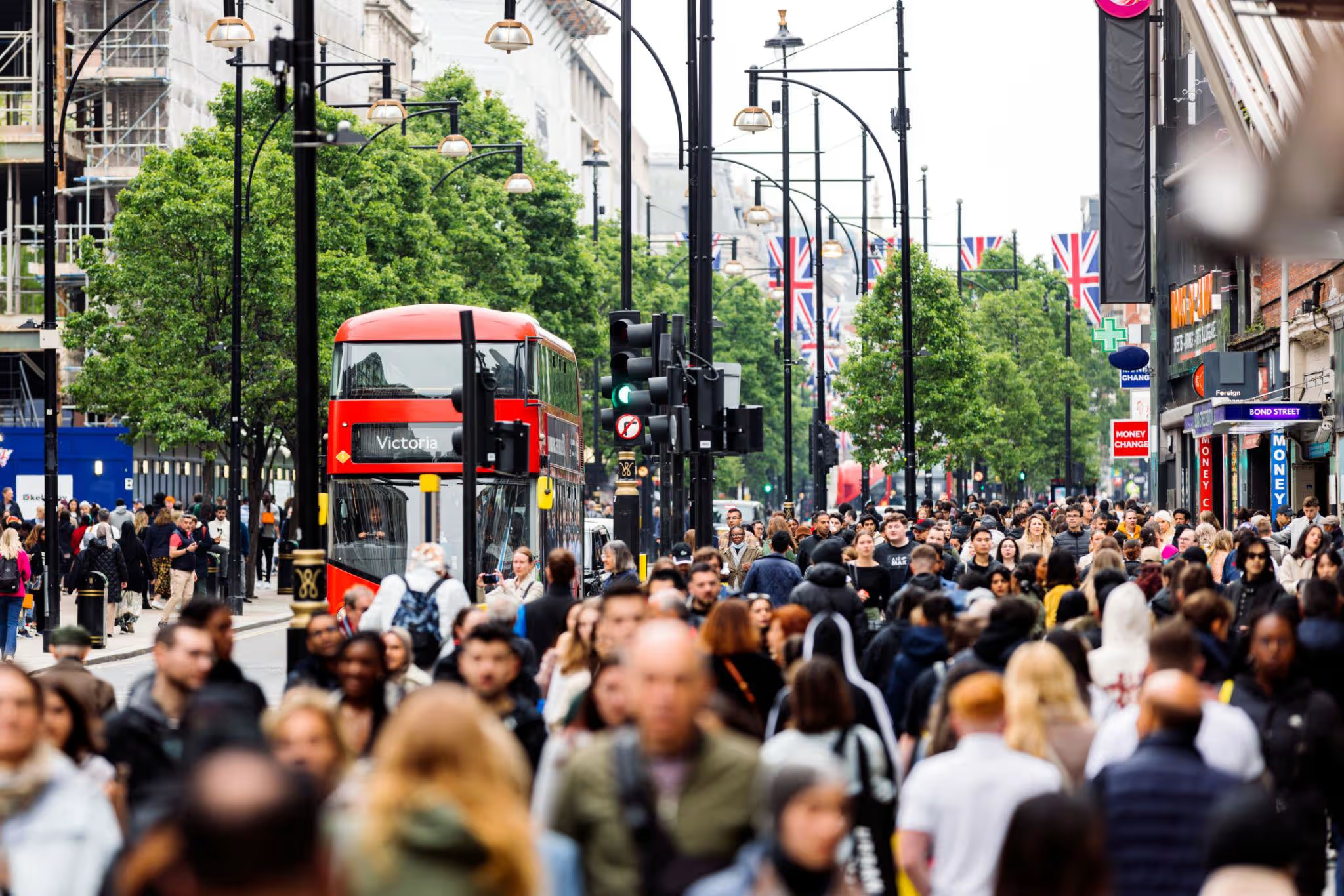
High tourist-density zones are where most petty crime concentrates, since that's where pickpockets operate. Oxford Street during peak hours, crowded Tube platforms on the Central Line on Saturday evenings, and busy market areas are the environments where you're most likely to have something taken. Being in a "safe" tourist area doesn't mean your phone is safe on the table.
If you're looking for a well-connected, walkable base in central London, our Covent Garden hotels guide covers the best options in one of the city's safest neighborhoods.
Pickpocketing and Phone Theft in London
Theft, not violence, is the primary safety concern for tourists in London. The city recorded 71,391 mobile phone theft and robbery offences in 2025, down 12.3% from 81,365 the year before, representing around 10,000 fewer victims in a single year thanks to targeted Met Police enforcement. That still works out to roughly 195 phone theft incidents per day, the majority in crowded public settings. Canada's travel advisory specifically flags cellphone theft as common in certain London tourist areas.
The most effective precautions:
- Carry bags across your chest or in front of you, never on your back in crowds
- Keep your phone in an inside pocket or zipped compartment, not a front jeans pocket
- Loop bag straps around your leg when sitting at a pub or café
- Don't leave anything on a table or the back of a chair
- Avoid having expensive devices visibly out on quiet or poorly lit streets at night
Is the London Underground Safe?
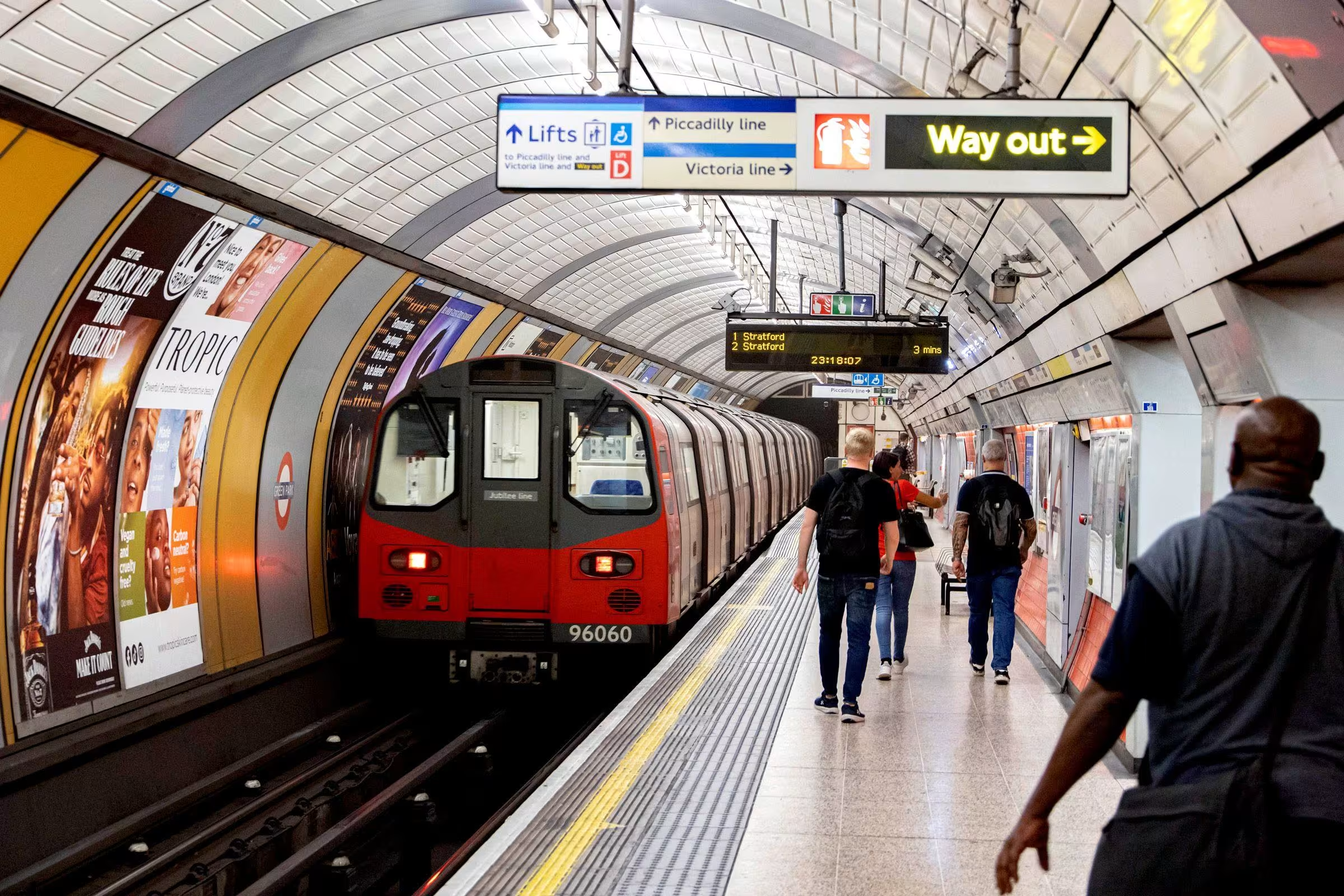
The Tube is safe for tourists by any reasonable standard. Transport hubs across London are monitored with CCTV and security personnel, and most crime that does occur involves petty theft rather than violence. The risk goes up slightly late at night on quieter lines and at end-of-platform areas, so stick to the middle of busy platforms and stay in carriages with other passengers.
The Night Tube (running on Fridays and Saturdays) is staffed and policed for overnight safety. If something feels wrong, flag down a staff member or use the emergency help points at every station.
London Emergency Numbers for Tourists
The two emergency numbers in the UK are 999 and 112. Both connect you to the same services: police, fire, ambulance, and coastguard. Both are free to dial from any phone, including a locked mobile with no credit or SIM card. When the operator answers, you'll be asked: "Emergency, which service?" State what you need clearly.
NUMBER USE 999 UK's primary emergency number: police, fire, ambulance, coastguard 112 Pan-european equivalent to 999; works identically in the UK 101 Non-emergency polica (report a crime that's already happened) 111 Non-urgent medical advice (NHS helpline, available 24/7)London Safety Tips for Tourists
Most of these come down to not making yourself an easy target:
- Walk with purpose. Confused, distracted tourists are the primary targets for pickpockets and scammers
- Blend in where possible. London's multicultural character makes this easier than most cities
- Ask your hotel concierge. For specific street-level guidance in your neighborhood, that's faster and more accurate than any app
- Don't stop suddenly on busy sidewalks to check maps. Step aside, use a shop window as cover, or use earbuds so the phone stays pocketed
- Use ATMs inside bank branches or well-lit, busy spots. Look around before entering your PIN
- Only use licensed transport. Black cabs and Uber/minicab services booked through an app are safe. Never accept unlicensed "private hire" offers from individuals on the street
For more practical logistics on navigating European cities, our Amsterdam travel tips guide covers similar ground on payments, transit, and common tourist mistakes.
Common Questions About London Safety
Is London safe for solo female travelers?
Yes, with the same precautions that apply to any large city. Central areas, major Tube lines, and the Night Tube all have consistent staffing and surveillance. Stay in well-lit areas after midnight, avoid isolated streets, and keep valuables out of sight.
Should I be worried about terrorism in London?
The UK government maintains a terrorism threat level for London (check GOV.UK before travel), but the day-to-day risk for tourists is low. Demonstrations do occur near tourist areas like Hyde Park, Oxford Street, and Trafalgar Square, so check local news for planned events on your travel dates.
What should I do if I'm pickpocketed?
Call 101 (non-emergency police line) to report the theft. If your phone was stolen, remotely lock it using Find My (iPhone) or Google's Find My Device immediately. Report card theft to your bank using the number on the back of the card.
Book through Dyme, travel that goes further
Every hotel booking on Dyme funds solar installations for schools and hospitals, cutting their electricity costs for decades. Whether you're planning a city break in central London or a longer UK trip, Dyme has hotel options at competitive rates.
Frequently asked questions
Is London Safe at Night?+
Night travel in London is fine in central areas, with the main caution being situational awareness rather than outright danger. The Night Tube is staffed at all times, and Transport for London has added British Transport Police officers dedicated to policing overnight services.On foot, stick to well-lit, populated streets and avoid isolated alleys or quiet end-of-platform areas in Tube stations. Late-night services do attract people traveling home after drinking, which isn't dangerous but does call for extra awareness near platform edges. Traveling in groups after midnight is the practical mov
Is the London Underground Safe?+
The Tube is safe for tourists by any reasonable standard. Transport hubs across London are monitored with CCTV and security personnel, and most crime that does occur involves petty theft rather than violence. The risk goes up slightly late at night on quieter lines and at end-of-platform areas, so stick to the middle of busy platforms and stay in carriages with other passengers.The Night Tube (running on Fridays and Saturdays) is staffed and policed for overnight safety. If something feels wrong, flag down a staff member or use the emergency help points at every station.