London is one of the most visited cities in the world, which means there's no shortage of advice — most of it aimed at getting you to buy something or go somewhere crowded. This guide focuses on practical information that makes a real difference: how to get around, what costs more than it should, what's free, and what most first-time visitors get wrong.
Getting Around London: Tube, Bus, and Contactless Cards
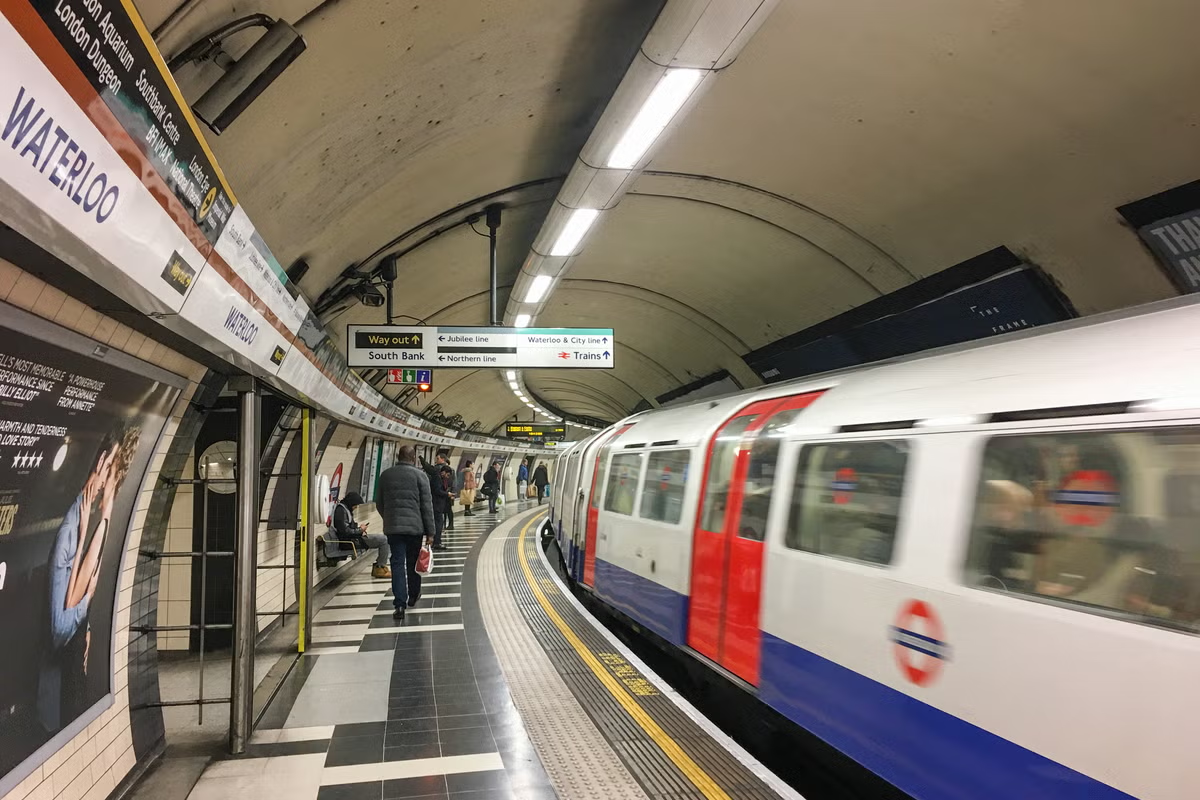
The tube is the backbone of getting around the city. It's fast, runs frequently, and once you understand the zone system it's straightforward to navigate. The single most important thing to know before you travel: pay with a contactless card or your phone rather than buying paper tickets. Contactless automatically caps your daily spend at the same rate as a day Travelcard, so you never overpay regardless of how many journeys you take. Paper tickets cost significantly more for the same journey.
One thing that catches tourists out: the daily cap only applies if you use the same card or device for every journey that day. If you tap in with your phone and tap out with your physical card, each counts separately and you lose the cap. Pick one and stick to it.
If you don't have a contactless card that works overseas without fees, pick up an Oyster card at any tube station when you arrive. It works identically to contactless, but note that the £7 card fee is not refundable — only any remaining balance comes back to you when you return it. Children under 11 travel free when accompanied by a fare-paying adult on the tube, bus, DLR, Overground, and Elizabeth line.
A few things worth knowing about the tube:
- Rush hour runs roughly 6:30–9:30am and 4–7pm. Trains and platforms are genuinely packed during these windows. If your schedule is flexible, avoid them.
- Stand on the right on escalators. Walking on the left is unwritten but firmly enforced by the look on every commuter's face.
- The tube map distorts distances. Many central London stations are closer on foot than they appear. Covent Garden to Leicester Square is a 5-minute walk. Check Citymapper before automatically taking the tube — it shows walking time alongside transit options so you can make a quick call.
- Tap out at the end of every journey. If you forget, TfL charges the maximum fare for that zone. It's an easy mistake and an expensive one.
- Covent Garden station has 193 steps and notoriously long lift queues. Most locals walk to Leicester Square station instead — it's about 5 minutes on foot.
The Elizabeth line is worth knowing about if you're arriving at Heathrow or travelling between Paddington and central or east London. It's newer, faster, and runs on larger trains than the Piccadilly line — though central sections can be crowded during peak hours.
Buses are slower but a good option for daytime travel when you want to see the city rather than tunnel through it. The same contactless or Oyster card works on all buses. Cash is not accepted on London buses and hasn't been since 2014.
For planning any journey by tube, bus, or rail, TfL's Journey Planner is the most reliable tool. Citymapper is worth downloading before you arrive — it handles walking, cycling, and bus routes better than most alternatives and shows real-time disruptions.
Getting Into London From the Airport
From Heathrow: The Piccadilly line costs around £5–6 with Oyster or contactless and runs every few minutes, but the journey to central London takes 45–60 minutes with many stops. The Elizabeth line is faster to Paddington (around 25 minutes) but costs significantly more — around £13. The Heathrow Express is the quickest option at 15 minutes to Paddington, but costs £25–37 unless booked in advance online. One practical note: early morning arrivals can mean 45–90 minutes in immigration queues. Use e-gates if your passport is eligible, and don't plan tight onward connections on arrival day.
From Gatwick: The Gatwick Express runs to Victoria in 30 minutes and costs around £20. Thameslink trains take slightly longer but cost significantly less and run to multiple central London stations including Farringdon, City Thameslink, and St Pancras — often more useful depending on where you're staying.
From Stansted: The Stansted Express runs to Liverpool Street in around 50 minutes. Book in advance online for lower fares.
From Luton: Trains run to St Pancras in around 45 minutes. The old shuttle bus between the terminal and Luton Airport Parkway station was replaced in 2023 by the Luton DART, an automated rail link. Factor in a few extra minutes for the connection.
How Many Days Do You Need to Visit London?
Three to four days covers the main landmarks and lets you explore a couple of neighborhoods beyond the tourist center. A week gives you time to slow down, go further out into areas like Notting Hill, Hackney, or Greenwich, and take a day trip to Oxford, Bath, or Cambridge.
London is large and travel times between areas add up quickly. Group your days by neighborhood rather than crossing the city multiple times. A day in Westminster — Big Ben, Westminster Abbey, Tate Britain, the Houses of Parliament — is a full day. The East End, covering Spitalfields Market, Brick Lane, and Shoreditch, is another. Treating them separately rather than combining them saves significant time in transit.
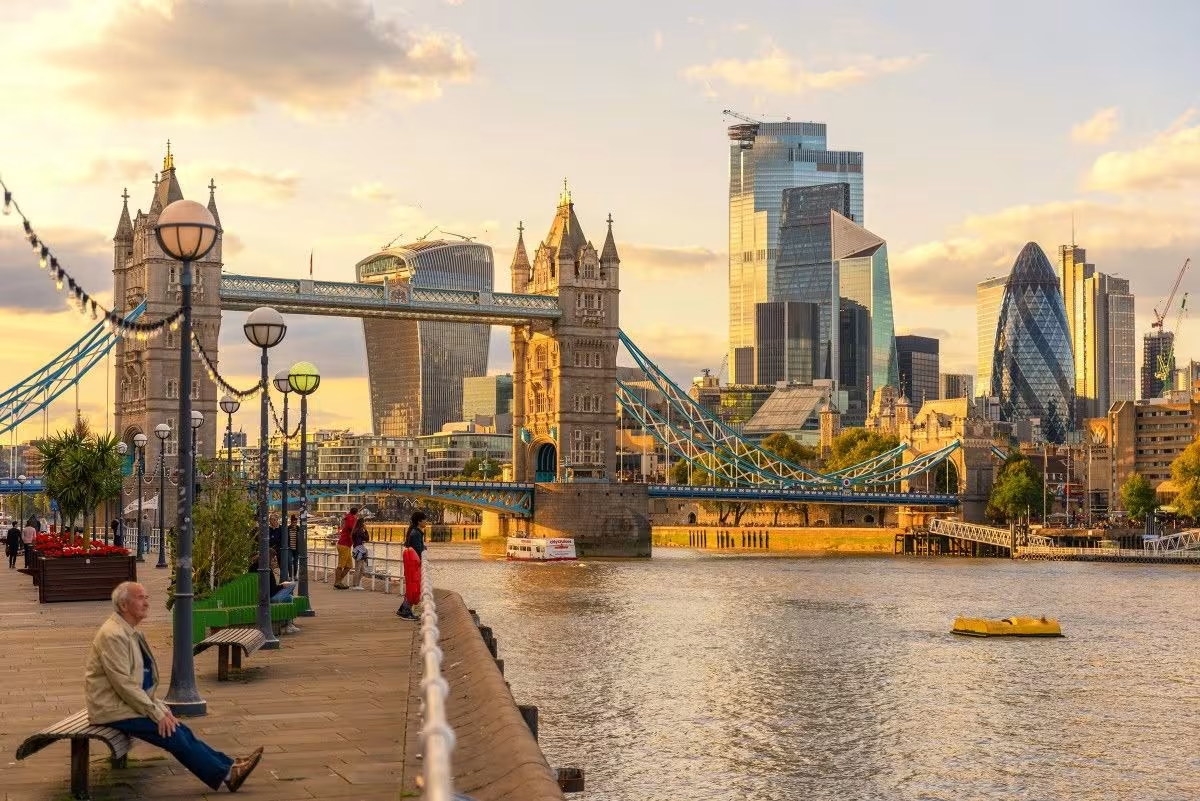
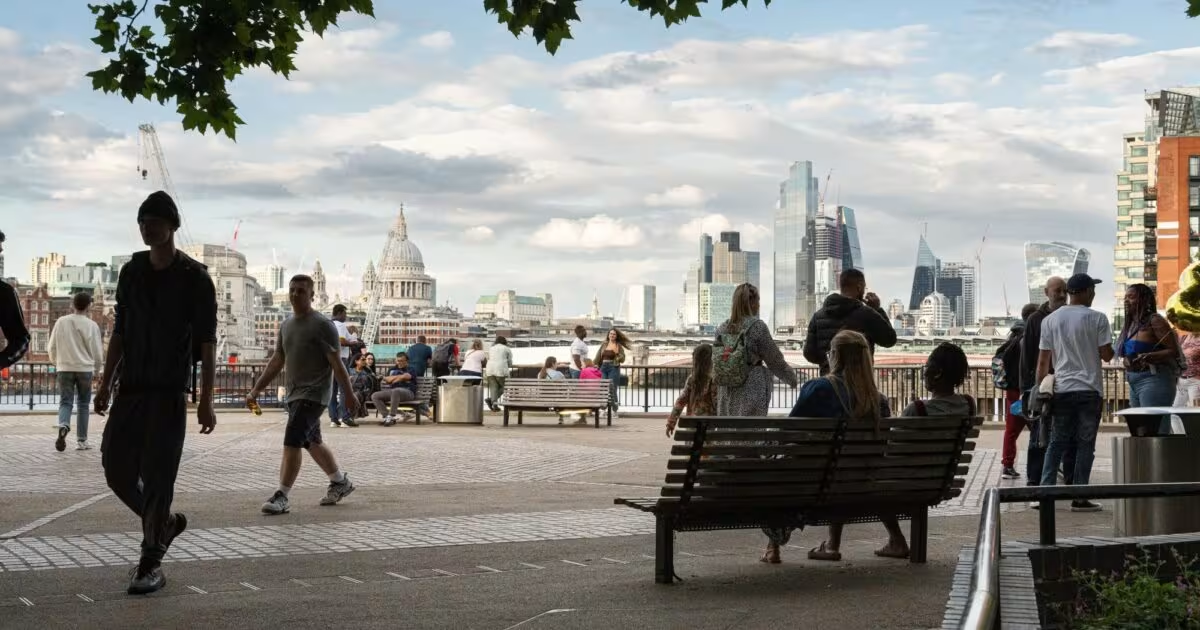
One of the best half-days in London costs nothing: walk the South Bank from Westminster Bridge to Tower Bridge. The route passes the Tate Modern, Borough Market, Shakespeare's Globe, and the area around St Paul's — more interesting per mile than most organised tours.
Free Things to Do in London Worth Your Time
London has some of the best free museums in the world:
- British Museum — one of the largest collections of human history anywhere, including the Rosetta Stone and the Elgin Marbles. Go at 8:45am when it opens or after 4pm — midday is extremely crowded.
- National Gallery — major collection of European paintings in Trafalgar Square
- Tate Modern — contemporary and modern art on the South Bank; the building itself, a converted power station, is worth seeing
- Natural History Museum — particularly good with children; the Victorian architecture alone is worth the visit
- Victoria and Albert Museum — decorative arts and design across five floors
- National Portrait Gallery — recently reopened after a major renovation; strong permanent collection
- Science Museum — good for a rainy afternoon
All permanent collections are free, though some temporary exhibitions charge admission.
What to Book in Advance in London
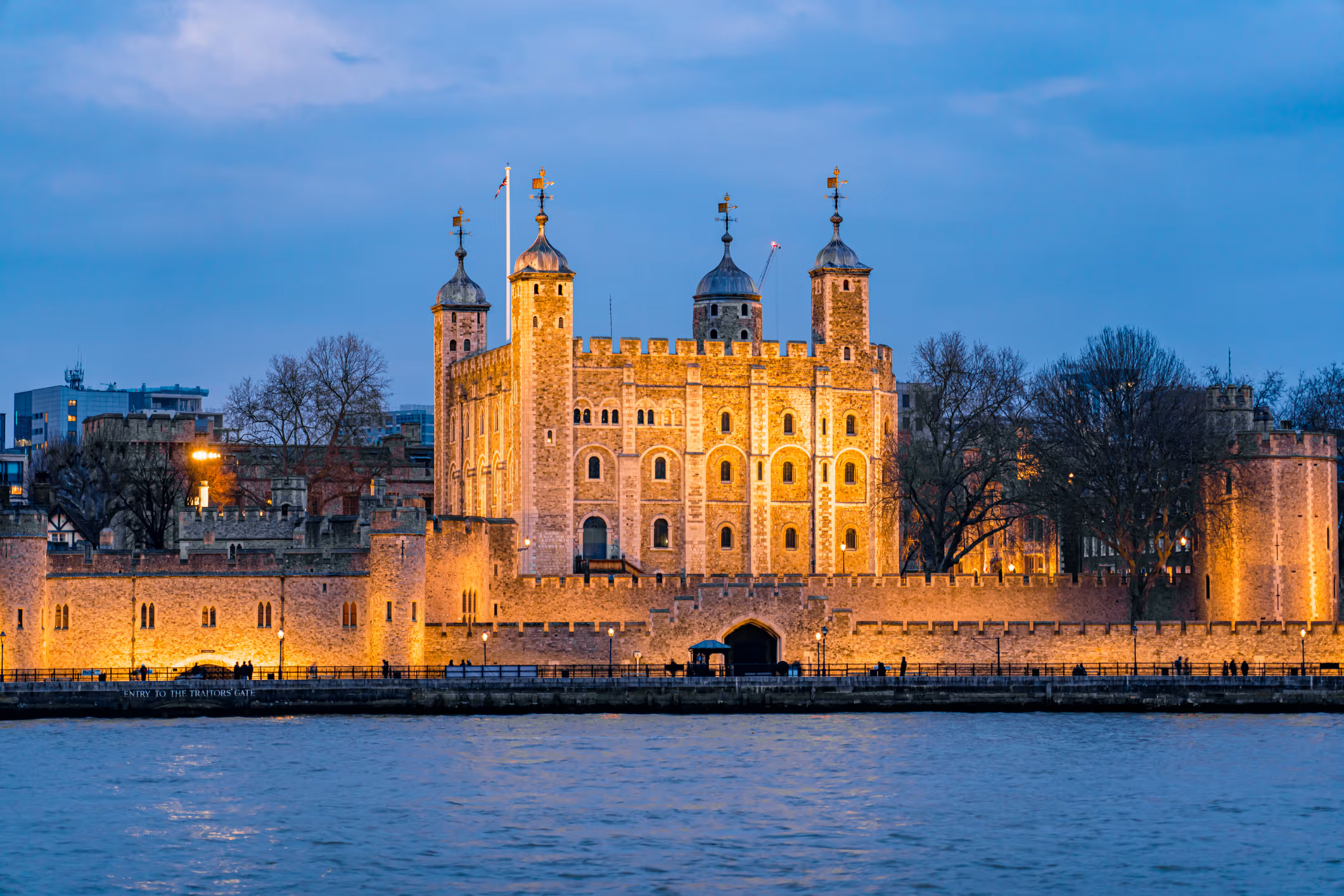
Several attractions have timed entry and sell out well ahead, especially in summer:
- Tower of London — book online; walk-up queues are long and prices are higher at the door
- Warner Bros. Studio Tour (Harry Potter) — not central London, but popular enough that it sells out weeks in advance
- Buckingham Palace State Rooms — only open in summer; book ahead
- West End shows — last-minute tickets exist but good seats for popular shows go fast. TKTS in Leicester Square sells same-day discounted tickets for many productions.
Money and Tipping in London: What to Expect
London is expensive. Budget at least £15–20 for a sit-down lunch, £25–50 for a mid-range dinner, and £6–8 for a pint in most central neighborhoods. Hotels in central London average £150–250 per night for a mid-range property.
Tipping in restaurants is customary but not required in the way it is in the US. Around 10–12.5% is standard; many restaurants add a service charge automatically, so check your bill before adding more. In pubs, order at the bar, say the beer name first, and don't wait for table service — it doesn't exist in most traditional pubs. Tipping at the bar is not expected.
VAT (20%) is included in all displayed prices, so no surprises at the register.
Common London Travel Mistakes to Avoid
Underestimating distances. The tube map makes everything look close. A 30-minute journey each way between two attractions burns an hour of your day before you've done anything. Check Citymapper or Google Maps for actual travel times before planning your day.
Using different devices for tube journeys. Tap in with your phone, tap out with your physical card, and you lose the daily fare cap. Use the same card or device every time.
Buying paper tickets. Contactless or Oyster is cheaper, faster, and already caps your daily spend automatically.
Looking left before crossing the road. Traffic comes from the right in the UK. Many crossings have "Look Right" painted on the ground for exactly this reason.
Not going beyond Zone 1. Neighborhoods like Brixton, Hackney, Peckham, and Dalston have better food, more interesting street life, and significantly lower prices than the tourist center. They're all accessible by tube or bus in under 30 minutes from central London.
Assuming the tube is always faster than walking. In central London, many tube journeys between adjacent stations are faster on foot once you factor in waiting, stairs, and platform changes. The walk from Embankment to Waterloo along the South Bank is 15 minutes and a much better way to see the city.
Forgetting that Sunday hours are shorter. Most shops on Oxford Street and in central London trade reduced hours on Sundays — typically noon to 6pm. If shopping is on the agenda, plan accordingly.
London Weather and What to Pack
London weather is unpredictable year-round. Rain is possible in any month and rarely gives much warning. A compact waterproof jacket is more practical than an umbrella on crowded streets.
The city is most crowded and most expensive in July and August. May, June, and September offer a reasonable balance of decent weather and smaller crowds. Winter visits (November through February) mean shorter days and cold, but also lower hotel prices, quieter attractions, and Christmas markets from late November.
Where to Stay in London
The neighborhood you choose shapes your visit more than the hotel itself. Central options like Covent Garden, Soho, and Marylebone put you within walking distance of most major sights. South Bank works well for Tate Modern, the Globe Theatre, and Borough Market. For a more local feel at lower prices, Shoreditch, Islington, and Brixton are all well-connected by tube or bus.
For a curated list of well-reviewed London hotels, Dyme's guide to sustainable business hotels in London covers options across the city at a range of price points. For restaurants, events, and what's on during your visit, Time Out London has reliable listings updated weekly.
Frequently asked questions
How Many Days Do You Need to Visit London?+
Three to four days covers the main landmarks and lets you explore a couple of neighborhoods beyond the tourist center. A week gives you time to slow down, go further out into areas like Notting Hill, Hackney, or Greenwich, and take a day trip to Oxford, Bath, or Cambridge.London is large and travel times between areas add up quickly. Group your days by neighborhood rather than crossing the city multiple times. A day in Westminster — Big Ben, Westminster Abbey, Tate Britain, the Houses of Parliament — is a full day. The East End, covering Spitalfields Market, Brick Lane, and Shoreditch, is anot