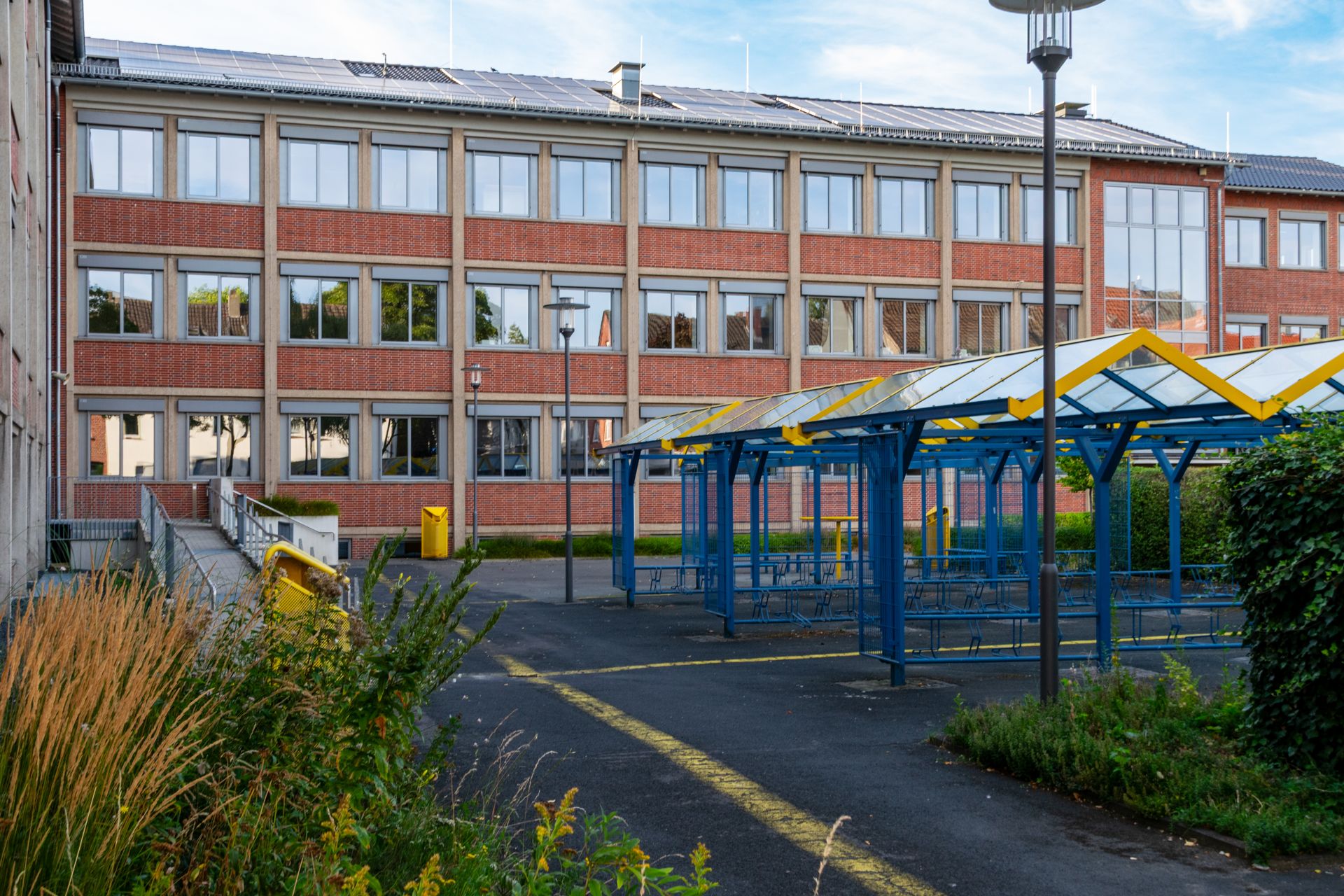
A solar array on a hospital roof does three different jobs for the people around it, and they run on three different clocks. It cuts the hospital's electricity bill every month for twenty-five years. It puts a construction crew to work for a season. And it displaces power from a grid that, in the places we build, is still mostly coal. Here is how each of those actually reaches a community, using our own program as the example.
The program: 40 MW for schools and hospitals
In October 2025 we signed a framework agreement with Talf Solar for up to 40 megawatts of new solar, built on education, medical and social infrastructure sites. Talf builds and operates the plants. Dyme provides the money that gets each new project built, rather than buying credits from one that already exists, and that money comes from a share of the margin on members' travel bookings. Of that, 5.5 MW is built and generating today and a further 20 MW is contracted.
The institutions buy the power under fixed-price long-term contracts. That detail matters more than it sounds, and it is where the community benefit starts.
The bill: the benefit that lasts longest
A school that generates its own electricity buys less from the grid, and a fixed-price contract means its cost per unit stays flat while grid tariffs keep rising. The gap between those two lines widens every year, which is why the saving grows over the life of the plant rather than shrinking.
Across the full 40 MW program, the projected saving is about $150 million in electricity bills over 25 years. Our project criteria target a cut of more than 30 percent in a site's power costs. For a hospital, the money that stops going to a utility goes to nurses, equipment and patient care instead. For a school, it goes to teachers. That is not a rounding error in a budget that was already tight; it is often the difference between a position being filled and not.
One honest note. That $150 million is a projection from tariffs and expected generation, and the sites that are already operating are the ones where it is becoming a measurement. We say which is which.
Jobs: a season of work, then a smaller team for decades
Building a solar plant takes a crowd. Running one does not. Our operating 5.5 MW represents roughly 135 job-years across its life, and most of those hours were worked during construction, by local crews doing site preparation, mounting and electrical work.
That shape is the same everywhere. IRENA counted 16.6 million people working in renewable energy worldwide in 2024, the most ever recorded, with solar the largest part at 7.2 million. India, where our projects are, accounts for about 1.28 million of those jobs. The honest way to describe the local effect is a burst of construction employment, followed by a small permanent operations team, followed by the bill savings that fund other people's jobs for the next quarter century.
Emissions: why the grid matters as much as the panels
A solar plant avoids emissions in proportion to what it pushes off the grid. The same array does far more good on a coal-heavy grid than on a clean one, which is why we build where we do.
The arithmetic is short. Our operating capacity produces about 7,800 megawatt-hours a year. At the Indian grid's combined margin of 0.757 tonnes of carbon per megawatt-hour, that is about 5,900 tonnes avoided every year, and the full 40 MW program is expected to avoid roughly 745,000 tonnes over 25 years. The full working is published here, including the assumptions.
This number is designed to fall over time. As the grid itself gets cleaner, each solar unit displaces a little less carbon. That is the system working.
How the three fit together
Put the clocks side by side. The construction jobs arrive first and end within a season. The avoided emissions start the day the plant is switched on and slowly decline as the grid improves. The bill saving starts the same day, and grows.
So when someone asks what a solar project does for a community, the honest answer is that it depends which year you ask. In year one it is mostly jobs. By year ten it is mostly a hospital that has had a decade of cheaper power and spent the difference on people. That second thing is the one we are building for, and it is the reason the program is written around schools and hospitals rather than the cheapest available roof.
FAQ: solar projects and communities
How does a solar project lower a school's electricity bill?+
The school generates part of its own power and buys it under a fixed-price contract, so it buys less from the grid and its unit cost stays flat while grid tariffs rise. Our project criteria target a cut of more than 30 percent in a site's power costs, and the saving widens over the life of the plant.
How many jobs does a solar project create?+
Most of the work is in construction, which lasts a season. Our operating 5.5 MW represents roughly 135 job-years across its life. A small permanent team runs the plant afterward, and the bill savings fund other jobs at the site for decades.
How much carbon does the program avoid?+
The operating 5.5 MW avoids about 5,900 tonnes a year at the Indian grid's 0.757 tonnes per megawatt-hour. The full 40 MW program is expected to avoid roughly 745,000 tonnes over 25 years. The figure per unit falls as the grid gets cleaner, which is the intended outcome.
Why build in India rather than closer to home?+
Because avoided emissions depend on what the solar displaces, and India's grid is still heavily coal-based, so the same array does more good there. The sites are also institutions with tight budgets, where a lower power bill has an immediate effect on staffing and services.
Is the $150 million saving a measurement or a forecast?+
A forecast, built from tariffs and expected generation over 25 years across the full 40 MW. The sites already operating are where it is becoming a measurement, and we say which figures are which.