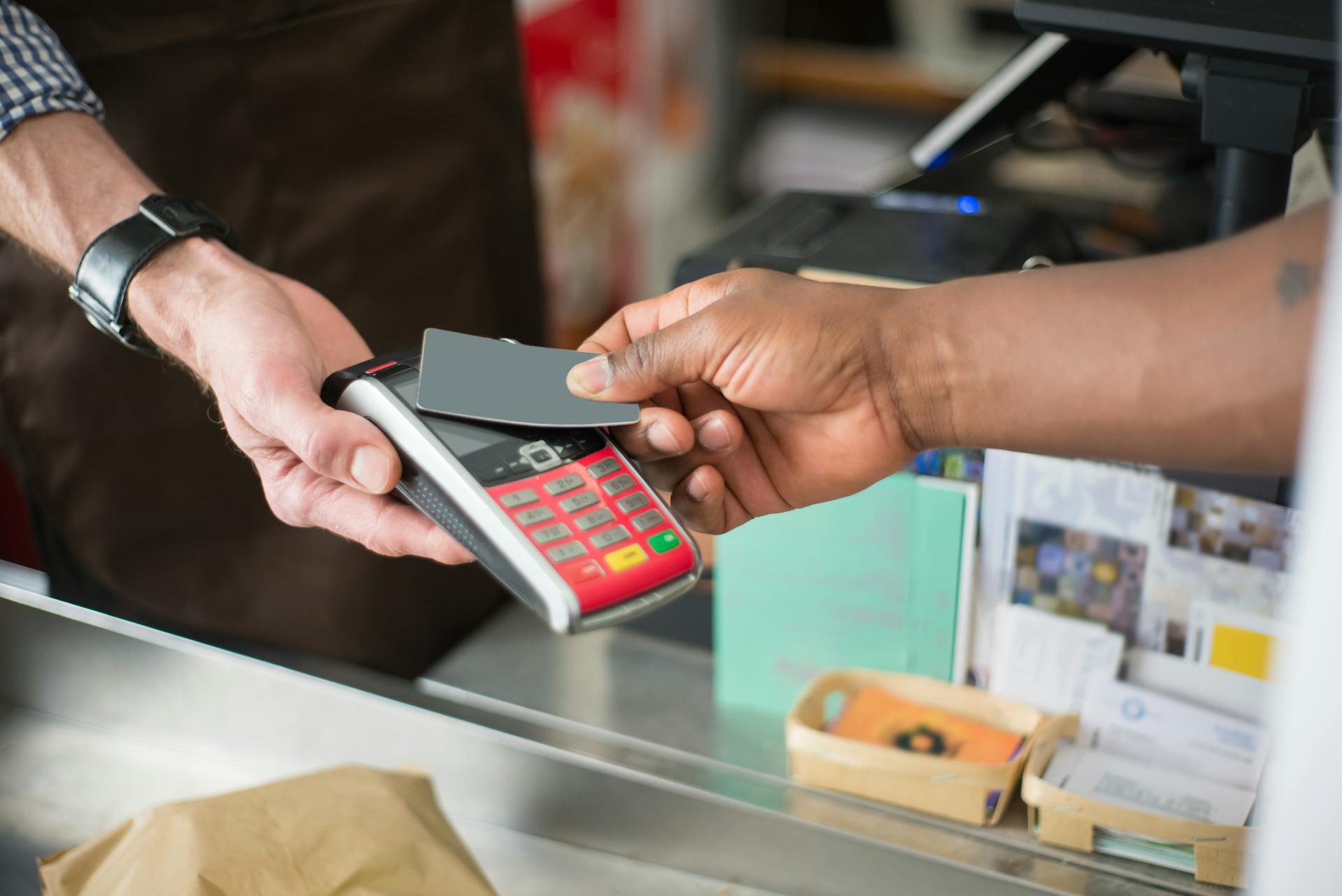
A debit card that promises "1% of every purchase" to solar can give away more than the fintech behind it earns. In the Federal Reserve's 2024 debit interchange data, the average exempt purchase was $42.27 and earned the issuing bank $0.51. A 1% pledge on it costs about $0.42, or about 83% of the bank's fee, and a fintech typically receives only part of that fee from its bank.
On purchases covered by the Fed's fee standard, the average was $48.95 and the fee $0.23. The same pledge costs about $0.49 there, more than twice the fee.
So do the arithmetic before anyone writes the marketing line: where the money comes from, how the amount is set, what it pays for and how you'll show the result.
Four places the money can come from
| Source | Who pays | What sets the amount | What moves it |
|---|---|---|---|
| A share of interchange | You, from your program share of the bank's fee | Your rate times the interchange you receive | Exempt or covered issuer, card mix, your program agreement |
| A share of merchant or supplier commission | You, from earned commission | Your rate times the commission | Commission rates, refunds and cancellations |
| A fixed amount per transaction, paid from your revenue | You, from your revenue | Number of transactions times the amount | Whether your margin covers it on small purchases |
| Customer round-ups | The customer | What customers opt into | How many opt in, and how often you sweep |
Exempt transactions in the Fed's data include those from issuers with under $10 billion in assets, and they earned 1.21% of the purchase on average. Covered transactions earned 0.47%. The same promise costs a different share of revenue depending on which bank issues your card.
That's the case for setting the rule on what you earn. "10% of net interchange" or "10% of our commission" can always be paid, because it's a slice of money you've received. A rule set on the customer's spend, such as 1% of every purchase, can cost more than the transaction brings in.
Run the earnings-based rule through the same data and the numbers get small fast. At the bank level, 10% of the average exempt fee is about $0.05 a purchase, and 10% of the average covered fee is about $0.02. And that's 10% of the bank's whole fee; 10% of your share is less. So model the program on your actual interchange receipts.
A share of commission behaves the same way. It moves with what you earn on each sale, so a small booking funds a little and a large one funds more, and the rule never asks you to pay out money you didn't receive. A fixed amount per transaction is the opposite: easy to explain to customers, and hardest on your margin when purchases are small.
Round-ups work differently because the money comes from the customer. This guide doesn't cover them in detail.
Funding new solar projects or buying renewable energy certificates (RECs)
Money from any of those sources can go two ways. It can buy renewable energy certificates, or it can pay toward building new solar, and the two produce different numbers.
The EPA's page on renewable energy certificates says a certificate is issued "when one megawatt-hour (MWh) of electricity is generated and delivered to the electricity grid from a renewable energy resource." Each one carries data such as the project name, its location, its nameplate capacity, its build date and a unique ID.
| Buying certificates | Funding a new project | |
|---|---|---|
| What you pay for | Certificates for MWh already generated | Part of the cost of building new capacity |
| What you can count | MWh of renewable generation, one per certificate | MW funded, MWh the project generates, emissions avoided |
| When generation counts | Before you buy them | From the date the project is energized |
Certificates don't have funding's timing gap. Money collected this quarter may go to a project that isn't generating yet, so report built and planned capacity as two numbers.
Business buyers will ask for the documents behind whichever you choose. Our guide to how employers evaluate transaction-funded climate programs lists the six they ask a vendor for.
What to report: capacity, generation and emissions avoided
The International Capital Market Association (ICMA) handbook on impact reporting names three core indicators for renewable energy: capacity added in MW, annual generation in MWh and annual emissions avoided in metric tons of CO2 equivalent. It asks for "links to the sources of such data and methods of calculation" alongside them. A platform's impact report can start from those three and add the detail that lets a reader check them.
| Field | What to record |
|---|---|
| Period | The dates the report covers |
| Recipient | Legal name and type: developer, fund or nonprofit |
| Project | Name, location and technology |
| Capacity | MW funded, with built and planned shown separately |
| Energized date | When the project began delivering power, or the expected date |
| Generation | MWh for the period, and whether it's metered or estimated |
| Emissions avoided | Metric tons of CO2 equivalent, with the grid factor used and its source |
| Certificates | Whether any were bought or issued, and who holds them |
| Method and review | How each figure was calculated, and who checked it |
The generation row needs a source too. Output per MW depends on where the panels are, so use each project's own estimate until it has metered data. For a sense of scale, Dyme's results page reports 7,807 MWh a year against 5.5 MW built, about 1,420 MWh per MW.
The emissions row is where readers check your math. Avoided emissions are generation times a grid factor, so publish the factor and its source next to the result, and anyone can redo it.
The same fields give you the line for your app. "Purchases on our card funded 2 MW of solar this year, 1.5 MW of it built" (example figures) comes straight from the capacity row, and it's a sentence a reader can check against the report.
Decisions to make before launching a funding program
- The source. Interchange, commission, a fixed amount per transaction or customer round-ups.
- The base. Gross or net of refunds and cancellations, and whether it's your receipts or the customer's spend.
- The rate. Tested against your lowest-earning transactions as well as the average, so the promise holds on a small purchase on a covered card.
- The instrument. New projects, certificates, or both, reported separately.
- The payout schedule. How often accrued money leaves your account, and where it's held until then.
- The grid factor. Which published source you'll use, so the number doesn't change method from year to year.
- The reviewer. Who checks the figures before they're published.
How Dyme routes travel commission to solar
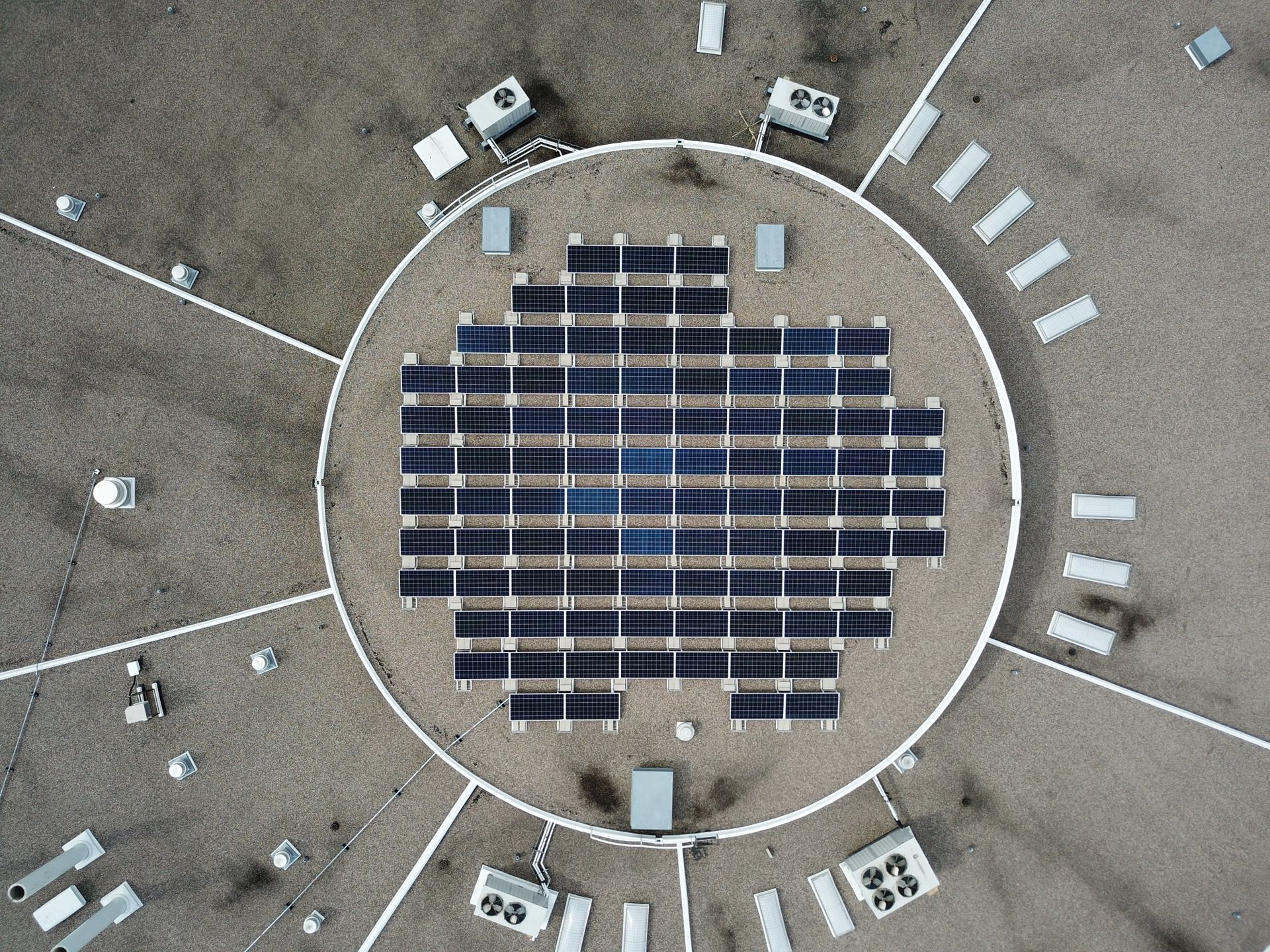
Dyme funds solar from commission. Travel providers pay us a commission on each booking, and we put part of it into new solar projects on schools and hospitals. It's our own revenue, so there's no customer contribution to collect or hold.
We don't use renewable energy certificates. We fund new solar projects directly, so our numbers are capacity, generation and emissions avoided.
Our impact results page keeps built and planned capacity apart: 5.5 MW built and operating, with 20 MW more in the pipeline.
It reports 7,807 MWh of generation a year and 5,910 metric tons of CO2 avoided, and it names the grid factor behind that figure: 0.757 metric tons per MWh, the 2023-24 combined margin from the Indian Central Electricity Authority's CO2 Baseline Database, version 20.0. Multiply 7,807 by 0.757 and you get about 5,910.
If you're weighing a similar program for your own platform, how Dyme works walks through ours.
FAQ: funding renewable energy from transaction revenue
What does a 1% pledge cost against debit interchange?+
About $0.42 on an average exempt debit purchase and $0.49 on a covered one. In the Federal Reserve's 2024 debit data, the exempt purchase averaged $42.27 and earned the issuer $0.51, and the covered purchase averaged $48.95 and earned $0.23. A pledge set as a share of the interchange you receive can't cost more than you earn.
What is the difference between funding a solar project and buying RECs?+
A renewable energy certificate is issued for each megawatt-hour a renewable project delivers to the grid, so buying certificates pays for generation that has already happened. Funding a new project pays toward capacity that will generate once it is built, and what you count is MW funded, MWh generated and emissions avoided.
How are emissions avoided by a solar project calculated?+
Generation in MWh times a grid emission factor in metric tons of CO2 per MWh. Dyme's results page, for example, reports 7,807 MWh a year and a grid factor of 0.757, which gives about 5,910 metric tons a year. Publish the factor and its source so readers can redo it.
What should a platform report about the projects it funds?+
The recipient, and for each project its capacity in MW (built and planned apart), the date it was energized, generation in MWh, emissions avoided with the grid factor used, and whether any certificates were bought or issued.