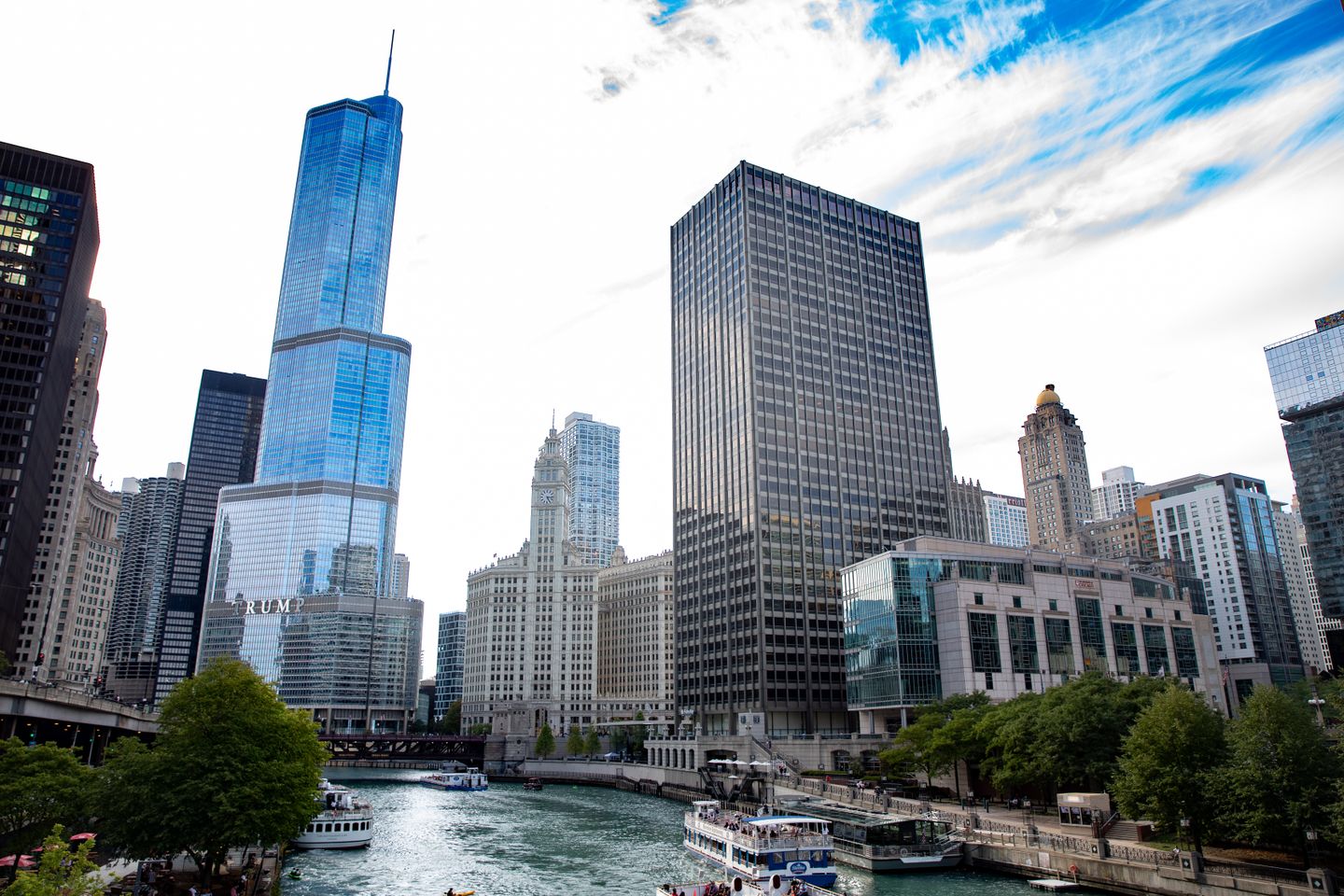
The best months to visit Chicago are May and September, when average highs are 71°F (22°C) and 76°F (24°C), hotel rates drop below peak summer pricing, and the city's event calendar stays active without the July and August crowds.
June through August draws the largest crowds and the highest hotel rates, while January and February offer the lowest prices but average highs of only 32°F to 36°F (0°C to 2°C). If you can travel in the shoulder seasons, you get the most city for your money.
Chicago by season: quick facts
- Chicago in Spring (March–May): Weather, Travel Costs & Crowds. Average highs climb from 47°F (8°C) in March to 71°F (22°C) in May. March stays cold and windy, but hotel rates run lower than summer. By May, average highs reach 71°F (22°C) and the lakefront opens up. Crowds are moderate, and you can book rooms at mid-range rates with good availability.
- Chicago in Summer (June–August): Weather, Travel Costs & Crowds. Average highs hit 85°F (29°C) in July, the warmest month. Lollapalooza (early August, Grant Park) and the Chicago Air and Water Show (mid-August, North Avenue Beach) push hotel rates to their peak and fill rooms weeks in advance. Expect premium pricing and the largest crowds of the year.
- Chicago in Fall (September–November): Weather, Travel Costs & Crowds. September averages 76°F (24°C) highs and sees fewer visitors than summer. The Chicago Marathon (mid-October) sells out hotels along the lakefront corridor and drives rates up for that specific weekend. By November, highs drop to 48°F (9°C) and rates fall to mid-range or lower.
- Chicago in Winter (December–February): Weather, Travel Costs & Crowds. Average winter highs range from 32°F to 37°F (0°C to 3°C), with average overnight lows between 19°F and 24°F (-7°C to -4°C). December sees a bump in visitors for the Christkindlmarket (Daley Plaza, late November through December 24) and holiday shopping on the Magnificent Mile. January and February are the quietest months, with the lowest hotel rates of the year and minimal crowds at major attractions like the Art Institute and the Museum of Science and Industry.
Best time to visit Chicago by traveler type
Budget travelers get the most value in January and February, when hotel rates drop to their annual floor and attractions like the Art Institute of Chicago stay open with short or no lines. The catch is the cold: expect average highs around 32°F to 36°F (0°C to 2°C) and wind chills that push the feels-like temperature well below that.
Families with school-age children tend to do best in late May or early June, before Lollapalooza and the peak summer surge hit. Average highs run from 71°F to 80°F (22°C to 27°C), Navy Pier and the lakefront museums are open and accessible, and hotel rates are below their July peak. The Chicago Children's Museum at Navy Pier and the Shedd Aquarium both see shorter waits before the summer rush.
Business travelers find the most predictable conditions in March, April, and October, when major conventions at McCormick Place can spike rates in specific weeks but overall availability stays reasonable. Check the Choose Chicago events calendar before booking to avoid convention blackout dates.
The cheapest month to visit is January. Hotel rates across the city hit their lowest point, and you can find mid-range options in the Loop and River North at a fraction of what the same rooms cost in July.
July is the busiest month. Peak summer weather fills the city, and early August stays just as busy with Lollapalooza, followed by the Chicago Air and Water Show. Expect the highest occupancy of the year and a real fight for rooms.
For events, July and August give you the densest calendar: Lollapalooza draws around 400,000 attendees over four days in Grant Park, the Chicago Jazz Festival runs over Labor Day weekend, and the 2026 Taste of Chicago ran July 8 to 12 in Grant Park. October adds the Bank of America Chicago Marathon, one of the World Marathon Majors, which fills the city on race weekend.
Chicago month-by-month: weather, crowds, and cost
| Month | Avg high °F (°C) | Crowd level | Hotel rate tier | Notable events |
|---|---|---|---|---|
| January | 32°F (0°C) | Low | Budget | Chicago Restaurant Week (late Jan) |
| February | 36°F (2°C) | Low | Budget | Chicago Restaurant Week (early Feb) |
| March | 47°F (8°C) | Low-Moderate | Mid-range | St. Patrick's Day River Dyeing |
| April | 59°F (15°C) | Moderate | Mid-range | No single anchor event |
| May | 71°F (22°C) | Moderate | Mid-range | No single anchor event |
| June | 80°F (27°C) | High | Premium | Chicago Blues Festival (Grant Park) |
| July | 85°F (29°C) | Peak | Premium | Taste of Chicago |
| August | 83°F (28°C) | Peak | Premium | Air & Water Show, Lollapalooza (Grant Park, ~400k attendees) |
| September | 76°F (24°C) | Moderate-High | Mid-range | Chicago Jazz Festival (Labor Day) |
| October | 63°F (17°C) | Moderate | Mid-range | Bank of America Chicago Marathon |
| November | 48°F (9°C) | Low-Moderate | Mid-range | Christkindlmarket opens late Nov |
| December | 37°F (3°C) | Moderate | Mid-range | Christkindlmarket, Magnificent Mile Lights |
What makes May and September the strongest months
May gives you Chicago at its most accessible. Average highs reach 71°F (22°C), the lakefront path fills with cyclists and runners rather than tourists, and hotel rates stay below the summer ceiling.
The Chicago Architecture Center at 111 East Wacker Drive runs its full tour schedule, and you can book an architecture boat tour on the Chicago River without the weeks-in-advance planning that July requires.
September is just as pleasant as May. Highs average 76°F (24°C), Lake Michigan stays warm enough for swimming through mid-month, and the Chicago Jazz Festival runs free over Labor Day weekend in Millennium Park.
Hotel rates drop noticeably from August, and you get the same city with fewer people competing for tables and museum tickets.
Both months also give you reliable weather for outdoor neighborhoods like Wicker Park, Logan Square, and Andersonville, where the street-level experience is the point. Rain is possible in both months, but neither sees the sustained heat and humidity that makes July afternoons on the lakefront uncomfortable.
Events that move hotel rates and availability
Lollapalooza is the single biggest rate driver of the year. The festival runs four days in early August at Grant Park, and hotels within a mile of the venue, including those in the South Loop and the Loop itself, sell out weeks ahead. If you plan to visit Chicago in early August for any reason other than the festival, book at least six to eight weeks out.
The Bank of America Chicago Marathon takes place on the second Sunday of October. The 2026 race, on October 11, drew more than 54,000 participants and hundreds of thousands of spectators along a course that winds through the Loop, Lincoln Park, Pilsen, and Chinatown. Hotels along the lakefront and in River North fill fast, and rates jump to near-summer levels for that one weekend.
The Christkindlmarket at Daley Plaza, 50 West Washington Street, runs from late November through December 24 and draws visitors from across the Midwest. December hotel rates in the Loop and River North run higher than November or January as a result, though they stay below summer peak.
Chicago Restaurant Week, organized by Choose Chicago, runs across late January and early February. It does not spike hotel rates, but it does fill reservation books at participating restaurants. If you plan to eat at specific spots during that window, book restaurant reservations before you book your flight.
Quick decision guide: when to go based on your priority
| If you want | Best time to go |
|---|---|
| Lowest hotel rates | January and February |
| Best weather | May and September |
| Major events | July and August |
| Festive atmosphere | December |
| Fewer crowds | Late March |
| Budget travel with mild weather | Early November |
| Marathon weekend energy | Second weekend of October |
Practical tips for planning your Chicago trip
- Use the CTA Blue Line from O'Hare International Airport (ORD) to reach the Loop in about 45 minutes for a flat fare, avoiding surge-priced rideshares during peak arrival times. The Orange Line connects Midway International Airport (MDW) to the Loop in about 30 minutes.
- Download the Ventra app before you arrive. You can load a transit card, check real-time CTA rail arrivals, and pay fares without hunting for a vending machine. The Red Line runs 24 hours and connects the North Side neighborhoods of Wrigleyville and Lincoln Park to the Loop and South Side.
- If you visit during Lollapalooza or the Chicago Marathon, book hotels in Evanston or Oak Park and take the Purple Line or Blue Line into the city. You pay mid-range rates and avoid the premium pricing inside the city core.
- The Chicago Architecture Center at 111 East Wacker Drive sells combination tickets for boat tours and walking tours. Book online at least a week ahead in June through August. In May or September, same-week availability is common.
- Chicago's lakefront is public and free for its entire 18-mile length. The 606 trail in Wicker Park and Logan Square gives you a car-free elevated path through two of the city's most active neighborhoods, and it costs nothing to use.
Shoulder season travel and its effect on the city
In May, September or early November the city isn't stretched. Restaurant reservations are easier to get and the museum galleries are quieter.
The Red and Brown Lines run the same schedule year-round, but platforms at busy stops like Fullerton and Belmont are noticeably less packed outside summer.
Off-peak visitors also tend to get further into the neighborhoods. In peak summer, most tourists concentrate in the Loop, River North, and the Magnificent Mile. In May and September, neighborhoods like Pilsen, Bridgeport, and Hyde Park see more visitors who have time to explore.
The CTA rail network runs on electricity, so using the Red, Blue, or Brown Line instead of rideshares or rental cars cuts per-trip emissions regardless of when you visit.
Official sources for Chicago travel planning
- Choose Chicago is the city's official tourism organization. Use it for the events calendar, neighborhood guides, and current hotel and attraction information.
- Chicago Transit Authority (CTA) publishes real-time rail and bus maps, fare information, and service alerts. The Ventra app links directly to CTA data.
- NOAA Climate Data for Chicago provides historical temperature and precipitation records for O'Hare, the official weather station for Chicago climate data.
- City of Chicago Official Site covers permits, public events, park district programming, and city-run attractions including the Chicago Cultural Center at 78 East Washington Street.
Planning around Chicago's calendar
Whatever month you choose, the two swing factors are weather and conventions: summer brings the festivals and the crowds, winter brings genuine cold but the year's lowest rates, and a big show at McCormick Place can tighten rooms citywide in any season. May and September get you mild lakefront days, lighter crowds, and lower prices.
Things to do in Chicago, by neighborhood
Where to start in each neighborhood, and what’s on there this weekend.
Frequently asked questions
What's the best month to visit Chicago for good weather?+
May and September give you the most reliable weather for outdoor activity. May averages highs of 71°F (22°C) and September averages 76°F (24°C), and both months see far fewer visitors than July and August. Lake Michigan stays swimmable through mid-September, and the lakefront path is accessible and uncrowded compared to peak summer.
What's the cheapest time to visit Chicago?+
January and February are the cheapest months, with hotel rates at their annual low across all neighborhoods. You'll pay for it in cold: average highs are between 32°F and 36°F (0°C to 2°C), and wind off Lake Michigan pushes the feels-like temperature lower. Indoor attractions like the Art Institute, the Museum of Science and Industry, and the Chicago Cultural Center are all open and far less crowded than in summer.
What's the busiest time to visit Chicago?+
July and early August are the busiest period. Lollapalooza in early August draws around 400,000 people to Grant Park over four days, and the Chicago Air and Water Show at North Avenue Beach in mid-August adds another large crowd. Hotels in the Loop, River North, and South Loop fill weeks in advance during these events, and rates reach their annual peak.
What's Chicago like in December?+
December in Chicago averages highs around 37°F (3°C) with overnight lows around 24°F (-4°C). The Christkindlmarket at Daley Plaza runs through December 24 and draws large crowds on weekends. Hotel rates in the Loop run higher than in January or November but stay below summer peak. If you visit in December, book weekend nights at least three to four weeks ahead.
Does the Chicago Marathon affect hotel availability?+
Yes. The Bank of America Chicago Marathon runs on the second Sunday of October and the 2026 race drew more than 54,000 participants plus spectators. Hotels along the lakefront, in River North, and in the Loop fill fast for that specific weekend, and rates spike to near-summer levels. If you plan to visit Chicago in mid-October for any reason, check the marathon date and book early or consider staying in a neighborhood like Wicker Park or Logan Square, where rates stay lower.
What's the weather like in Chicago in spring?+
Spring in Chicago runs from March through May and covers a wide temperature range. March averages highs of 47°F (8°C) and can still see snow. April climbs to around 59°F (15°C), and May reaches 71°F (22°C) with reliable sunshine. March and April see lower hotel rates and smaller crowds, making them good options for budget-focused travelers who don't mind variable weather.


