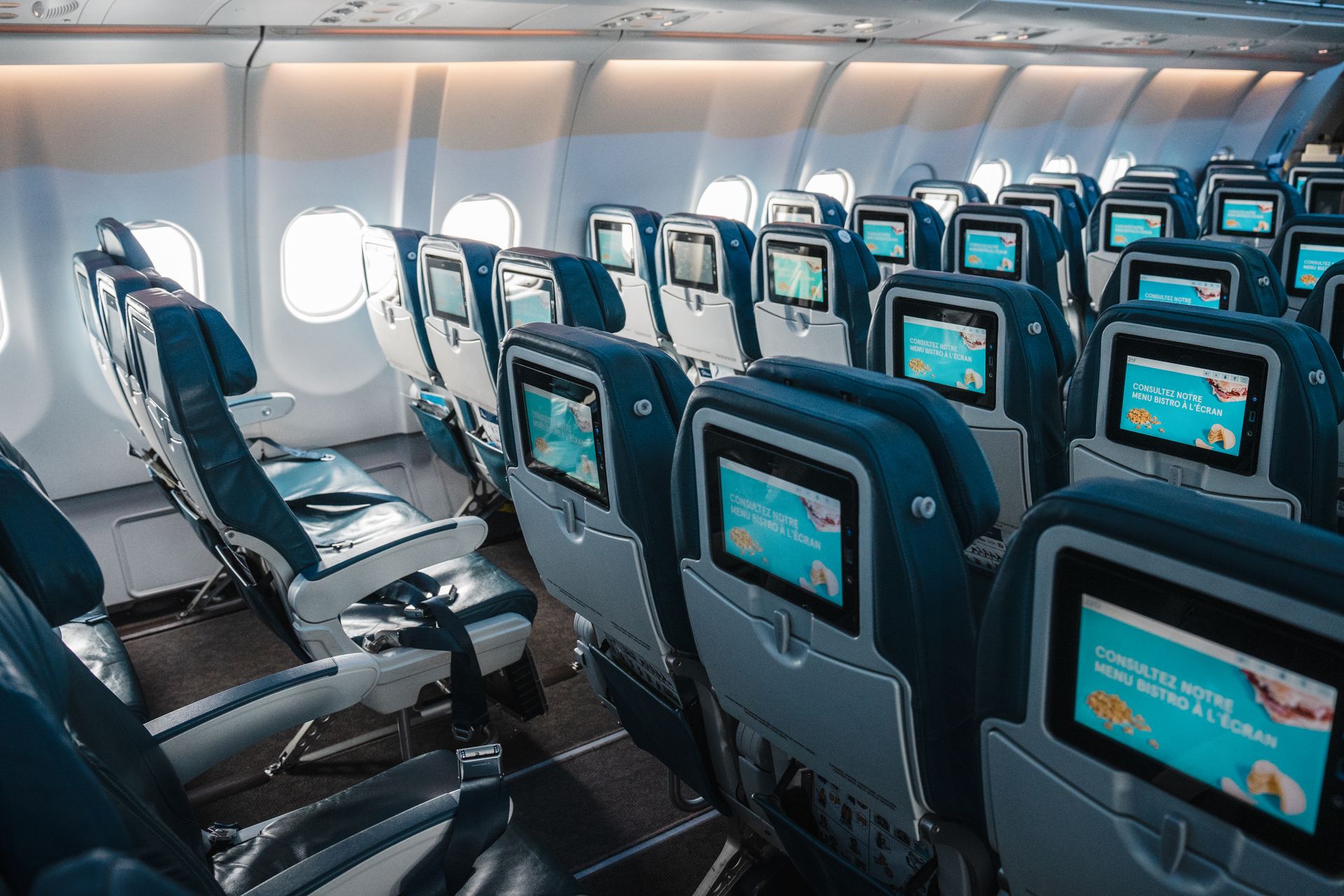
Most business-class travel policies answer a question about seniority. Who has earned the flat bed, at what grade, on which routes. The rule the US government writes for its own travelers does not ask that question at all. It asks whether putting someone in a better seat is cheaper than paying them to sleep for a day when they land.
That reframing is worth borrowing even if you have no interest in federal travel rules, because it turns an argument about status into an arithmetic problem your finance team can settle.
What the federal rule authorizes, and at what hour
The current text is 41 CFR 301-10.100, on the use of other than coach class accommodations. Worth noting if you are checking older guidance: the premium-class rules used to live at 301-10.123 and 301-10.124, and those sections are now marked reserved. Any policy citing them is quoting a version that no longer exists.
The default is the cheapest cabin that does the job. Above that, the regulation sets an explicit ladder, and the phrasing carries the intent: agencies should authorize "the lowest level of other than coach class accommodations, starting with premium economy, then business, then first, with much higher agency scrutiny on each increase in class level authorized."
Two of the twelve conditions are pure thresholds, and they are the ones most corporate policies try to invent from scratch.
| Condition | Trigger | Cabin it opens |
|---|---|---|
| 301-10.100(h) | Origin or destination outside the continental US, scheduled flight time including stopovers and plane changes in excess of 8 hours | Premium economy |
| 301-10.100(i) | Same, but more than 14 hours | Business |
| 301-10.100(j) | No coach, premium economy or business seat leaves within 24 hours of the proposed departure, or arrives within 24 hours of the proposed arrival | First |
Note what the thresholds measure. Not flight time, but scheduled time including stopovers and changes of plane. A routing decision can move a trip across the line without anyone flying an extra mile, which is a thing to write down before someone discovers it on their own.
The other conditions cover a medical disability or other special need, exceptional security circumstances, a route that only sells premium cabins, costs paid in full by a non-federal source, health or sanitation standards on a foreign carrier, and the case where no coach seat arrives in time for an urgent mission.
The trade the rule forces: a flat bed or a rest day
Here is the part that changes how you write the clause. Condition (l) authorizes a better cabin when "the agency determines other than coach class accommodations are more advantageous than authorizing a rest period."
Then look at the rest period itself, at 41 CFR 301-11.12, on agency authorization of rest periods during travel. An agency may authorize up to 24 hours of rest when the trip is outside the continental US, scheduled flight time including stopovers exceeds 14 hours, and travel is by a usual route.
There is a fourth condition, and it is the one that matters: "the agency has determined that travel by business class is not advantageous and travel is by coach class or premium economy class."
The same 14-hour trigger opens both doors, and each rule closes the other. You are not choosing whether to spend money. You are choosing which way to spend it: on the seat, or on a day of per diem at the rest stop rate plus a working day nobody gets back.
Neither rule claims business class wins that comparison. What both rules require is that somebody run it and record the answer. That obligation, rather than the 14-hour number, is the part worth copying into a corporate policy.
Duty of care is thinner than it sounds
Duty of care gets cited in cabin-class debates as though a statute somewhere names a seat. In the US, none does.
The nearest hook is the General Duty Clause, Section 5 of the OSH Act, 29 USC 654, under which an employer "shall furnish to each of his employees employment and a place of employment which are free from recognized hazards that are causing or are likely to cause death or serious physical harm." That is written about the place of employment. Stretching it to seat pitch on a fourteen-hour flight is an argument, not a requirement.
ISO 31030, the travel risk management standard, is what buyers usually mean when they raise this. It is guidance rather than a rule you can be fined under, and we have not quoted it here because the text is behind a paywall we did not buy.
So the honest position: your duty of care on cabin class is whatever your own written standard says, plus whatever your insurance and your contracts oblige. That is a reason to write the standard carefully, not a reason to pretend the law wrote it for you.
What the cabin does to your emissions number
The methodology behind most corporate air emissions reporting is IATA Recommended Practice 1726, the passenger CO2 calculation methodology. Its section 2.4.2 assigns a cabin-class factor, and on a wide-body aircraft business class carries a factor of 4 against economy's 1. First carries 5.
One business-class passenger is counted as four economy passengers, because of what section 2.4.1 calls "the different weight and space associated with a passenger seat in different cabin classes."
Now put that next to the threshold. The flights that qualify under condition (i) are long-haul wide-body flights, which are exactly the flights where the factor is 4. The trip that earns the upgrade is the trip where the upgrade costs the most.
Both things are true and a good policy holds them together rather than picking a side. If you are building the carrier and cabin criteria into a tender, the fuller treatment is in how to build a preferred-airline program with sustainability criteria. On shorter city pairs the honest comparison is often not a cabin at all, which is the ground covered in our door-to-door rail versus air benchmark.
Writing the business-class policy clause: five things to get right
Five things, and none of them require a view on whether anyone deserves a flat bed.
1. A threshold measured the way the regulation measures it. Scheduled time including stopovers and plane changes, not flight time. Say which, or your routing will decide it for you.
2. A ladder, not a switch. Premium economy before business, business before first, with the approval bar rising at each step. This is the single cheapest thing to copy and the most commonly missing.
3. The rest-period comparison, named as a requirement. Whoever approves the cabin has to state what the alternative would have cost, including the working day. Put the comparison in the approval record rather than in someone's head.
4. Exceptions that are about people, not grades. Medical need and security risk belong in the policy explicitly. A seniority table quietly does that work badly and creates a disclosure problem for anyone who has to invoke it.
5. A line about the emissions consequence. Not a prohibition. A note that the approval carries a factor of 4 on a wide-body, so the number turns up in your reporting later and nobody is surprised.
How the resulting spend gets categorized and reimbursed is a separate question, covered in our guide to corporate travel expense categories. If you want to talk through how any of this lands on a live travel program, Dyme for Business is where we do that.
FAQ: setting a business-class threshold
At what flight length is business class normally allowed?+
There is no general legal answer, but the most widely copied benchmark is the federal one. Under 41 CFR 301-10.100, business class may be authorized when the origin or destination is outside the continental US and scheduled flight time, including stopovers and changes of plane, is more than 14 hours. Premium economy opens earlier, above 8 hours. Note that it measures scheduled time including connections, not time in the air. A connection can move a trip across the threshold on its own.
Is business class cheaper than paying for a rest day?+
That is exactly the comparison the federal rule asks you to run, and it does not prejudge the answer. 41 CFR 301-10.100(l) allows the better cabin when it is "more advantageous than authorizing a rest period," and 41 CFR 301-11.12 allows a rest period of up to 24 hours only once the agency has determined business class is not advantageous. The two are alternatives at the same 14-hour trigger. What the rules require is that someone compares them and records the result, including the cost of the working day lost to the rest stop.
Does duty of care legally require business class on long flights?+
No US statute names a cabin. The nearest hook is the General Duty Clause at Section 5 of the OSH Act, which requires an employer to furnish a place of employment free from recognized hazards, and that is written about the workplace rather than about seat pitch. ISO 31030 is the travel risk management standard buyers usually have in mind. It is guidance, not an enforceable rule. In practice your obligation is whatever your own written standard, insurance and contracts create, which is a reason to draft the standard carefully.
How much does a business-class seat add to our reported emissions?+
Under IATA Recommended Practice 1726, the methodology behind most corporate air reporting, a business-class seat on a wide-body aircraft carries a cabin-class factor of 4 against economy at 1. First class carries 5. Premium economy carries 1.5. One caveat that trips people up: on a narrow-body aircraft configured entirely as business class, the standard requires a factor of 4 rather than the 1.5 that narrow-body business normally attracts.
Should the policy set the threshold by grade or by route?+
By route, with named exceptions for medical need and security risk. A grade-based table is doing two jobs at once: it is rationing a cost, and it is quietly handling disability and safety cases without saying so. That second job is the one that creates problems. Someone invoking a medical need under a seniority table has to disclose it to whoever polices the table, which is a worse outcome than an explicit exception clause.