April, May, and October offer some of Washington DC's most comfortable sightseeing weather, but they suit different priorities. April brings cherry blossoms and some of the year's largest crowds at premium pricing. May offers warm weather between major event weekends with slightly lower visitor levels. October combines mild temperatures with more moderate crowds and easier access to the National Mall.
If budget is your priority, January and February offer the lowest hotel rates of the year, with average highs around 42°F to 47°F (6°C to 8°C).
Washington DC quick-reference: best time by traveler goal
- Lowest hotel rates: January and February, when demand drops after the holidays and inauguration years aside, rooms run at mid-range or lower pricing.
- Best weather: April (55°F–65°F / 13°C–18°C) and October (55°F–68°F / 13°C–20°C) give you comfortable walking temperatures for outdoor monuments.
- Cherry blossoms: late March to mid-April, peak bloom typically falls in the first two weeks of April per the National Park Service forecast.
- Fewest crowds: late January through mid-February, after MLK weekend and before spring break season begins.
- Major events: March (Cherry Blossom Festival opens), July 4th (National Mall fireworks), September (National Book Festival), December (National Christmas Tree lighting).
- Families with kids: late June through early July for summer programming at Smithsonian museums, or mid-October for fall break with shorter lines than summer.
- Business travelers: September through November, when the convention calendar at the Walter E. Washington Convention Center fills up and direct flights from major hubs run at high frequency.
Washington DC in spring (March–May): weather, travel costs and crowds
Spring is the most popular season in Washington DC, and March through May reflects that in both hotel pricing and foot traffic on the National Mall. Average highs climb from 53°F (12°C) in March to 74°F (23°C) by late May, with overnight lows ranging from 34°F to 54°F (1°C to 12°C). You get long daylight hours and blooming trees, but you also get the densest crowds of the year.
The National Cherry Blossom Festival runs from late March through mid-April, drawing over 1.5 million visitors according to Destination DC. Peak bloom, forecast each year by the National Park Service, typically falls between April 2 and April 12. Hotels in Penn Quarter, Capitol Hill, and Foggy Bottom see premium pricing during this window, and rooms book out weeks in advance.
May is a better balance point. Temperatures reach 65°F to 74°F (18°C to 23°C), the festival crowds thin out, and you can walk the Tidal Basin or the National Mall without the shoulder-to-shoulder congestion of peak bloom weekend. Memorial Day weekend at the end of May brings another surge, so mid-May hits the sweet spot for spring visitors who want good weather without the highest rates.
Washington DC in summer (June–August): weather, travel costs and crowds
Summer in Washington DC is hot and humid. Average highs in July reach 88°F to 90°F (31°C to 32°C), with heat index values regularly pushing past 95°F (35°C) on humid afternoons. Overnight lows stay around 70°F to 72°F (21°C to 22°C), so evenings offer little relief. NOAA climate data shows July as the wettest month, with afternoon thunderstorms common.
Despite the heat, summer draws the largest volume of family travelers because of school schedules. The Smithsonian museums, all free, become the main refuge from the heat, and lines at popular spots like the National Air and Space Museum and the National Museum of Natural History stretch out the door by 10 a.m. Hotel pricing peaks in late June and early July around the Fourth of July, when the National Mall fireworks and the Smithsonian Folklife Festival overlap.
July 4th is the single busiest day of the year on the Mall. The fireworks draw hundreds of thousands of people, WMATA runs extended Metro service, and hotels within walking distance of the Mall charge premium rates. If you plan to attend, book your hotel at least three months out and arrive at your viewing spot by early afternoon to secure a good position.
Washington DC in fall (September–November): weather, travel costs and crowds
Fall is the second-best season to visit, and October in particular offers some of the most comfortable conditions of the year. Average highs in October run from 63°F to 68°F (17°C to 20°C), with overnight lows between 45°F and 52°F (7°C to 11°C). The humidity that defines summer drops off, and the trees along the Tidal Basin and in Rock Creek Park turn amber and gold through late October.
September stays warm, with highs around 78°F to 82°F (26°C to 28°C), and the National Book Festival at the Walter E. Washington Convention Center draws literary crowds to the Mall area. Hotel rates in September are below summer peaks but above the winter floor, making it a reasonable mid-range option. The Marine Corps Marathon in late October brings runners and spectators from across the country, which tightens hotel availability in the Capitol Hill and Navy Yard neighborhoods for that weekend.
November cools quickly. Average highs drop from 63°F (17°C) in early November to 52°F (11°C) by month's end, and overnight lows can dip to 38°F (3°C). Crowds thin considerably after Veterans Day weekend, and hotel rates fall toward their annual low. Thanksgiving week is the exception, when family travel pushes rates back up briefly before dropping again in early December.
Washington DC in winter (December–February): weather, travel costs and crowds
Winter is the quietest and most affordable season for hotel stays in Washington DC. Average winter highs range from 42°F to 47°F (6°C to 8°C), with overnight lows typically between 27°F and 32°F (–3°C to 0°C). Snowfall averages around 15 inches per season according to NOAA, though accumulation varies widely year to year. When snow does fall, it can disrupt Metro service and close federal buildings, so check WMATA service alerts before heading out.
December has two distinct phases. Early December through mid-month draws visitors for the National Christmas Tree lighting on the Ellipse, holiday markets in Georgetown and at Union Station, and the Zoolights event at the Smithsonian's National Zoo. Hotel rates in this window stay at mid-range pricing. After Christmas, rates drop sharply through January and February, making those two months the cheapest of the year.
January and February reward travelers who can handle cold temperatures. The monuments are uncrowded, museum wait times disappear, and you can walk through the National Gallery of Art or the Library of Congress without competing for space. Presidential inauguration years (2025, 2029) are the major exception: January 20th and the surrounding days see hotel rates spike to premium levels and rooms sell out months in advance across the entire metro area.
Month-by-month Washington DC overview
| Month | Avg high °F / °C | Crowd level | Hotel pricing tier | Notable event |
|---|---|---|---|---|
| January | 42°F / 6°C | Low | Budget-friendly | MLK Day weekend (mid-Jan) |
| February | 47°F / 8°C | Low | Budget-friendly | Presidents' Day weekend |
| March | 57°F / 14°C | Moderate–High | Mid-range to premium | Cherry Blossom Festival opens |
| April | 67°F / 19°C | Very High | Premium | Cherry blossom peak bloom |
| May | 74°F / 23°C | High | Mid-range to premium | Memorial Day weekend |
| June | 83°F / 28°C | High | Mid-range to premium | Smithsonian Folklife Festival |
| July | 88°F / 31°C | Very High | Premium | Fourth of July fireworks |
| August | 86°F / 30°C | High | Mid-range | Back-to-school travel |
| September | 80°F / 27°C | Moderate–High | Mid-range | National Book Festival |
| October | 67°F / 19°C | Moderate | Mid-range | Marine Corps Marathon |
| November | 55°F / 13°C | Low–Moderate | Mid-range to budget | Veterans Day ceremonies |
| December | 47°F / 8°C | Moderate | Mid-range | National Christmas Tree lighting |
Best time to visit by traveler type
Budget travelers get the most value in January and February, when hotel rates across all neighborhoods drop to their annual floor. You still get full access to every free Smithsonian museum, the monuments, and the National Gallery of Art. Bring layers for temperatures that hover between 27°F and 47°F (–3°C to 8°C).
Families with children do best in mid-June or mid-October. Mid-June gives you warm weather around 83°F (28°C), full Smithsonian programming, and school groups that have mostly wrapped up their spring trips. Mid-October offers 63°F to 68°F (17°C to 20°C) temperatures, fall foliage, and noticeably shorter lines at the National Air and Space Museum and the National Museum of Natural History compared to July.
Business travelers find September through November the most practical window. The Walter E. Washington Convention Center at 801 Mount Vernon Place NW runs a packed fall conference calendar, direct flights from major hubs operate at high frequency, and the weather stays cooperative for client dinners and outdoor events. Hotel availability near the Convention Center tightens around major conference dates, so book at least six weeks out.
Event-focused visitors should target late March through early April for the Cherry Blossom Festival, July 4th for the National Mall fireworks, and December for the National Christmas Tree and holiday markets. Each of these windows compresses hotel availability, so early booking is not optional.
Major events that shift hotel rates and availability
The National Cherry Blossom Festival, held annually from late March through mid-April, is the single biggest driver of hotel rate increases in Washington DC. The National Park Service publishes its peak bloom forecast at nps.gov/cherry starting in late February. The three to four days around peak bloom see the highest rates of the year, often matching or exceeding Fourth of July pricing.
The Fourth of July draws the largest single-day crowd to the National Mall. The fireworks launch from the Lincoln Memorial Reflecting Pool area, and viewing spots along the Mall fill up by early afternoon. WMATA runs extended service on all lines, but expect packed trains after the show. Hotels within a 10-minute walk of the Mall charge premium rates for the surrounding weekend.
The Marine Corps Marathon, held on the last Sunday of October, brings roughly 30,000 runners and their families to the DC area. The course runs through Georgetown, past the Lincoln Memorial, and through Crystal City in Arlington, which tightens hotel availability in those neighborhoods specifically.
Presidential inaugurations on January 20th of inauguration years transform the entire city. Hotels across DC, Northern Virginia, and suburban Maryland sell out months in advance, and rates reach their highest point of any four-year cycle. If your travel dates overlap with an inauguration, book as early as possible or consider staying in Baltimore and taking the MARC train into Union Station.
Practical tips for planning your Washington DC trip
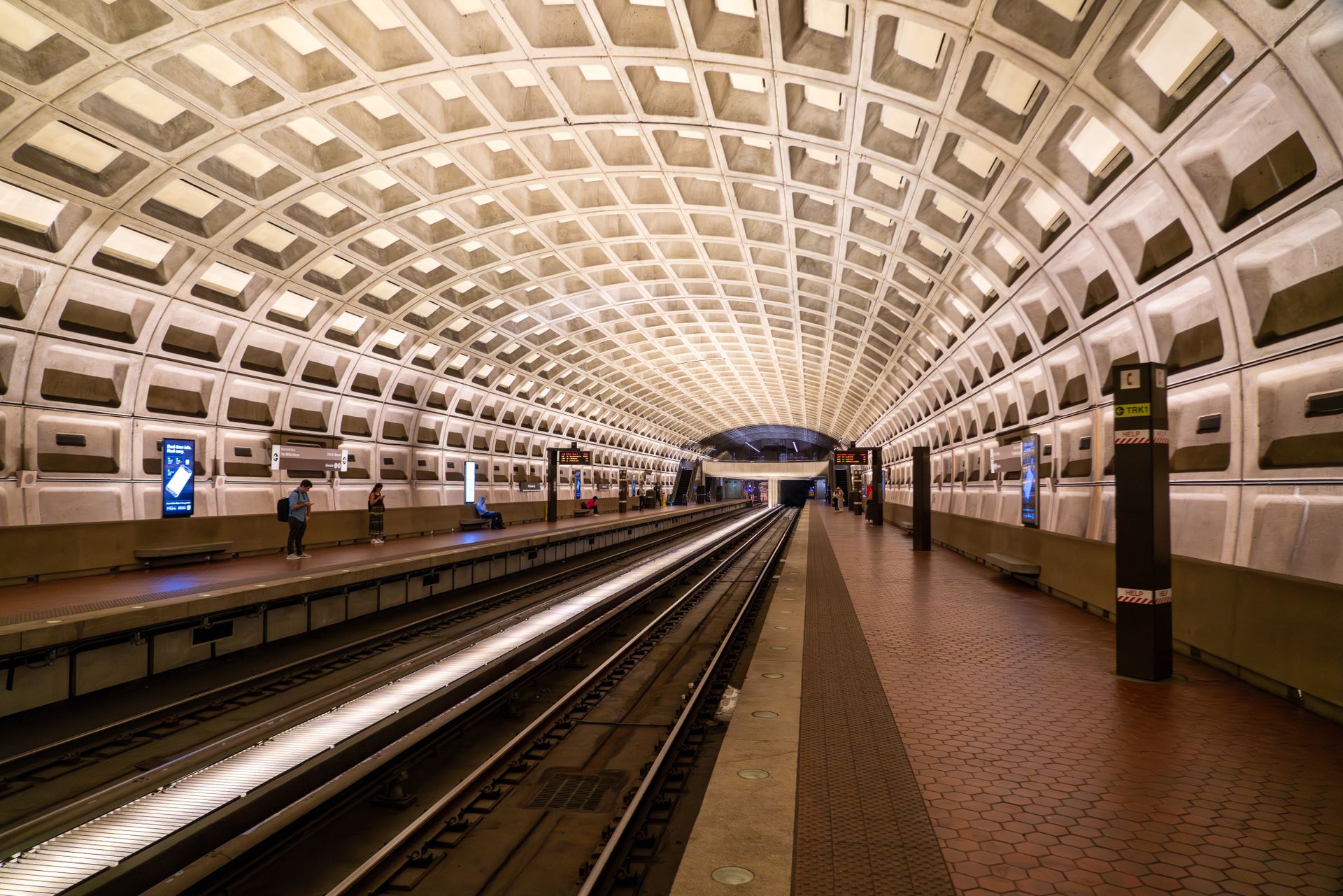
- Download the MetroPulse app and load a SmarTrip card before you arrive. Every Smithsonian museum and major monument has a Metro station within a 10-minute walk, and parking near the Mall costs more than a day's worth of Metro fares.
- Book timed-entry passes for the Washington Monument and the National Museum of African American History and Culture as soon as they open, which is typically 30 days in advance at recreation.gov. Both fill up within hours of release during spring and summer.
- Stay in Capitol Hill, Penn Quarter, or Foggy Bottom if you want to walk to the major monuments and museums. The Judiciary Square Metro station (Red Line) puts you two blocks from the National Mall, and the Smithsonian Metro station (Blue, Orange, Silver Lines) drops you at the center of the museum campus.
- Check the National Park Service event calendar before finalizing your dates. Free outdoor concerts, ranger-led tours, and special monument lighting events run throughout the year and add value to any visit.
- If you visit in July or August, plan outdoor monument time for early morning, before 9 a.m., when temperatures sit around 72°F to 75°F (22°C to 24°C) rather than the afternoon high of 88°F to 90°F (31°C to 32°C). Most Smithsonian museums open at 10 a.m. and provide air-conditioned relief for the hottest part of the day.
Shoulder season travel and its effect on the city
Visiting Washington DC in May, September, or early November spreads your spending across a city that depends on tourism revenue, and it reduces the pressure on the National Mall's infrastructure during the weeks when it matters most. The Mall's grass and pathways take a beating during peak bloom weekend and the Fourth of July, and the National Park Service has documented erosion and turf damage around the Tidal Basin that worsens with concentrated foot traffic.
Traveling by Metro rather than driving cuts your carbon footprint and keeps you out of the gridlock that clogs Constitution Avenue and Independence Avenue during major events. WMATA's rail system connects Reagan National Airport (DCA) directly to the city via the Blue and Yellow Lines, and Union Station on the Red Line serves Amtrak routes from the Northeast Corridor, which produces significantly lower emissions per passenger than flying from cities like Boston, Philadelphia, or New York.
Choosing a hotel in a walkable neighborhood like Dupont Circle, Logan Circle, or Capitol Hill means you can cover most of your itinerary on foot or by Metro without renting a car. That combination, shoulder-season timing plus transit-first travel, keeps your trip cost lower and reduces the congestion that frustrates both visitors and residents during peak periods.
Official sources for Washington DC travel planning
- Destination DC: the official tourism organization for Washington DC, with event calendars, neighborhood guides, and hotel search tools.
- National Park Service: National Mall and Memorial Parks: timed-entry passes, event schedules, and monument hours for all NPS-managed sites on the Mall.
- WMATA Metro: real-time service alerts, SmarTrip card management, and trip planning for the DC Metro rail and bus network.
- NOAA Climate Data Online: historical temperature, precipitation, and snowfall data for Washington DC by month.
Frequently asked questions
What's the cheapest month to visit Washington DC?+
January and February are the cheapest months, with hotel rates at their annual low across all neighborhoods. Temperatures average 42°F to 47°F (6°C to 8°C) during the day and drop to 27°F to 32°F (–3°C to 0°C) overnight. Every Smithsonian museum and monument remains open and free, and crowds are thin enough that you can walk through the National Gallery of Art or stand at the Lincoln Memorial without competing for space. The exception is inauguration years, when January 20th and surrounding days push rates to their highest point of the four-year cycle.
What's the best time to see the cherry blossoms in Washington DC?+
Peak bloom typically falls between April 2 and April 12, though the National Park Service publishes an updated forecast each year starting in late February at nps.gov. The Tidal Basin is the main viewing area, and the surrounding paths get extremely crowded on peak bloom weekends. If you want to see the blossoms without the densest crowds, aim for a weekday morning during the first week of April, arriving before 8 a.m. The Cherry Blossom Festival itself runs from late March through mid-April and includes free events at the National Mall and the Wharf.
What's the weather like in Washington DC in October?+
October is one of the most comfortable months to visit. Average highs run from 63°F to 68°F (17°C to 20°C), with overnight lows between 45°F and 52°F (7°C to 11°C). The humidity that defines summer is gone, and the trees along the Tidal Basin and in Rock Creek Park turn amber and gold through late October. The Marine Corps Marathon on the last Sunday of October brings runners and spectators to the city, which tightens hotel availability in Georgetown and near the Lincoln Memorial for that specific weekend.
How far in advance should I book a hotel for the Cherry Blossom Festival?+
Book at least two to three months in advance for peak bloom weekend, and four to six months out if you want a specific hotel near the Tidal Basin or the National Mall. Hotels in Penn Quarter, Capitol Hill, and Foggy Bottom fill up fastest. If you have flexibility on dates, arriving a few days before peak bloom or staying through the week after gives you better availability and lower rates while still catching the blossoms. The National Park Service forecast, published in late February, helps you narrow your target dates once you already have a reservation.
What's the busiest time of year in Washington DC?+
Peak bloom weekend during the Cherry Blossom Festival, typically the first two weeks of April, draws the largest crowds of the year, with over 1.5 million visitors according to Destination DC. The Fourth of July is the single busiest day on the National Mall. Summer overall, from late June through mid-August, sustains the highest visitor volume because of school schedules, with families filling the Smithsonian museums and monument grounds daily. If you visit during any of these windows, book timed-entry passes for the Washington Monument and the National Museum of African American History and Culture as soon as they become available.
Is Washington DC worth visiting in winter?+
Yes, particularly for travelers who prioritize budget and low crowds over warm weather. January and February give you uncrowded museums, no wait times at most monuments, and hotel rates at their annual low. The monuments are open 24 hours a day, and seeing the Lincoln Memorial or the Jefferson Memorial at night in winter, with few other visitors around, is a different experience than the summer crowds allow. Bring a warm coat for overnight lows between 27°F and 32°F (–3°C to 0°C), and check WMATA service alerts if snow is in the forecast.