Most visitors to Los Angeles do need a car. The LA Metro rail network covers key corridors but does not reach many major attractions, beaches, or neighborhoods without a transfer or a long walk. If you plan to visit Santa Monica, Malibu, Beverly Hills, or the San Fernando Valley, a rental car will save you hours of transit time.
Key facts at a glance
- LA Metro rail operates roughly 5:00 AM to midnight on weekdays, with reduced hours on weekends. No 24-hour service.
- A single Metro rail or bus ride costs $1.75. A day pass costs $5.00. Buy tickets via the TAP card app or at station kiosks.
- Santa Monica, Malibu, and most beach communities are not on the Metro rail network.
- Rideshare (Uber/Lyft) is widely available across LA but surge pricing during rush hour on the 405 or 101 can push fares high.
- Parking in Downtown LA or Hollywood typically runs $20 to $40 per day in a garage.
- Metro Bike Share stations are concentrated in Downtown LA, Hollywood, and the Westside. Find stations via the Metro Bike Share site.
- LAX is not directly on the Metro rail network. You take the LAX Automated People Mover to the LAX/Metro Transit Center on the C and K Lines.
Los Angeles transport options compared
| Option | Typical cost | Convenience |
|---|---|---|
| Metro Rail | $1.75 per ride / $5 day pass | Medium |
| Metro Bus | $1.75 per ride / $5 day pass | Low |
| Taxi / Rideshare (Uber, Lyft) | $15 to $60+ depending on distance and surge | High |
| Rental Car | $50 to $120 per day plus parking | Very high |
| Metro Bike Share | $1.75 to unlock plus $0.30 per minute (e-bike) | Medium |
When you probably need a car in Los Angeles
Visiting Malibu or the Pacific Coast Highway beaches requires a car. No Metro rail line reaches Malibu, and the bus route from Santa Monica takes over an hour each way.
Day trips to Joshua Tree National Park, the Angeles National Forest, or Griffith Observatory's upper trails all demand a car. Public transit gets you close to Griffith Park, but the observatory itself is at the top of a steep hill with no direct bus service.
The San Fernando Valley, including Burbank, Glendale, and the Warner Bros. Studio Tour, is reachable by the Metro B Line to North Hollywood, but getting around within the Valley without a car is slow and transfers are frequent.
Traveling with large luggage, a stroller, or mobility equipment makes Metro rail and bus transfers difficult. Elevators at many stations are unreliable, and the distance between stops and your destination can be significant.
If you plan to visit multiple neighborhoods in a single day, such as Venice Beach in the morning and Pasadena in the afternoon, a car cuts your travel time from three-plus hours by transit to under an hour.
When you can skip the car entirely
Staying in Downtown LA and limiting your trip to the Arts District, Little Tokyo, Grand Central Market, and the Broad Museum means you can walk or take the Metro rail without any issue. The B, D, and E Lines all pass through Downtown, connecting you to Hollywood, Koreatown, and Culver City.
The Metro B Line runs between Union Station and North Hollywood, stopping at Hollywood/Highland and Hollywood/Vine. If your itinerary centers on the Hollywood Walk of Fame, the Dolby Theatre, and nearby restaurants, you do not need a car for those days.
WeHo (West Hollywood) and Silver Lake are compact enough for rideshare hops. A short Uber between the two costs $12 to $18 outside of peak hours, and both neighborhoods reward walking once you arrive.
The Metro E Line connects Downtown LA to Culver City and Santa Monica's 4th Street station. If your beach day is in Santa Monica rather than Malibu or Venice, the E Line gets you there without a car.
For a conference or event at the Los Angeles Convention Center, the Metro E and A Lines stop at Pico station, a short walk from the main entrance.
How to get around Los Angeles without a car
Load the TAP card app before you arrive. You can add funds, buy day passes, and tap your phone at Metro rail and bus fare gates. This removes the need to find a kiosk every time you board.
Use the LA Metro Trip Planner to map multi-leg journeys. It shows real-time departures and walking connections between lines. The Metro A Line and E Line are the most tourist-relevant rail routes, covering the path from Long Beach through Downtown to Santa Monica.
For short hops in dense neighborhoods, Metro Bike Share e-bikes are a practical option. Stations cluster around 7th Street/Metro Center station, Hollywood/Highland, and the Westside. The Metro Bike Share app shows live station availability.
Dash buses operated by LADOT run frequent, low-cost routes through specific neighborhoods including Downtown, Hollywood, and Fairfax. A Dash ride costs $0.50 and connects gaps that Metro rail misses. Check routes at LADOT Transit.
If you need a car for one or two days but not your whole trip, services like Turo let you rent from local owners. For airport pickup, the FlyAway bus runs from LAX to Union Station for $9.75 and is far cheaper than a rideshare during peak hours.
The real cost of driving in LA
Owning or renting a car in Los Angeles comes with costs beyond the daily rental rate. Parking in Hollywood or Santa Monica runs $20 to $40 in a garage, and street parking in many neighborhoods requires a permit or has a two-hour limit enforced by parking enforcement officers who work seven days a week.
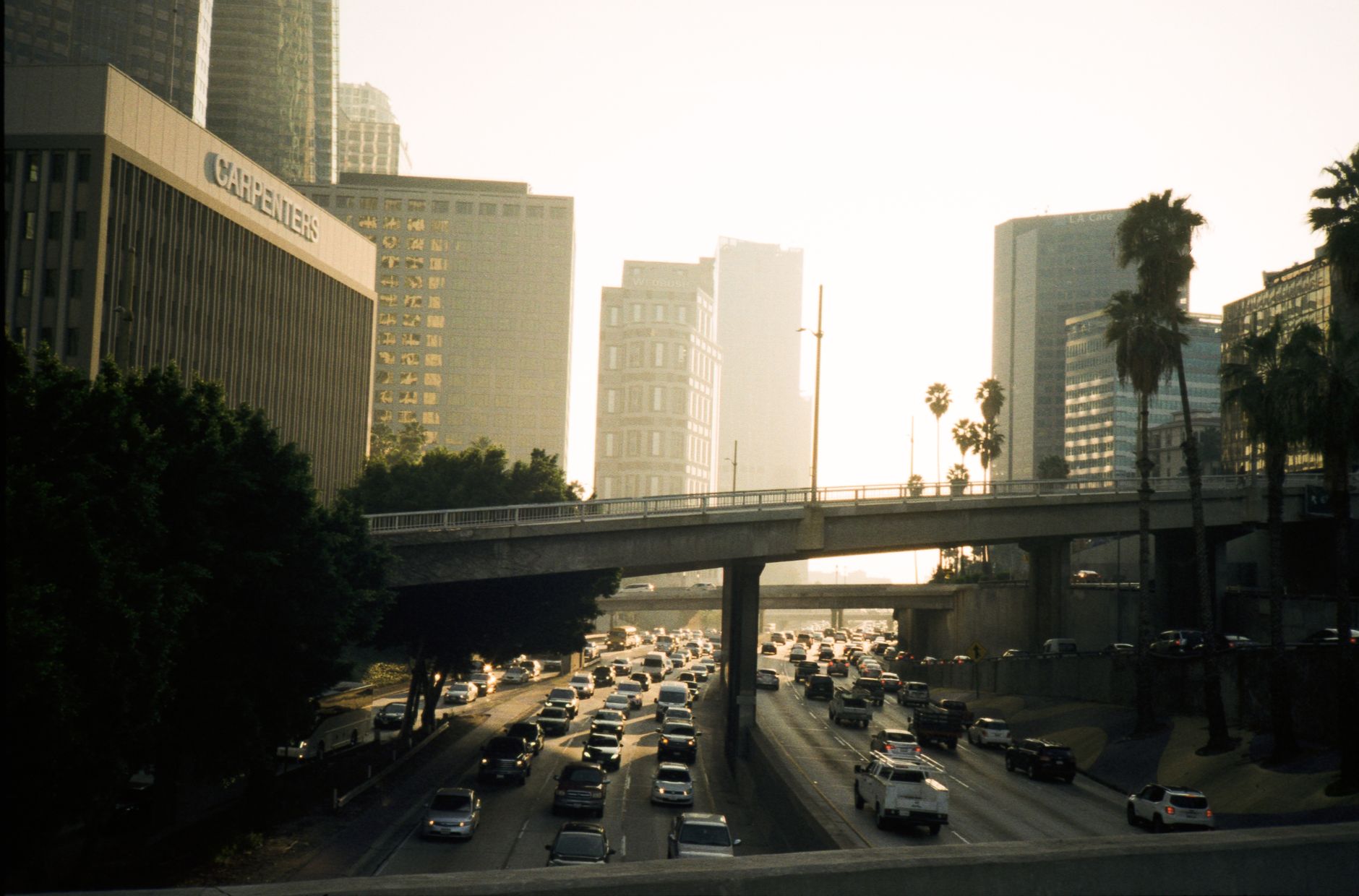
Rush hour on the 405 between the Westside and the Valley can stretch a 12-mile drive to 90 minutes. The 101 through Hollywood and the 10 through Downtown are similarly congested between 7:00 AM and 9:30 AM and again from 4:00 PM to 7:00 PM on weekdays.
For travelers staying in one neighborhood for most of their trip, the math often favors rideshare over a rental. A rental car at $80 per day plus $30 in parking adds up to $110 daily before you fill the tank. Four rideshare trips at $15 to $20 each covers similar ground for less, with no parking stress.
Sustainable travel in Los Angeles
Choosing Metro rail over a rental car cuts your per-trip carbon output and reduces the number of vehicles on already-congested freeways. The LA Metro system carries over 800,000 boardings on a typical weekday, and each rail trip you take instead of driving removes one car from the road for that journey. Metro Bike Share e-bikes are a zero-emission option for the last mile between a station and your destination, and LADOT's Dash buses run on compressed natural gas on several routes.
Official sources for LA transit planning
- LA Metro: Rail and bus maps, TAP card management, real-time trip planning, and service alerts.
- LADOT Transit: Dash bus routes, commuter express lines, and parking information.
- FlyAway Bus: LAX to Union Station and other city destinations for $9.75.
- Metro Bike Share: Station map, pricing, and app download for e-bike and standard bike rentals.
Frequently asked questions
What's the easiest way to get from LAX to Hollywood without a car?+
Take the LAX Automated People Mover from the terminals to the LAX/Metro Transit Center. Board the Metro C or K Line and transfer at Expo/Crenshaw station to reach the Metro E Line toward Downtown. From Downtown, switch to the Metro B Line northbound to Hollywood/Highland or Hollywood/Vine. The full trip takes 60 to 80 minutes and costs $1.75. The FlyAway bus to Union Station is a faster alternative at $9.75 if you are heading to Downtown first.
Can I get to Santa Monica from Downtown LA on public transit?+
Yes. The Metro E Line runs from 7th Street/Metro Center in Downtown LA to the Downtown Santa Monica station at 4th Street and Colorado Avenue. The ride takes about 46 minutes and costs $1.75. From the Santa Monica station, the beach is a 10-minute walk west. This is one of the most tourist-friendly Metro routes in the city.
What's the best app for navigating LA public transit?+
The TAP card app handles fare payment for Metro rail and bus. For trip planning, the LA Metro Trip Planner shows real-time departures and walking connections. Google Maps also integrates LA Metro data and is reliable for multi-leg journeys that mix rail, bus, and walking.
Is rideshare reliable in Los Angeles?+
Uber and Lyft are widely available across LA, including in most residential neighborhoods, beach communities, and the airport. Wait times in central areas like Hollywood, Downtown, and WeHo are typically under five minutes. Surge pricing during rush hour, major events at SoFi Stadium or the Hollywood Bowl, and late-night weekend hours can push fares significantly higher. Budget for that variability if you plan to rely on rideshare for evening outings.
What's the cheapest way to get around LA as a tourist?+
A Metro day pass at $5.00 covers unlimited Metro rail and bus rides for one calendar day. If you take three or more rides in a day, the day pass pays for itself. Combine it with a $0.50 Dash bus ride for neighborhood-level coverage and you can cover a lot of ground for under $10. Rideshare fills the gaps for destinations Metro does not reach.
Do I need a car to visit Griffith Observatory?+
You do not need a car, but getting there without one takes planning. The Metro B Line stops at Vermont/Sunset, and from there the LADOT Dash Observatory bus runs on weekends and some weekday evenings directly to the observatory. On days when the Dash does not run, you can take a rideshare from the Vermont/Sunset station for about $8 to $12. Driving and parking at the observatory is free but the lot fills by mid-morning on weekends.