Amsterdam Travel Tips: 11 Local Hacks to Navigate the City
If you're planning a trip to Amsterdam, a little homework goes a long way. It's one of Europe's most visited cities, but it works differently from most places tourists are used to — the payment system will catch you off guard, the cycling is faster than you expect, and some of the best experiences need to be booked weeks in advance. This guide covers the things we wish someone had told us before our first visit.
There are a couple of things worth sorting out before you even pack.
What to Know Before You Arrive in Amsterdam
Amsterdam is compact but dense. The historic canal ring — the semicircle of Prinsengracht, Keizersgracht, Herengracht, and Singel — contains most of the major attractions, and you can walk from one end to the other in under 30 minutes. The flat terrain makes that easy, but the streets follow the canal ring pattern rather than a grid, so it's easy to get turned around in the first day or two. Download Google Maps before you land — you'll use it constantly.
A couple of practical things that trip people up: let your bank know you're traveling (international charges can trigger fraud blocks), and know that Amsterdam runs on cards, not cash. A lot of shops and even some restaurants are "Pin Only" (Alleen Pinnen), which means they won't take cash at all. Visa debit cards often don't work; Maestro is the local standard, and credit cards are accepted at most tourist-facing businesses but not universally. Most Albert Heijn stores — the biggest supermarket chain — won't take credit cards, which is genuinely annoying if you're trying to stock up a self-catered apartment. Make sure you have a debit card that works internationally.
11 Local Hacks for Getting the Most Out of Amsterdam
These are the things that make a difference once you're there:
1. Avoid Peak Season If You Can
Amsterdam has been dealing with serious overtourism, and summer (especially June through August) is when it's at its worst — higher prices, longer queues, and the canal paths get uncomfortably crowded. If your dates are flexible, late March is beautiful for tulips at nearby Keukenhof, and September gives you mild weather with noticeably fewer people. If you do end up visiting in peak summer, staying outside the central ring (more on that below) and getting out early in the morning — before 9am — makes a bigger difference than you'd expect.
2. Book Anne Frank House and Van Gogh Museum First
You need to book these in advance — not "it's a good idea," but you literally can't get in without a pre-booked ticket. Anne Frank House releases tickets every Tuesday at 10am Amsterdam time, for visits six weeks later. They sell out within hours. So if you're visiting in, say, mid-July, you need to be on the website at 10am on the Tuesday that falls exactly six weeks before that. Set a calendar reminder right now — this is the single most common thing people miss.
Van Gogh Museum works similarly with timed-entry slots, and walk-in availability is very limited. For both, you'll want to build your daily itinerary around whichever time slot you get rather than trying to squeeze them in.
Worth booking ahead too: the Rijksmuseum, MOCO Museum, Heineken Experience, and A'DAM Lookout Tower.
3. Get the I Amsterdam City Card (If You're a Museum Person)
The I Amsterdam City Card gets you into over 70 attractions, plus a canal cruise, a bike rental, and unlimited public transport. The 24-hour card is around €65 — check the current pricing on iamsterdam.com as rates do change. To give you a sense of value: the Rijksmuseum alone is €23.50, and a canal cruise runs €15-20, so if you're hitting two or three museums and a cruise, you come out ahead.
Two things to know: Anne Frank House and Van Gogh Museum are both excluded from the card. You'll need to book and pay for those separately.
If you're the kind of traveler who prefers wandering through markets and sitting in cafes over ticking off museums, the card probably isn't worth it for you.
4. Walk First, Tram Second, Cab Last
Walking is honestly the best way to see Amsterdam. The city is small and flat, and most things you'll want to visit are within a 20-minute walk of each other. When the weather isn't cooperating or you need to cover more ground, the tram network is excellent — 14 lines across the city — and GVB travel cards work on trams, buses, and the Metro. A single one-hour GVB card lets you hop between all three within that window.
One thing that catches people out: you need to check in and check out with your card every time you board a tram or enter the Metro. If you forget to check out, the system treats your ticket as invalid.
Taxis are expensive and almost never faster than a tram. From Schiphol Airport, official cabs run €40-60 to central Amsterdam (TCA taxis offer a fixed rate capped at €50). Uber is typically €35-55 for the same trip. If you're arriving at Schiphol, stick to the official taxi rank marked by floor signs — there are unofficial drivers who will approach you, and they're overpriced.
5. Don't Drive Into Amsterdam
This one is simple: parking in the center is either prohibited or restricted to residents, Park + Ride lots on the outskirts cost at least €25 per day, and the road rules prioritize cyclists and pedestrians in ways that take real getting used to. If you're renting a car for a broader Netherlands trip, leave it parked outside the city and use the tram.
6. Think Twice Before Renting a Bike
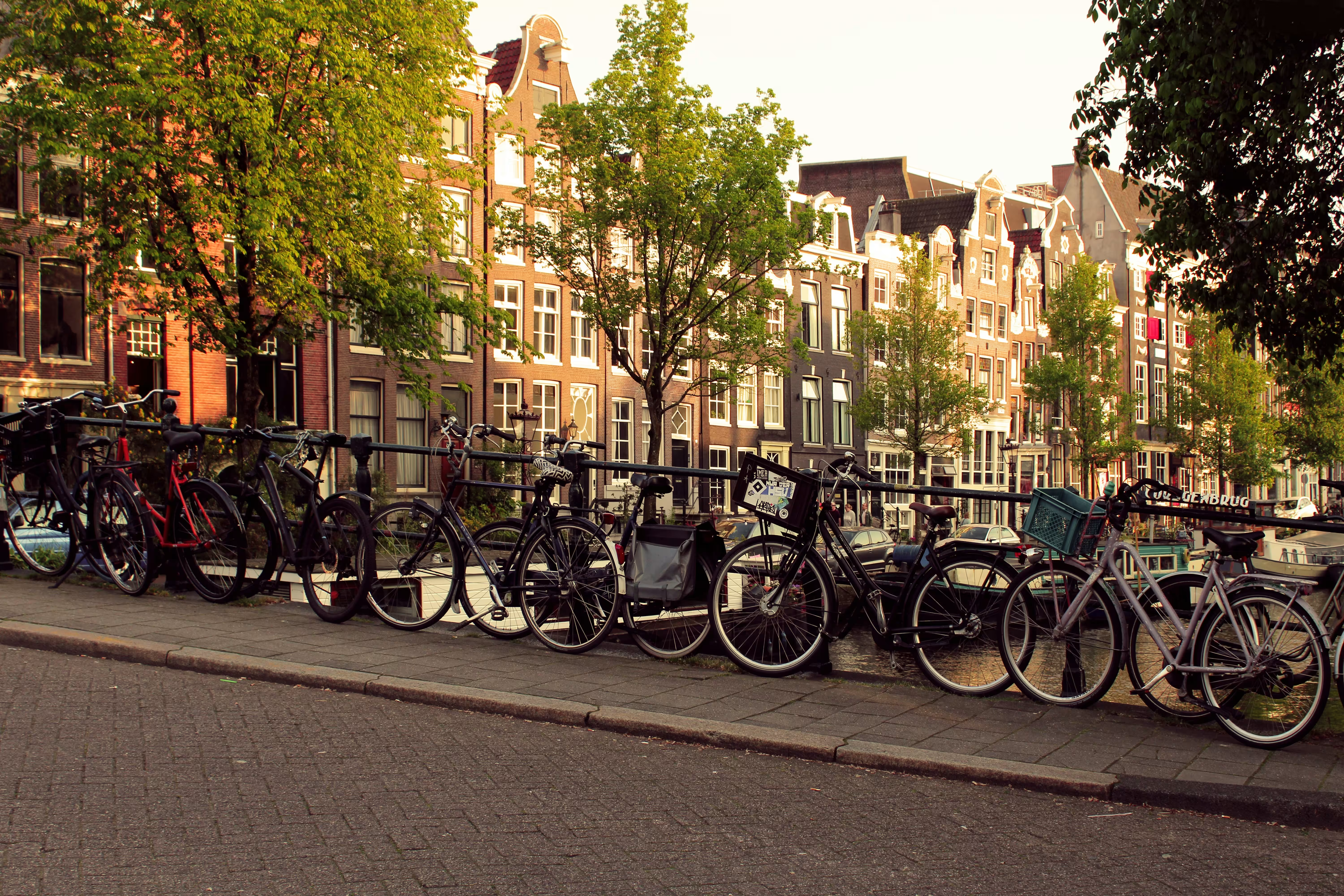
Amsterdam's cycling culture is famous, but it's also fast, dense, and not very patient with beginners. The bike paths work like informal highways during rush hour, and locals ride at speed while weaving around trams, pedestrians, and each other. If you cycle regularly in a busy city, you'll probably enjoy it — but read up on Amsterdam's specific cycling rules before you go. If you're more of a casual rider, the tram will get you where you need to go with a lot less anxiety.
Once you get outside the main tourist center, cycling does get easier. Neighborhoods like Jordaan, Oud-West, and De Pijp have calmer paths and less traffic than the Red Light District and central canal ring.
7. Stay Outside the Center
Hotels right in the middle of Amsterdam — around the Red Light District and inside the main canal ring — tend to be overpriced for what you get, and noisy at night. You don't need to be that central. Neighborhoods like Jordaan, De Pijp, and Oud-West are a 10-minute tram or Metro ride from everything, and the hotels are noticeably better value. Jordaan especially is the neighborhood most people wish they'd picked — it's quiet, lined with canals, full of independent restaurants and small galleries, and you can walk to Anne Frank House in about 10 minutes.
If you do want to stay in the center, book early. Demand is high year-round and last-minute prices reflect it.
8. Know Your Coffee Shop from Your Café
This matters more than it sounds. A "café" (eetcafé or bruin café) is a traditional Dutch pub — many serve food, and they're great for a casual meal or a beer. A "coffee shop" is a licensed cannabis retailer. If you want a quiet breakfast spot, look for a café. Dutch bruine kroegen (brown cafes) are some of the best places to eat well at a reasonable price and actually talk to locals.
9. Eat Like a Local, Not a Tourist
The restaurants along the main tourist streets in Amsterdam are expensive and often not very good. You'll eat better and spend less with a few simple adjustments.
Have your main meal at lunch — many restaurants offer a dagschotel (dish of the day) or set lunch menu at prices well below dinner. For street food, Albert Cuyp Market in De Pijp is hard to beat: fresh stroopwafels, Surinamese roti, Dutch herring, and kibbeling (fried fish) for a few euros each. If you want to try a bunch of different things in one go, the Foodhallen in Oud-West is an indoor food hall with about 20 vendors.
Amsterdam's tap water is excellent — some of the cleanest in Europe — so bring a reusable bottle and save yourself the €3 bottled water. If you're self-catering, the Too Good To Go app works well here. Local bakeries and cafes sell what's left at the end of the day at steep discounts.
10. Take the Free Ferry to Noord
There are free GVB ferries that run from the back of Centraal Station across the IJ waterway to Amsterdam Noord. The area has changed a lot in the past decade, and NDSM Wharf in particular is worth the 15-minute crossing — street art, restaurants with an industrial-chic feel, and a weekend vintage market. Ferries run every 10–30 minutes during the day, with less frequent service overnight, and they're completely free.
11. Watch Your Belongings in Busy Areas
Amsterdam is a safe city overall, but pickpocketing is a real issue in the busiest tourist spots — around the Red Light District, Dam Square, and near the major museums. Keep your bag zipped, don't put your phone in your back pocket, and avoid walking through parks alone late at night. If you do need help, the emergency number in the Netherlands is 112.
How to Get to Amsterdam (Airports, Trains and Transfers)
Schiphol is one of Europe's busiest airports and well-connected from most major cities. The train from the airport to central Amsterdam takes about 15-20 minutes and costs from €5.50 for an e-ticket or around €7 if you buy at the station. Trains run frequently during the day. It's worth checking whether a station closer to your hotel might save you a transfer — not everyone needs to go all the way to Centraal Station.
If you're on a tighter budget, Eindhoven Airport (used by many low-cost carriers) is roughly 80 minutes by train from Amsterdam Centraal. FlixBus and Megabus also serve Amsterdam from other European cities and arrive near Sloterdijk, which connects to the tram network.
Where to Stay in Amsterdam: Best Areas and Hotels
Amsterdam has everything from budget hostels near the center to boutique canal-house hotels in Jordaan and Oud-West. Here are three properties we'd recommend looking at.
Pulitzer Amsterdam — Best for Canal Atmosphere
Prinsengracht 315-331, Amsterdam
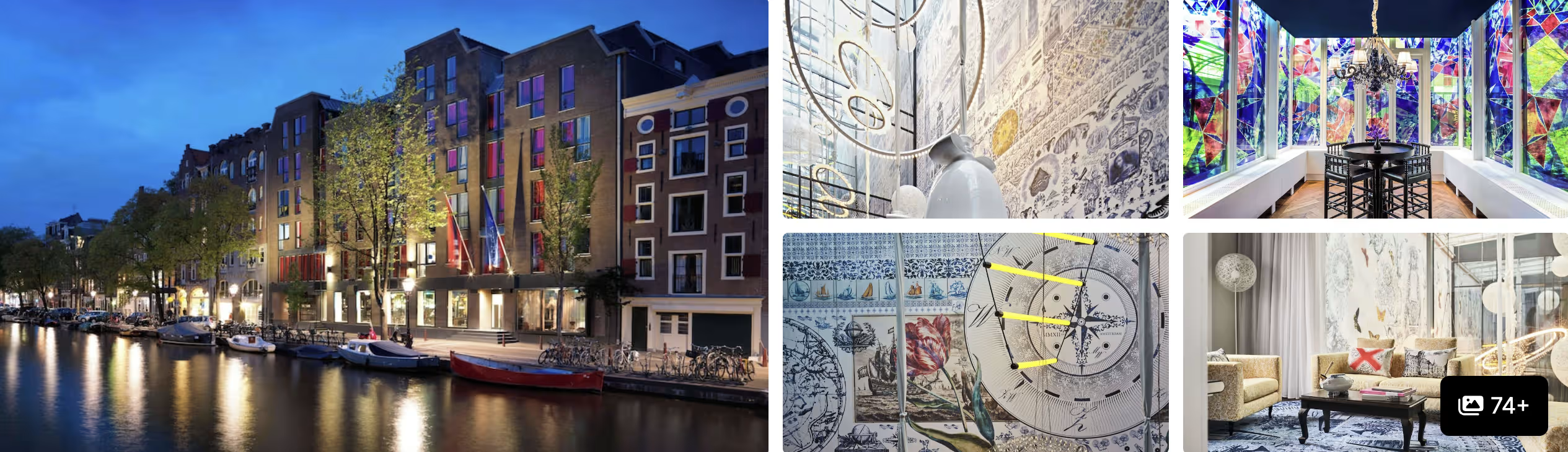
The Pulitzer is spread across 25 restored 17th- and 18th-century canal houses along Prinsengracht and Keizersgracht. Rooms vary a lot in layout and view — some are cosy canal-facing rooms, others are full suites with king beds and marble bathrooms. You're on one of the most scenic stretches of canal in the city, and Anne Frank House and the Jordaan market streets are a short walk away.
Book the Pulitzer Amsterdam on Dyme →
Andaz Amsterdam Prinsengracht — Best for Design
Prinsengracht 587, Amsterdam
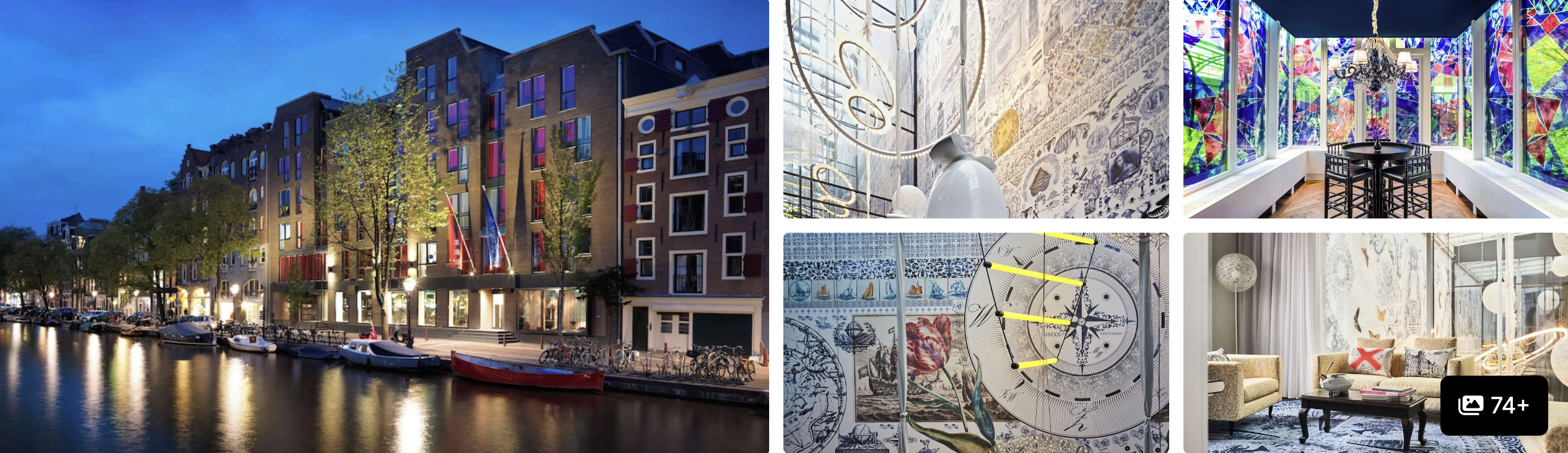
Designed by Marcel Wanders, this was a public library before it became a hotel in 2012. The 122 rooms include five suites, one with a penthouse terrace and canal views. The design plays with Dutch heritage in a way that's fun without being heavy-handed. Bar & Restaurant Prins & Aap does coffee through cocktails, and you're about a 15-minute walk to the museum district or Anne Frank House.
Check availability at Andaz Amsterdam on Dyme →
The Toren Amsterdam — Best for Canal Views on a Quieter Street
Keizersgracht 164, Amsterdam
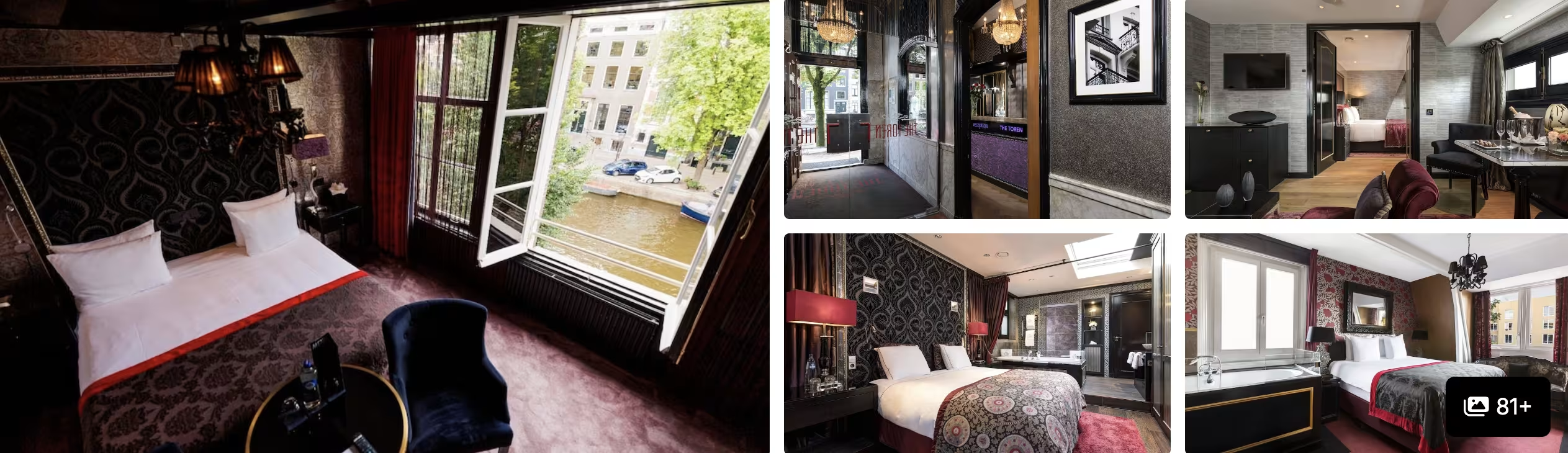
The Toren is a canalfront boutique hotel on Keizersgracht, around the corner from Anne Frank House and one canal over from the Pulitzer. Some of the suites have whirlpool baths overlooking the canal, which is a lovely detail if you're celebrating an occasion. Jordaan's antiques and vintage shops are right around the corner.
See rates at The Toren on Dyme →
Best Time to Visit Amsterdam by Season
Here’s how each season in Amsterdam compares in terms of weather, crowds, and what’s on:
Common Questions About Visiting Amsterdam
Check out the most common questions about visiting Amsterdam:
What do most tourists get wrong about Amsterdam?
The two biggest surprises are the payment system and the Anne Frank House booking process. "Pin Only" signs are everywhere, and a lot of shops won't take cash at all — make sure your card works in the Netherlands before you arrive. For Anne Frank House, tickets go on sale every Tuesday at 10am Amsterdam time for visits six weeks out. If you miss that window, you're out of luck.
Is Amsterdam easy to navigate for first-time visitors?
It takes about a day to get your head around the canal ring layout, but after that it clicks and getting around feels pretty natural. Google Maps works well, and the GVB tram network is reliable and easy to use. The thing that frustrates most first-timers is the cycling — bike paths look like sidewalks but move like fast lanes, so you need to pay attention to where you're walking.
What's the best day trip from Amsterdam?
Keukenhof Gardens (open March through May) is about 40 km from the city and worth the trip just for the scale of it — it's one of the largest flower gardens in the world. Haarlem is only a 15-minute train ride and has a lot of the same canal charm with far fewer tourists. Zaanse Schans (about 20 minutes by train) is the classic windmill and traditional Dutch crafts visit.
What taxes should I expect on my hotel bill?
This catches a lot of people off guard. Amsterdam charges a tourist tax of 12.5% on your room rate (before VAT). As of January 2026, VAT on hotels went from 9% to 21%, so the combined tax above your base rate is now roughly 33.5%. This gets collected at or before check-in and is separate from whatever you paid when you booked — make sure you factor it into your budget.
Book through Dyme — travel that goes further
Every hotel booking on Dyme funds solar installations for schools and hospitals, cutting their electricity costs for decades. Whether you're staying in the Jordaan or along Prinsengracht, Dyme has Amsterdam options at competitive rates.
If you have an early flight, it’s worth checking hotels near the airport — see options near Schiphol Airport.
Table of Contents
Amsterdam Travel Tips: 11 Local Hacks to Navigate the City
If you're planning a trip to Amsterdam, a little homework goes a long way. It's one of Europe's most visited cities, but it works differently from most places tourists are used to — the payment system will catch you off guard, the cycling is faster than you expect, and some of the best experiences need to be booked weeks in advance. This guide covers the things we wish someone had told us before our first visit.
There are a couple of things worth sorting out before you even pack.
What to Know Before You Arrive in Amsterdam
Amsterdam is compact but dense. The historic canal ring — the semicircle of Prinsengracht, Keizersgracht, Herengracht, and Singel — contains most of the major attractions, and you can walk from one end to the other in under 30 minutes. The flat terrain makes that easy, but the streets follow the canal ring pattern rather than a grid, so it's easy to get turned around in the first day or two. Download Google Maps before you land — you'll use it constantly.
A couple of practical things that trip people up: let your bank know you're traveling (international charges can trigger fraud blocks), and know that Amsterdam runs on cards, not cash. A lot of shops and even some restaurants are "Pin Only" (Alleen Pinnen), which means they won't take cash at all. Visa debit cards often don't work; Maestro is the local standard, and credit cards are accepted at most tourist-facing businesses but not universally. Most Albert Heijn stores — the biggest supermarket chain — won't take credit cards, which is genuinely annoying if you're trying to stock up a self-catered apartment. Make sure you have a debit card that works internationally.
11 Local Hacks for Getting the Most Out of Amsterdam
These are the things that make a difference once you're there:
1. Avoid Peak Season If You Can
Amsterdam has been dealing with serious overtourism, and summer (especially June through August) is when it's at its worst — higher prices, longer queues, and the canal paths get uncomfortably crowded. If your dates are flexible, late March is beautiful for tulips at nearby Keukenhof, and September gives you mild weather with noticeably fewer people. If you do end up visiting in peak summer, staying outside the central ring (more on that below) and getting out early in the morning — before 9am — makes a bigger difference than you'd expect.
2. Book Anne Frank House and Van Gogh Museum First
You need to book these in advance — not "it's a good idea," but you literally can't get in without a pre-booked ticket. Anne Frank House releases tickets every Tuesday at 10am Amsterdam time, for visits six weeks later. They sell out within hours. So if you're visiting in, say, mid-July, you need to be on the website at 10am on the Tuesday that falls exactly six weeks before that. Set a calendar reminder right now — this is the single most common thing people miss.
Van Gogh Museum works similarly with timed-entry slots, and walk-in availability is very limited. For both, you'll want to build your daily itinerary around whichever time slot you get rather than trying to squeeze them in.
Worth booking ahead too: the Rijksmuseum, MOCO Museum, Heineken Experience, and A'DAM Lookout Tower.
3. Get the I Amsterdam City Card (If You're a Museum Person)
The I Amsterdam City Card gets you into over 70 attractions, plus a canal cruise, a bike rental, and unlimited public transport. The 24-hour card is around €65 — check the current pricing on iamsterdam.com as rates do change. To give you a sense of value: the Rijksmuseum alone is €23.50, and a canal cruise runs €15-20, so if you're hitting two or three museums and a cruise, you come out ahead.
Two things to know: Anne Frank House and Van Gogh Museum are both excluded from the card. You'll need to book and pay for those separately.
If you're the kind of traveler who prefers wandering through markets and sitting in cafes over ticking off museums, the card probably isn't worth it for you.
4. Walk First, Tram Second, Cab Last
Walking is honestly the best way to see Amsterdam. The city is small and flat, and most things you'll want to visit are within a 20-minute walk of each other. When the weather isn't cooperating or you need to cover more ground, the tram network is excellent — 14 lines across the city — and GVB travel cards work on trams, buses, and the Metro. A single one-hour GVB card lets you hop between all three within that window.
One thing that catches people out: you need to check in and check out with your card every time you board a tram or enter the Metro. If you forget to check out, the system treats your ticket as invalid.
Taxis are expensive and almost never faster than a tram. From Schiphol Airport, official cabs run €40-60 to central Amsterdam (TCA taxis offer a fixed rate capped at €50). Uber is typically €35-55 for the same trip. If you're arriving at Schiphol, stick to the official taxi rank marked by floor signs — there are unofficial drivers who will approach you, and they're overpriced.
5. Don't Drive Into Amsterdam
This one is simple: parking in the center is either prohibited or restricted to residents, Park + Ride lots on the outskirts cost at least €25 per day, and the road rules prioritize cyclists and pedestrians in ways that take real getting used to. If you're renting a car for a broader Netherlands trip, leave it parked outside the city and use the tram.
6. Think Twice Before Renting a Bike
Amsterdam's cycling culture is famous, but it's also fast, dense, and not very patient with beginners. The bike paths work like informal highways during rush hour, and locals ride at speed while weaving around trams, pedestrians, and each other. If you cycle regularly in a busy city, you'll probably enjoy it — but read up on Amsterdam's specific cycling rules before you go. If you're more of a casual rider, the tram will get you where you need to go with a lot less anxiety.
Once you get outside the main tourist center, cycling does get easier. Neighborhoods like Jordaan, Oud-West, and De Pijp have calmer paths and less traffic than the Red Light District and central canal ring.
7. Stay Outside the Center
Hotels right in the middle of Amsterdam — around the Red Light District and inside the main canal ring — tend to be overpriced for what you get, and noisy at night. You don't need to be that central. Neighborhoods like Jordaan, De Pijp, and Oud-West are a 10-minute tram or Metro ride from everything, and the hotels are noticeably better value. Jordaan especially is the neighborhood most people wish they'd picked — it's quiet, lined with canals, full of independent restaurants and small galleries, and you can walk to Anne Frank House in about 10 minutes.
If you do want to stay in the center, book early. Demand is high year-round and last-minute prices reflect it.
8. Know Your Coffee Shop from Your Café
This matters more than it sounds. A "café" (eetcafé or bruin café) is a traditional Dutch pub — many serve food, and they're great for a casual meal or a beer. A "coffee shop" is a licensed cannabis retailer. If you want a quiet breakfast spot, look for a café. Dutch bruine kroegen (brown cafes) are some of the best places to eat well at a reasonable price and actually talk to locals.
9. Eat Like a Local, Not a Tourist
The restaurants along the main tourist streets in Amsterdam are expensive and often not very good. You'll eat better and spend less with a few simple adjustments.
Have your main meal at lunch — many restaurants offer a dagschotel (dish of the day) or set lunch menu at prices well below dinner. For street food, Albert Cuyp Market in De Pijp is hard to beat: fresh stroopwafels, Surinamese roti, Dutch herring, and kibbeling (fried fish) for a few euros each. If you want to try a bunch of different things in one go, the Foodhallen in Oud-West is an indoor food hall with about 20 vendors.
Amsterdam's tap water is excellent — some of the cleanest in Europe — so bring a reusable bottle and save yourself the €3 bottled water. If you're self-catering, the Too Good To Go app works well here. Local bakeries and cafes sell what's left at the end of the day at steep discounts.
10. Take the Free Ferry to Noord
There are free GVB ferries that run from the back of Centraal Station across the IJ waterway to Amsterdam Noord. The area has changed a lot in the past decade, and NDSM Wharf in particular is worth the 15-minute crossing — street art, restaurants with an industrial-chic feel, and a weekend vintage market. Ferries run every 10–30 minutes during the day, with less frequent service overnight, and they're completely free.
11. Watch Your Belongings in Busy Areas
Amsterdam is a safe city overall, but pickpocketing is a real issue in the busiest tourist spots — around the Red Light District, Dam Square, and near the major museums. Keep your bag zipped, don't put your phone in your back pocket, and avoid walking through parks alone late at night. If you do need help, the emergency number in the Netherlands is 112.
How to Get to Amsterdam (Airports, Trains and Transfers)
Schiphol is one of Europe's busiest airports and well-connected from most major cities. The train from the airport to central Amsterdam takes about 15-20 minutes and costs from €5.50 for an e-ticket or around €7 if you buy at the station. Trains run frequently during the day. It's worth checking whether a station closer to your hotel might save you a transfer — not everyone needs to go all the way to Centraal Station.
If you're on a tighter budget, Eindhoven Airport (used by many low-cost carriers) is roughly 80 minutes by train from Amsterdam Centraal. FlixBus and Megabus also serve Amsterdam from other European cities and arrive near Sloterdijk, which connects to the tram network.
Where to Stay in Amsterdam: Best Areas and Hotels
Amsterdam has everything from budget hostels near the center to boutique canal-house hotels in Jordaan and Oud-West. Here are three properties we'd recommend looking at.
Pulitzer Amsterdam — Best for Canal Atmosphere
Prinsengracht 315-331, Amsterdam
The Pulitzer is spread across 25 restored 17th- and 18th-century canal houses along Prinsengracht and Keizersgracht. Rooms vary a lot in layout and view — some are cosy canal-facing rooms, others are full suites with king beds and marble bathrooms. You're on one of the most scenic stretches of canal in the city, and Anne Frank House and the Jordaan market streets are a short walk away.
Book the Pulitzer Amsterdam on Dyme →
Andaz Amsterdam Prinsengracht — Best for Design
Prinsengracht 587, Amsterdam
Designed by Marcel Wanders, this was a public library before it became a hotel in 2012. The 122 rooms include five suites, one with a penthouse terrace and canal views. The design plays with Dutch heritage in a way that's fun without being heavy-handed. Bar & Restaurant Prins & Aap does coffee through cocktails, and you're about a 15-minute walk to the museum district or Anne Frank House.
Check availability at Andaz Amsterdam on Dyme →
The Toren Amsterdam — Best for Canal Views on a Quieter Street
Keizersgracht 164, Amsterdam
The Toren is a canalfront boutique hotel on Keizersgracht, around the corner from Anne Frank House and one canal over from the Pulitzer. Some of the suites have whirlpool baths overlooking the canal, which is a lovely detail if you're celebrating an occasion. Jordaan's antiques and vintage shops are right around the corner.
See rates at The Toren on Dyme →
Best Time to Visit Amsterdam by Season
Here’s how each season in Amsterdam compares in terms of weather, crowds, and what’s on:
Common Questions About Visiting Amsterdam
Check out the most common questions about visiting Amsterdam:
What do most tourists get wrong about Amsterdam?
The two biggest surprises are the payment system and the Anne Frank House booking process. "Pin Only" signs are everywhere, and a lot of shops won't take cash at all — make sure your card works in the Netherlands before you arrive. For Anne Frank House, tickets go on sale every Tuesday at 10am Amsterdam time for visits six weeks out. If you miss that window, you're out of luck.
Is Amsterdam easy to navigate for first-time visitors?
It takes about a day to get your head around the canal ring layout, but after that it clicks and getting around feels pretty natural. Google Maps works well, and the GVB tram network is reliable and easy to use. The thing that frustrates most first-timers is the cycling — bike paths look like sidewalks but move like fast lanes, so you need to pay attention to where you're walking.
What's the best day trip from Amsterdam?
Keukenhof Gardens (open March through May) is about 40 km from the city and worth the trip just for the scale of it — it's one of the largest flower gardens in the world. Haarlem is only a 15-minute train ride and has a lot of the same canal charm with far fewer tourists. Zaanse Schans (about 20 minutes by train) is the classic windmill and traditional Dutch crafts visit.
What taxes should I expect on my hotel bill?
This catches a lot of people off guard. Amsterdam charges a tourist tax of 12.5% on your room rate (before VAT). As of January 2026, VAT on hotels went from 9% to 21%, so the combined tax above your base rate is now roughly 33.5%. This gets collected at or before check-in and is separate from whatever you paid when you booked — make sure you factor it into your budget.
Book through Dyme — travel that goes further
Every hotel booking on Dyme funds solar installations for schools and hospitals, cutting their electricity costs for decades. Whether you're staying in the Jordaan or along Prinsengracht, Dyme has Amsterdam options at competitive rates.
If you have an early flight, it’s worth checking hotels near the airport — see options near Schiphol Airport.