Airplane departure icon
650
Airlines
Hotel building illustration icon with HOTEL sign
2 Million
Hotels
Blue car icon illustration
2000
Car Rentals
Table of Contents
Chevron down arrow icon
Airplane departure icon
650
Airlines
Hotel building illustration icon with HOTEL sign
2 Million
Hotels
Blue car icon illustration
2000
Car Rentals

Where to Stay in Rome, Safe Areas for First-Time Visitors

Rome is statistically one of the safest big-city destinations in Europe. Violent crime against tourists is rare, and the parts of the city where most first-time visitors spend their days (the historic centre, Trastevere, Monti, Prati near the Vatican) are well-lit, busy, and patrolled. The safety conversation in Rome is less about danger than about petty theft, taxi scams, metro pickpockets, and the handful of streets around Termini Station that get sketchier after midnight.

This guide is for first-time visitors who want to know which Rome neighborhoods to base themselves in, what "safe" means in practice in this city, and where to stay so the trip is built around the things you came for. Six hotels across five neighborhoods, all in areas you can walk back to at 11 pm without thinking twice.

What "safe" means in Rome in practice

The crime that affects first-time visitors in Rome is almost entirely petty. Pickpockets on the metro (especially Line A between Termini and Spagna), bag-snatches at outdoor café tables, rose-and-bracelet scammers near the Spanish Steps and Trevi Fountain, fake taxi drivers at Termini who charge triple. Annoying, occasionally expensive, not dangerous. Violent street crime against tourists is rare; the Italian violent crime rate is roughly a quarter of the United States rate.

Practically, the safety question collapses to two things. Pick a neighborhood busy enough at night that you are not walking three blocks alone past closed shutters, and pick a hotel on a real street, not buried in a back alley off Termini. The neighborhoods below all pass both tests.

The safest areas to stay in Rome

Centro Storico (the historic centre) is the area between the Tiber and Via del Corso, including the Pantheon, Piazza Navona, and the Trevi Fountain. It is the safest area for first-time visitors because it is dense, walkable, and busy with foot traffic until well past midnight every night. Almost everything you came to Rome to see is within a 20-minute walk.

Monti is the residential neighborhood just east of the Roman Forum, between Via Cavour and Via dei Serpenti. It feels like a real Rome neighborhood (corner cafés, locals walking dogs, small wine bars) and is two metro stops or a ten-minute walk from the historic centre. Very safe.

Trastevere is across the river, west of the Tiber. Historically it was the bohemian district and now it is the evening-out district: cobblestone alleys, terrace dinners, live music. The core is safe and lively until late, with a caveat that some of the back streets behind Viale di Trastevere thin out after midnight. Pick a hotel on a main piazza or near Santa Maria in Trastevere.

Pinciano and the Villa Borghese area is the leafy, residential district north of the Spanish Steps, around the city's biggest park. Quieter than the centre, very safe, less ideal if you want to walk everywhere but the right pick for families and travelers who want a calm base.

Prati, the Vatican-adjacent neighborhood north of the river, is also worth mentioning: organized on a grid (unusual for Rome), safe, and a short walk to St Peter's. Not in our hotel list below but a strong base for travelers prioritizing the Vatican.

Where to be more careful in Rome

The streets immediately east of Termini Station (Via Giolitti, Via Marsala, back of Piazza dei Cinquecento) thin out at night and concentrate more petty crime than central Rome. Hotels on Via Nazionale, Via Cavour, or Piazza della Repubblica are technically "near Termini" but on busy, well-lit boulevards and feel completely different. The distinction matters when reading hotel reviews.

Esquilino, the neighborhood south of Termini around Piazza Vittorio Emanuele II, has a tourist-targeted petty crime concentration. The easy answer is to stay north or west of Termini, not south. The far suburbs that sometimes get mentioned in Rome safety articles (Tor Bella Monaca, parts of San Basilio) are residential outskirts no first-time visitor has any reason to be in.

Six hotels in safe Rome neighborhoods

These six hotels are in the areas above, with locations where walking back at night feels straightforward.
1. Six Senses Rome

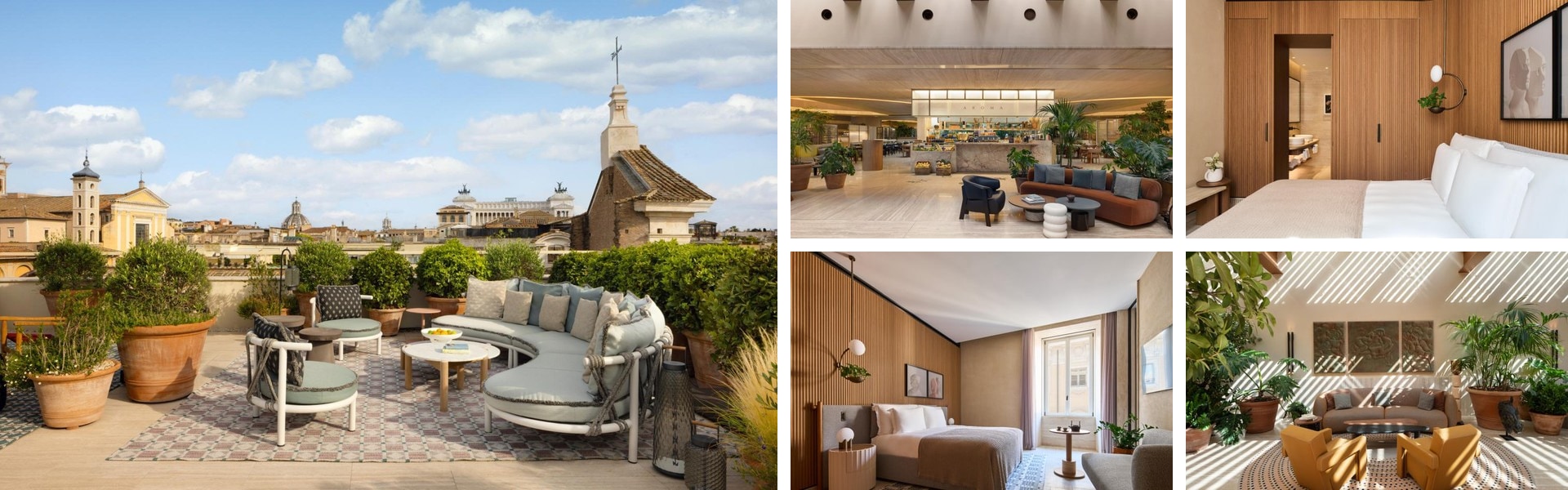
Six Senses Rome opened in 2023 in the restored Palazzo Salviati Cesi-Mellini on Piazza San Marcello, a two-minute walk from the Trevi Fountain. The hotel is in one of the most central, busiest, and best-policed pockets of Rome, which means you walk everywhere you want to go and the night-walk back to the hotel is on the city's main pedestrian streets.

Six Senses Rome is the luxury pick on this list, run to Six Senses' global sustainability standards (energy and water reduction, locally-sourced restaurant program, no single-use plastics), and the right answer if the trip is about being two minutes from everything in central Rome.
2. Hotel Nazionale

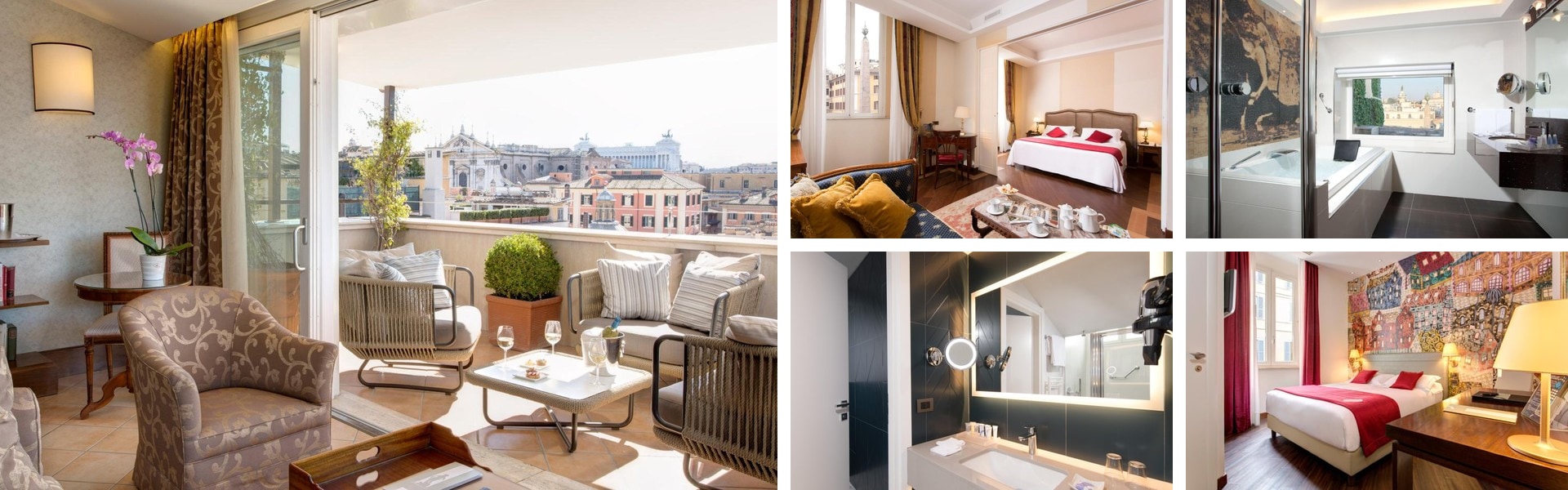
Hotel Nazionale is on Piazza Montecitorio, a quiet square in the Centro Storico that happens to be next to the Italian Parliament (which means a permanent police presence, which means it is one of the safest single addresses in the city). The hotel is a five-minute walk from the Pantheon, a ten-minute walk from the Trevi Fountain, and on the same square as Caffè Sant'Eustachio and Tazza d'Oro for the morning espresso debate.

Rooms are smaller than the modern norm but in proportion to a 19th-century building on a small square. Hotel Nazionale is the right pick for travelers who want central Rome, a quieter address than the Pantheon's main square, and the convenience of being near the seat of Italian government.
3. FH55 Grand Hotel Palatino

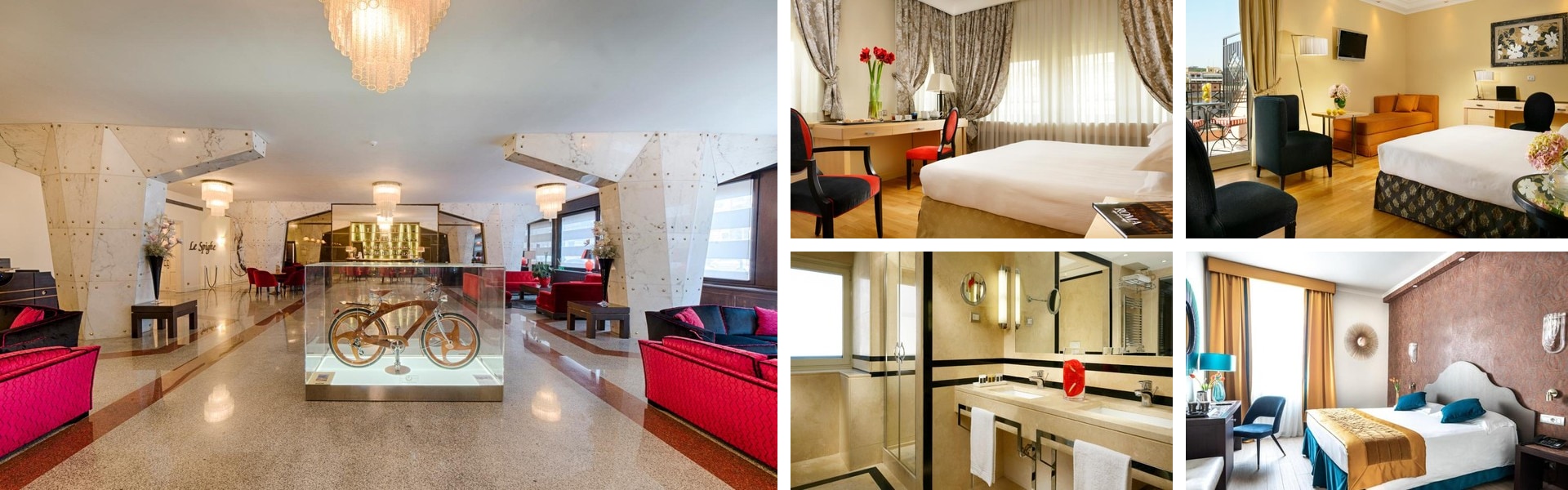
The Palatino is on Via Cavour 213, in Monti, a five-minute walk from the Colosseum and four minutes from the Cavour metro station (Line B). For first-time visitors who want to walk to the major ancient Rome sites (Colosseum, Forum, Trajan's Market) without a transit leg, Monti is the right neighborhood and the Palatino is the right hotel inside it.

The hotel is a 200-room, full-service property (real lobby, restaurant, bar, fitness room), which is a different experience from the boutique hotels in this neighborhood and a strong pick for travelers who want hotel-grade service rather than B&B-grade. FH55 Grand Hotel Palatino is the most-walkable hotel on this list for the ancient Rome itinerary.
4. Donna Camilla Savelli – VRetreats

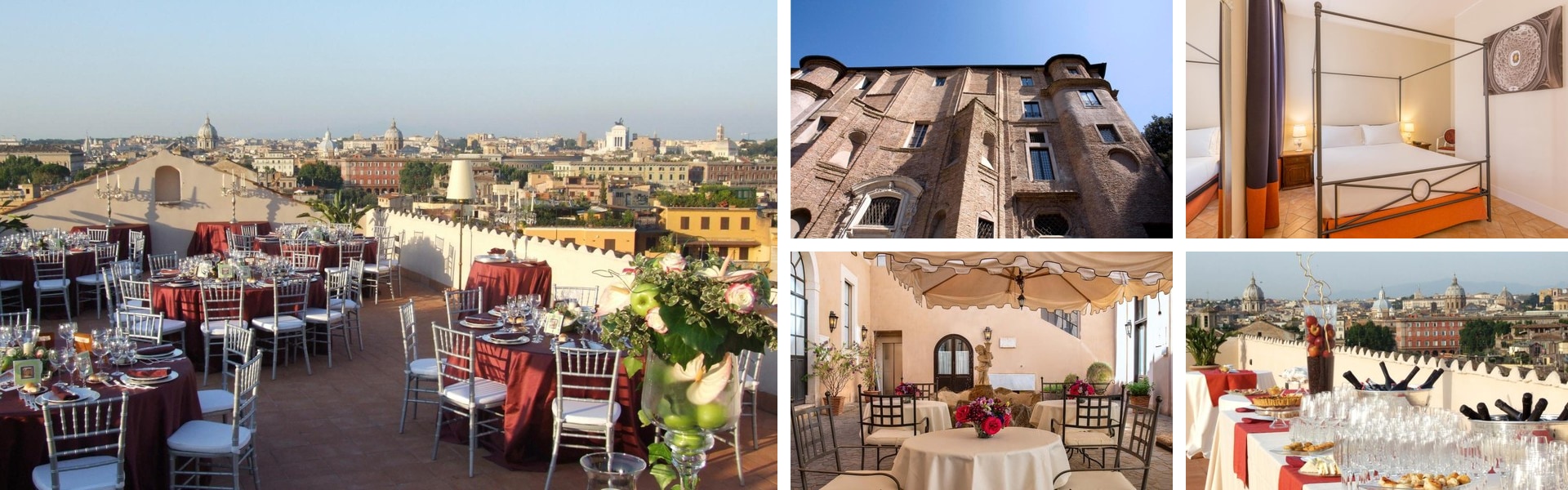
Donna Camilla Savelli is a converted 17th-century convent on Via Garibaldi, on the Janiculum Hill side of Trastevere. The architecture is the draw: a Borromini-designed cloister, a courtyard garden, and rooms in the former convent cells. The location is calm and quiet (you walk down the hill to the Trastevere restaurants and walk back uphill at the end of the night) and feels distinctly removed from the central tourist crush.

Donna Camilla Savelli – VRetreats is the answer for families or travelers who want Trastevere without the late-night noise. The walk back uphill at midnight is the trade-off; the courtyard breakfast in May is the reward.
5. Hotel Artemide

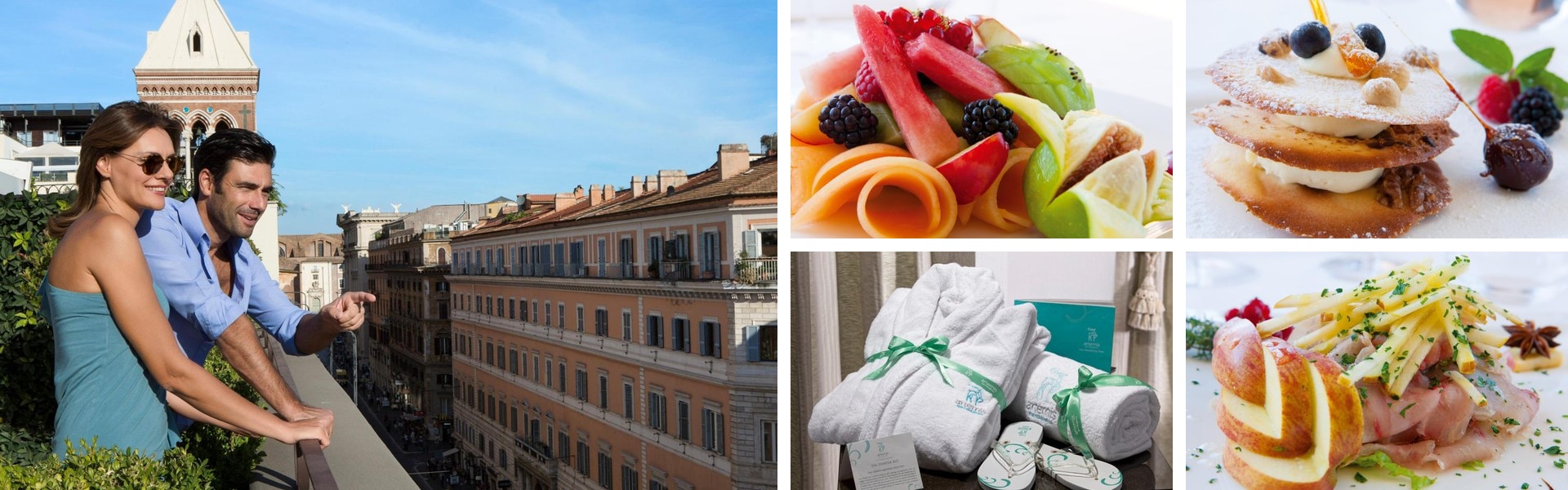
Hotel Artemide is on Via Nazionale 22, a wide, busy boulevard between Termini and Piazza Venezia. The "near Termini" framing is technically correct and worth understanding clearly: Via Nazionale is a major commercial street with restaurants, shops, and constant foot traffic, completely different from the back streets immediately around the station. The hotel is a ten-minute walk to the Trevi Fountain and a fifteen-minute walk to the Colosseum.

The rooftop bar, with views over central Rome, is one of the better hotel rooftops in the city. Hotel Artemide is the right pick for travelers who want a four-star property with central walking access at a more reasonable price tier than the Pantheon-adjacent hotels.
6. Parco dei Principi Grand Hotel & SPA

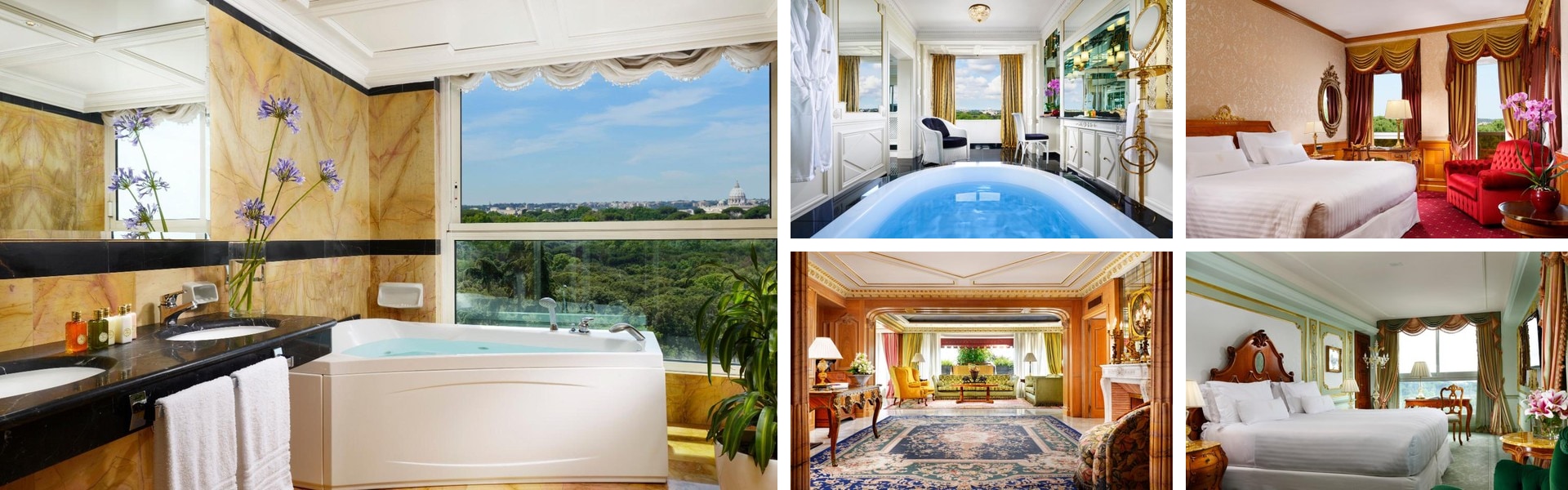
Parco dei Principi is on Via Frescobaldi, on the Pinciano edge of Villa Borghese, the city's biggest park. The neighborhood is residential, leafy, and very quiet, which makes it the calmest base on this list. From the hotel, you can walk into the park in two minutes, walk to the Galleria Borghese in ten, and reach the Spanish Steps in a 25-minute walk through the park.

The pool is one of the few real outdoor pools at a Rome hotel, which matters in a July or August trip with kids. Parco dei Principi Grand Hotel & SPA is the right pick for families, multi-generation groups, and travelers who want the city to feel calm at the end of each day.

Safety tips for first-time Rome visitors

A few practical things experienced Rome travelers do without thinking:

On the metro, keep your bag in front of you on Line A between Termini and Spagna. The pickpocket teams that work this stretch are organized and good. Backpacks come off and go on your front.

At outdoor café tables, do not put your bag on the chair back, on the empty chair next to you, or on the ground unattended. A strap looped through your leg is fine.

Taxis from Termini: only take official white taxis from the marked rank. Drivers who approach you inside the station are not licensed and charge two to three times the metered fare. A metered fare to most hotels in central Rome is fifteen to twenty euros; if someone quotes fifty, walk away.

ATMs: use bank ATMs (Intesa, UniCredit, BNL) inside bank branches, not the standalone yellow Euronet machines on tourist streets, which apply higher exchange-rate margins.

Frequently asked questions

These are the questions most first-time visitors ask when choosing where to stay.

What are the safest areas to stay in Rome?

Centro Storico (the historic centre), Monti, the core of Trastevere, Prati near the Vatican, and Pinciano around Villa Borghese are the safest neighborhoods for first-time visitors. All are well-lit, busy, and walkable.

Is it safe to stay in central Rome?

Yes. Central Rome is the safest area for tourists, with constant foot traffic, police presence, and almost no violent crime against visitors. The only thing to watch for is petty theft (pickpockets, bag snatchers) on the metro and at outdoor cafés.

Where should first-time visitors stay in Rome?

Centro Storico for first-time visitors who want to walk to everything, Monti for a more local feel near the Colosseum, Trastevere for evenings out, Pinciano for families. Avoid the back streets immediately east and south of Termini Station.

What areas of Rome should tourists avoid?

The back streets immediately east of Termini (Via Giolitti) and south into Esquilino thin out at night with higher petty crime rates. Far suburbs like Tor Bella Monaca are residential and not relevant to tourist itineraries.

Is Rome safe at night for tourists?

Yes in Centro Storico, Monti, Trastevere, Prati, and Pinciano. Roman dinner culture means main streets have foot traffic past midnight. The exception is the area immediately around Termini, which thins out after dark.

Book through Dyme — travel that goes further

Every hotel booking on Dyme funds solar installations for schools and hospitals, cutting their electricity costs for decades. Whether you are walking everywhere from the Pantheon or basing yourself near Villa Borghese with the family, Dyme has Rome options across the safest neighborhoods at competitive rates.

Find Rome Hotels on Dyme →

Table of Contents

Airplane departure icon
650
Airlines
Hotel building illustration icon with HOTEL sign
2 Million
Hotels
Blue car icon illustration
2000
Car Rentals

Where to Stay in Rome, Safe Areas for First-Time Visitors

Rome is statistically one of the safest big-city destinations in Europe. Violent crime against tourists is rare, and the parts of the city where most first-time visitors spend their days (the historic centre, Trastevere, Monti, Prati near the Vatican) are well-lit, busy, and patrolled. The safety conversation in Rome is less about danger than about petty theft, taxi scams, metro pickpockets, and the handful of streets around Termini Station that get sketchier after midnight.

This guide is for first-time visitors who want to know which Rome neighborhoods to base themselves in, what "safe" means in practice in this city, and where to stay so the trip is built around the things you came for. Six hotels across five neighborhoods, all in areas you can walk back to at 11 pm without thinking twice.

What "safe" means in Rome in practice

The crime that affects first-time visitors in Rome is almost entirely petty. Pickpockets on the metro (especially Line A between Termini and Spagna), bag-snatches at outdoor café tables, rose-and-bracelet scammers near the Spanish Steps and Trevi Fountain, fake taxi drivers at Termini who charge triple. Annoying, occasionally expensive, not dangerous. Violent street crime against tourists is rare; the Italian violent crime rate is roughly a quarter of the United States rate.

Practically, the safety question collapses to two things. Pick a neighborhood busy enough at night that you are not walking three blocks alone past closed shutters, and pick a hotel on a real street, not buried in a back alley off Termini. The neighborhoods below all pass both tests.

The safest areas to stay in Rome

Centro Storico (the historic centre) is the area between the Tiber and Via del Corso, including the Pantheon, Piazza Navona, and the Trevi Fountain. It is the safest area for first-time visitors because it is dense, walkable, and busy with foot traffic until well past midnight every night. Almost everything you came to Rome to see is within a 20-minute walk.

Monti is the residential neighborhood just east of the Roman Forum, between Via Cavour and Via dei Serpenti. It feels like a real Rome neighborhood (corner cafés, locals walking dogs, small wine bars) and is two metro stops or a ten-minute walk from the historic centre. Very safe.

Trastevere is across the river, west of the Tiber. Historically it was the bohemian district and now it is the evening-out district: cobblestone alleys, terrace dinners, live music. The core is safe and lively until late, with a caveat that some of the back streets behind Viale di Trastevere thin out after midnight. Pick a hotel on a main piazza or near Santa Maria in Trastevere.

Pinciano and the Villa Borghese area is the leafy, residential district north of the Spanish Steps, around the city's biggest park. Quieter than the centre, very safe, less ideal if you want to walk everywhere but the right pick for families and travelers who want a calm base.

Prati, the Vatican-adjacent neighborhood north of the river, is also worth mentioning: organized on a grid (unusual for Rome), safe, and a short walk to St Peter's. Not in our hotel list below but a strong base for travelers prioritizing the Vatican.

Where to be more careful in Rome

The streets immediately east of Termini Station (Via Giolitti, Via Marsala, back of Piazza dei Cinquecento) thin out at night and concentrate more petty crime than central Rome. Hotels on Via Nazionale, Via Cavour, or Piazza della Repubblica are technically "near Termini" but on busy, well-lit boulevards and feel completely different. The distinction matters when reading hotel reviews.

Esquilino, the neighborhood south of Termini around Piazza Vittorio Emanuele II, has a tourist-targeted petty crime concentration. The easy answer is to stay north or west of Termini, not south. The far suburbs that sometimes get mentioned in Rome safety articles (Tor Bella Monaca, parts of San Basilio) are residential outskirts no first-time visitor has any reason to be in.

Six hotels in safe Rome neighborhoods

These six hotels are in the areas above, with locations where walking back at night feels straightforward.

1. Six Senses Rome

Six Senses Rome opened in 2023 in the restored Palazzo Salviati Cesi-Mellini on Piazza San Marcello, a two-minute walk from the Trevi Fountain. The hotel is in one of the most central, busiest, and best-policed pockets of Rome, which means you walk everywhere you want to go and the night-walk back to the hotel is on the city's main pedestrian streets.

Six Senses Rome is the luxury pick on this list, run to Six Senses' global sustainability standards (energy and water reduction, locally-sourced restaurant program, no single-use plastics), and the right answer if the trip is about being two minutes from everything in central Rome.

2. Hotel Nazionale

Hotel Nazionale is on Piazza Montecitorio, a quiet square in the Centro Storico that happens to be next to the Italian Parliament (which means a permanent police presence, which means it is one of the safest single addresses in the city). The hotel is a five-minute walk from the Pantheon, a ten-minute walk from the Trevi Fountain, and on the same square as Caffè Sant'Eustachio and Tazza d'Oro for the morning espresso debate.

Rooms are smaller than the modern norm but in proportion to a 19th-century building on a small square. Hotel Nazionale is the right pick for travelers who want central Rome, a quieter address than the Pantheon's main square, and the convenience of being near the seat of Italian government.

3. FH55 Grand Hotel Palatino

The Palatino is on Via Cavour 213, in Monti, a five-minute walk from the Colosseum and four minutes from the Cavour metro station (Line B). For first-time visitors who want to walk to the major ancient Rome sites (Colosseum, Forum, Trajan's Market) without a transit leg, Monti is the right neighborhood and the Palatino is the right hotel inside it.

The hotel is a 200-room, full-service property (real lobby, restaurant, bar, fitness room), which is a different experience from the boutique hotels in this neighborhood and a strong pick for travelers who want hotel-grade service rather than B&B-grade. FH55 Grand Hotel Palatino is the most-walkable hotel on this list for the ancient Rome itinerary.

4. Donna Camilla Savelli – VRetreats

Donna Camilla Savelli is a converted 17th-century convent on Via Garibaldi, on the Janiculum Hill side of Trastevere. The architecture is the draw: a Borromini-designed cloister, a courtyard garden, and rooms in the former convent cells. The location is calm and quiet (you walk down the hill to the Trastevere restaurants and walk back uphill at the end of the night) and feels distinctly removed from the central tourist crush.

Donna Camilla Savelli – VRetreats is the answer for families or travelers who want Trastevere without the late-night noise. The walk back uphill at midnight is the trade-off; the courtyard breakfast in May is the reward.

5. Hotel Artemide

Hotel Artemide is on Via Nazionale 22, a wide, busy boulevard between Termini and Piazza Venezia. The "near Termini" framing is technically correct and worth understanding clearly: Via Nazionale is a major commercial street with restaurants, shops, and constant foot traffic, completely different from the back streets immediately around the station. The hotel is a ten-minute walk to the Trevi Fountain and a fifteen-minute walk to the Colosseum.

The rooftop bar, with views over central Rome, is one of the better hotel rooftops in the city. Hotel Artemide is the right pick for travelers who want a four-star property with central walking access at a more reasonable price tier than the Pantheon-adjacent hotels.

6. Parco dei Principi Grand Hotel & SPA

Parco dei Principi is on Via Frescobaldi, on the Pinciano edge of Villa Borghese, the city's biggest park. The neighborhood is residential, leafy, and very quiet, which makes it the calmest base on this list. From the hotel, you can walk into the park in two minutes, walk to the Galleria Borghese in ten, and reach the Spanish Steps in a 25-minute walk through the park.

The pool is one of the few real outdoor pools at a Rome hotel, which matters in a July or August trip with kids. Parco dei Principi Grand Hotel & SPA is the right pick for families, multi-generation groups, and travelers who want the city to feel calm at the end of each day.

Safety tips for first-time Rome visitors

A few practical things experienced Rome travelers do without thinking:

On the metro, keep your bag in front of you on Line A between Termini and Spagna. The pickpocket teams that work this stretch are organized and good. Backpacks come off and go on your front.

At outdoor café tables, do not put your bag on the chair back, on the empty chair next to you, or on the ground unattended. A strap looped through your leg is fine.

Taxis from Termini: only take official white taxis from the marked rank. Drivers who approach you inside the station are not licensed and charge two to three times the metered fare. A metered fare to most hotels in central Rome is fifteen to twenty euros; if someone quotes fifty, walk away.

ATMs: use bank ATMs (Intesa, UniCredit, BNL) inside bank branches, not the standalone yellow Euronet machines on tourist streets, which apply higher exchange-rate margins.

Frequently asked questions

These are the questions most first-time visitors ask when choosing where to stay.

What are the safest areas to stay in Rome?

Centro Storico (the historic centre), Monti, the core of Trastevere, Prati near the Vatican, and Pinciano around Villa Borghese are the safest neighborhoods for first-time visitors. All are well-lit, busy, and walkable.

Is it safe to stay in central Rome?

Yes. Central Rome is the safest area for tourists, with constant foot traffic, police presence, and almost no violent crime against visitors. The only thing to watch for is petty theft (pickpockets, bag snatchers) on the metro and at outdoor cafés.

Where should first-time visitors stay in Rome?

Centro Storico for first-time visitors who want to walk to everything, Monti for a more local feel near the Colosseum, Trastevere for evenings out, Pinciano for families. Avoid the back streets immediately east and south of Termini Station.

What areas of Rome should tourists avoid?

The back streets immediately east of Termini (Via Giolitti) and south into Esquilino thin out at night with higher petty crime rates. Far suburbs like Tor Bella Monaca are residential and not relevant to tourist itineraries.

Is Rome safe at night for tourists?

Yes in Centro Storico, Monti, Trastevere, Prati, and Pinciano. Roman dinner culture means main streets have foot traffic past midnight. The exception is the area immediately around Termini, which thins out after dark.
Book through Dyme — travel that goes further

Every hotel booking on Dyme funds solar installations for schools and hospitals, cutting their electricity costs for decades. Whether you are walking everywhere from the Pantheon or basing yourself near Villa Borghese with the family, Dyme has Rome options across the safest neighborhoods at competitive rates.

Find Rome Hotels on Dyme →