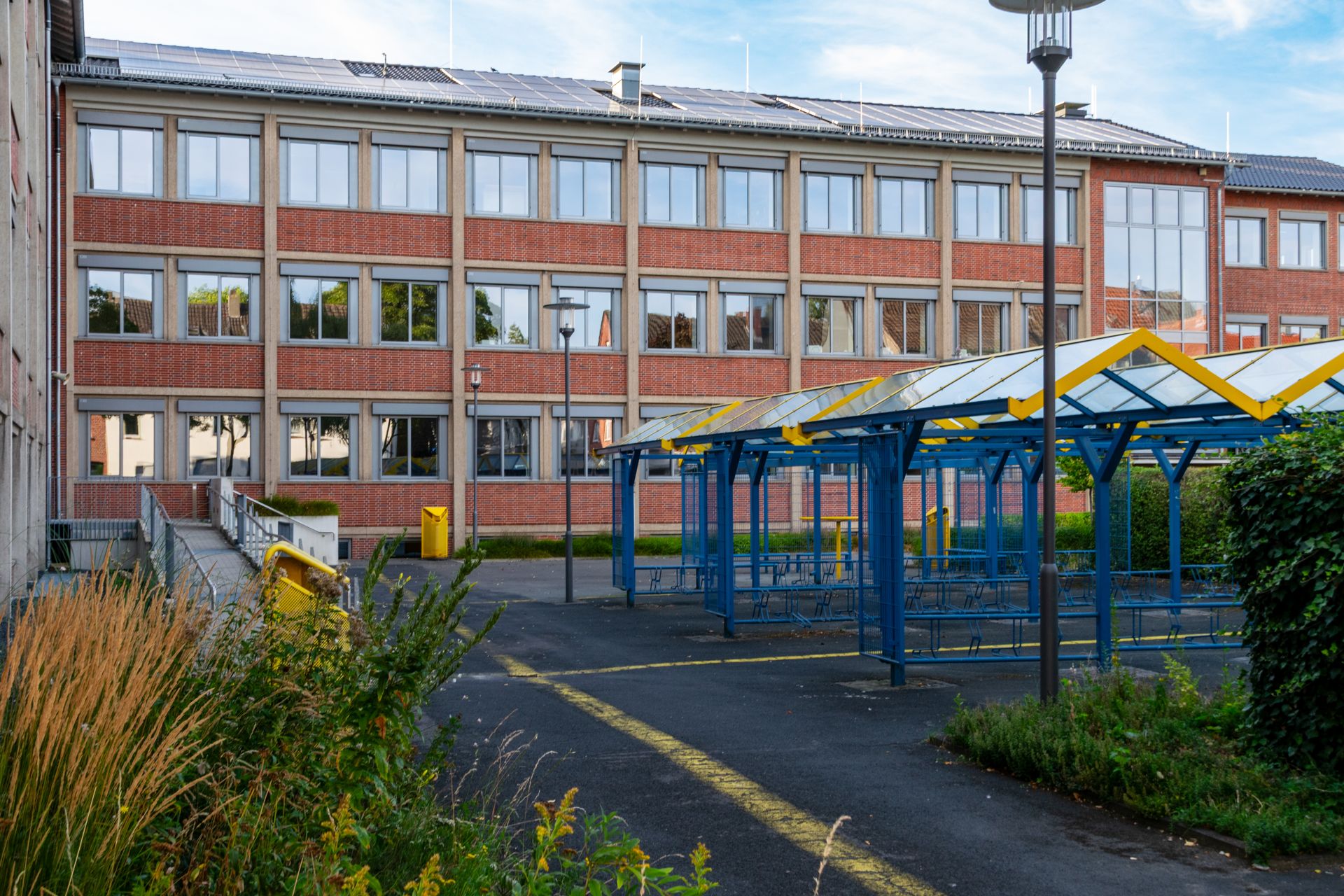
An elementary school in Jonesboro, Illinois paid about $982,000 for a 300-kilowatt solar array, and within a year of switching it on it had more than $500,000 of that back. Most of it came as a check from the IRS for roughly $393,000. The rest comes back as savings on its power bills, which the school expected to run $55,000 to $60,000 a year.
Solar projects are usually paid for like this, with several kinds of money stacked together, and each wants something different back. Some is repaid with interest, some is repaid without it, and some never comes back. The money that asks for little or nothing back is the part worth caring about, because it's what makes a project's power cheaper.
One school's solar project, dollar by dollar
The Illinois Power Agency's case study of Jonesboro Elementary School lays out the money. People in finance call a mix like this a capital stack. Here's Jonesboro's:
| Layer | Amount | Does anyone have to pay it back? |
|---|---|---|
| Federal tax credit, paid to the school as a check from the IRS | About $393,000 | No |
| State incentives from the Illinois Power Agency, plus incentives from the utility | More than $100,000 together | No, though incentives like these can mean selling the project's certificates (more below) |
| The school district's own money | A little under $482,000 | It comes back to the school as lower power bills |
| Total cost | About $982,000 |
The case study gives the cost, the IRS check and the "more than $500,000" total. We worked out the other 2 rows by subtraction. The case study doesn't say how the district paid its share.
The federal credit alone covered about 40% of the cost. And the check came "after filing a tax return," once the panels were running, so it looks like the district had to cover the whole cost first and wait.
On the school's estimate of $55,000 to $60,000 a year in savings, its share pays for itself in roughly 8 to 9 years. That's our rough math, before any repairs or changes in power prices. The early numbers look good: the array saved about $39,000 in its first 6 months, most of them winter months.
The kinds of money in a solar project
Jonesboro used 3 of these. Most projects mix them differently.
| Money | Who puts it in | What they get back |
|---|---|---|
| A loan | A bank or other lender | The loan plus interest, on a fixed schedule |
| The owner's own money | Whoever owns the panels: the school, or a solar developer | Whatever the project earns after the bills and loan payments |
| The federal tax credit | The US Treasury | Nothing |
| State and utility incentives | A state program or the local utility | Sometimes the project's renewable energy certificates |
| Grants and donations | Foundations, companies, individuals | Nothing |
| Small loans from lots of people | Individuals, through a nonprofit fund | Their money back, sometimes with no interest |
The tax credit is the federal government's share. The IRS describes the clean electricity investment credit as 6% of the cost, or up to 30% for projects that meet its rules on paying prevailing wages and hiring apprentices, plus bonuses for US-made parts or certain locations. Under the law, projects smaller than 1 megawatt get the 30% rate without the wage rules. The case study doesn't say which of these got Jonesboro to about 40%.
Schools, cities and nonprofits don't pay income tax, so the credit used to be no use to them. Since the 2022 Inflation Reduction Act, the IRS's elective pay rules let them receive it as a payment, because the IRS "treats the elective payment amount as a tax payment." That's the check Jonesboro got.
State and utility incentives aren't always gifts. Under Illinois Shines, the Illinois Power Agency's solar program, Illinois utilities buy a project's renewable energy certificates, the records that say who can claim its clean power. So the project is selling something to get that money.
Grants are the simplest money in the stack, with one wrinkle for a school or nonprofit using elective pay: if a grant is made specifically for the system, the grant plus the tax credit can't add up to more than the system costs. Our guide to funding solar for schools and nonprofits walks through that rule.
Small loans from lots of people are newer. Renewables.org, a nonprofit we've also invested through, asks people to "make a 0% interest loan" that it lends to solar developers in the Global South. As the projects sell their power, they repay the fund, and you're paid back monthly over 5 years. Then you can lend the same money again.
Everything that gets paid back comes out of what the project earns
Once the incentives are in, a solar array earns money from one thing: the power it makes. Either the owner pays less to the utility, or the building that uses the power pays the owner for it. Every loan payment and every return to an owner comes from that.
Lenders get paid first and on a schedule, which is why loans are usually the cheaper kind of money. Owners get what's left, so they carry more risk and expect more in return.
That's why every dollar of tax credit or grant is a dollar the electricity doesn't have to earn back. At Jonesboro, incentives covered more than half the cost, so the savings only have to repay a little under half. With no incentives at all, the savings would have to cover the full $982,000, which takes 16 to 18 years on our rough math.
When a developer owns the panels: power purchase agreements
Jonesboro owns its array, but it nearly didn't. Before elective pay, the district was planning to have a solar company own the system, because a public school couldn't use the tax credit.
The EPA's page on solar financing calls this kind of third-party financing "a well-established financing solution in the United States." Under a power purchase agreement, a developer owns, runs and maintains the panels and "sells the power generated to the customer at a fixed rate, typically lower than the local utility."
The stack looks different from the developer's side. The developer puts in its own money and usually borrows the rest. A company that owns the panels can use the tax credit against its own taxes, or sell it to another company for cash. The school usually puts in nothing up front, and the developer's lenders and investors are repaid from what the school pays for its power each month.
Here too, money that doesn't need repaying lowers what the developer has to recover, and so the price it needs to charge the school for power.
Why 2027 matters for the US solar tax credit
A 2025 tax law cut the federal credit short for wind and solar. Under the law, a solar project that started construction after July 4, 2026 earns the credit only if it's running by December 31, 2027. Projects that started by July 4, 2026 have longer.
A project that misses that date loses what was, at Jonesboro, the biggest layer of money that doesn't need repaying: about 40% of the cost. Something has to fill the gap, whether bigger loans, more of the owner's money, more grants or a higher price for the power. If you're a business buying solar for your own buildings, our guide to solar project finance for business buyers covers the deadline in detail.
What a small contribution to a solar project changes
A $50 gift won't buy a panel when a school's array costs about $982,000. Small amounts matter when they're pooled, and what they do depends on which layer they join.
Pooled money that's lent on easy terms, like the 0% loans at Renewables.org, comes back and can go out again, so the same dollars can help build more than one project. Pooled money given as a grant doesn't come back, and none of it has to be earned back from the electricity, so it does the most for the one project it goes into.
So if someone tells you your money funds solar, ask 2 things: which layer it joins, and whether it helps build new panels or pays for ones that already exist.
Where your Dyme bookings fit
Your bookings help pay for new solar that gives schools, hospitals and other institutions cheaper power. Hotels and airlines pay Dyme a commission on each booking, so your booking costs you nothing extra, and our profit from those commissions pays for solar.
We put that money into funding for developers who build and run the panels, and the institutions buy the power under long-term fixed-price contracts. That's the setup Jonesboro almost used. We only fund projects that add new solar to the grid, and we don't buy renewable energy certificates.
Our money is paid back. We can fund any layer of a project's stack, from a loan to an ownership stake, depending on what the project needs. Our first solar investment, in December 2023, was with UGEI, a solar developer in Canada, and our second, in February 2024, went through Renewables.org.
So far, the solar we've funded adds up to 5.5 megawatts built and running, with 20 megawatts more in the pipeline. Some of the projects we fund are in the US, so new ones there face the same 2027 deadline. Our impact results page has the numbers, and how Dyme works explains where the commission comes from.
FAQ: how solar projects are financed
How are renewable energy projects financed?+
Usually with several kinds of money stacked together: the owner's own money, loans, a federal tax credit, state or utility incentives, and sometimes grants or donations. An Illinois school's $982,000 solar array, for example, got about $393,000 back from the IRS and more than $100,000 in state and utility incentives. The school covered the rest.
Does the money that funds a solar project get paid back?+
Some of it. Loans are repaid with interest, and owners earn a return from what the project makes. Tax credits, grants and donations aren't repaid. Everything that is repaid comes out of what the project earns, mostly from its electricity, so money that needs no repayment lets the power be cheaper.
Can a school or nonprofit get the solar tax credit?+
Yes, as a payment. Since the 2022 Inflation Reduction Act, schools, local governments and nonprofits can receive certain clean energy credits through the IRS's elective pay rules. Jonesboro Elementary in Illinois got a check for roughly $393,000 on a project that cost about $982,000.
Does booking with Dyme cost more because it funds solar?+
No. Hotels and airlines pay Dyme a commission on each booking, so your booking costs you nothing extra. Our profit from those commissions pays for solar projects.